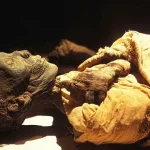
Relief from the Tomb of King Ramesses VI
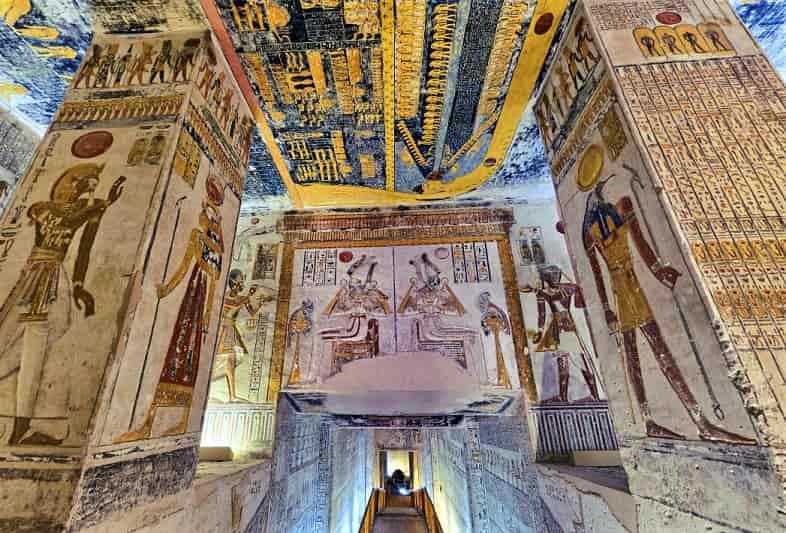
This relief comes from the walls of Tomb KV9 in the Valley of the Kings, the burial site of King Ramesses VI, who reigned c. 1143–1136 BCE during the 20th Dynasty.
The artwork exemplifies the elaborate funerary decoration of New Kingdom pharaohs, intended to honor the king and ensure his safe passage to the afterlife.
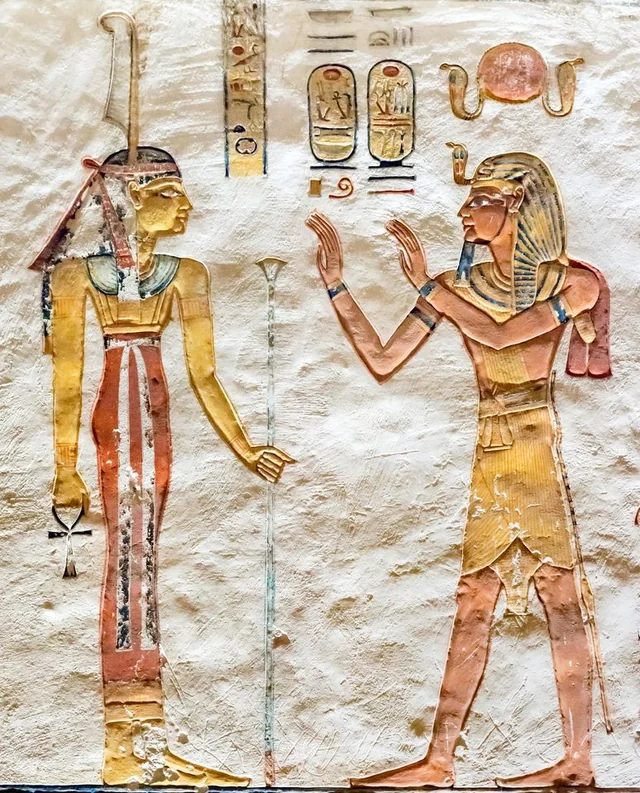
Tomb KV9 stands as a testament to the artistic skill and religious devotion of ancient Egyptian artisans.
The Tomb of King Ramesses VI, located in the Valley of the Kings (KV9) at Thebes, is one of the most beautifully decorated royal tombs of the New Kingdom.
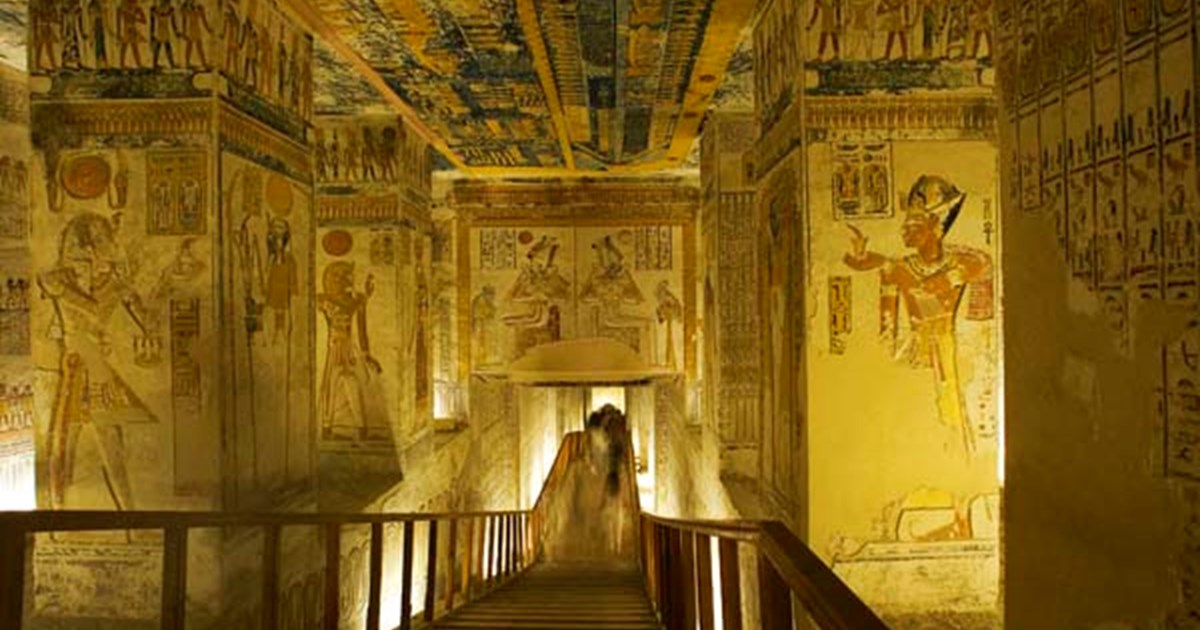
Originally begun for Ramesses V and later taken over and expanded by his successor Ramesses VI, the tomb features a long descending corridor richly adorned with detailed scenes from the Book of the Dead, the Book of Gates, and the Book of Caverns, reflecting ancient Egyptian concepts of the afterlife.
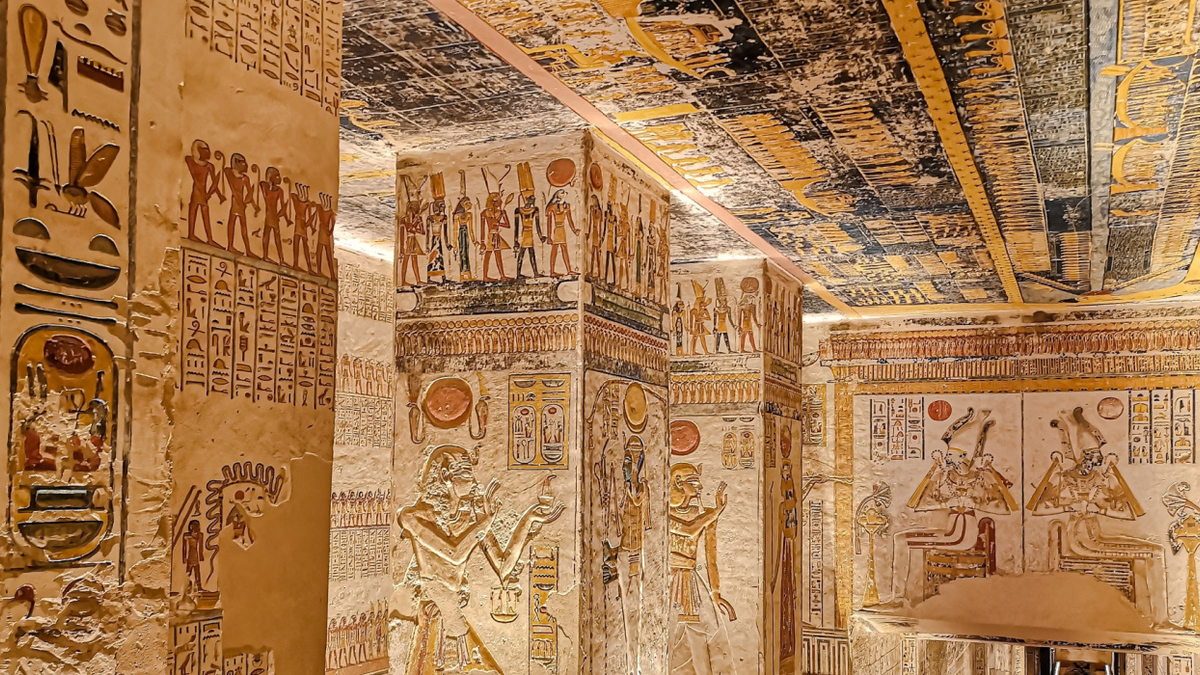
Its walls and ceilings are covered with vivid paintings of deities, protective spells, and astronomical texts, including a magnificent depiction of the sky goddess Nut arching over the burial chamber.
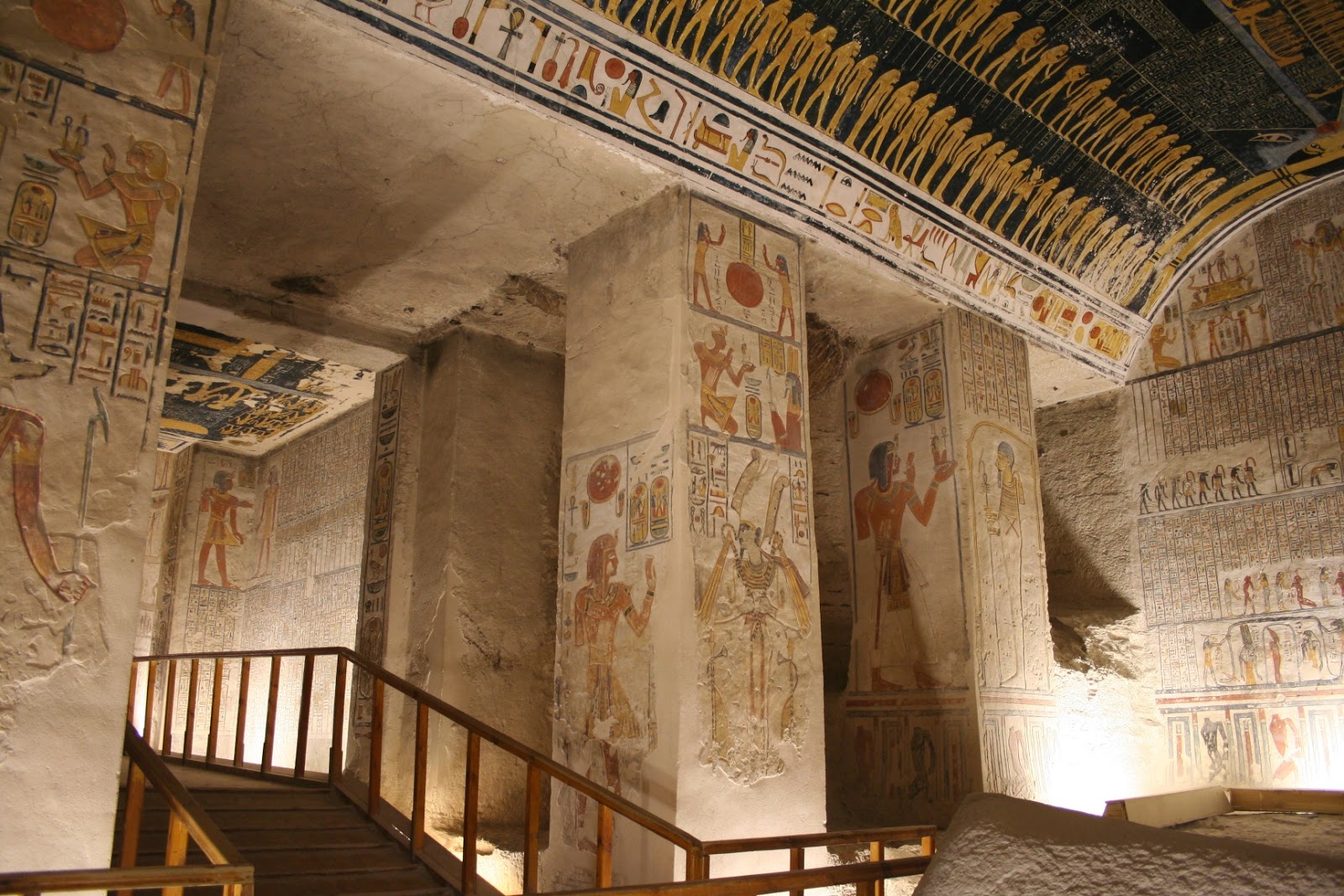
The tomb’s grand hall, with its well-preserved colors and intricate iconography, showcases the height of 20th Dynasty artistry. Although the burial was looted in antiquity, the structure remains an extraordinary testament to Egyptian funerary beliefs and the enduring legacy of Ramesses VI.