Mama Wulu
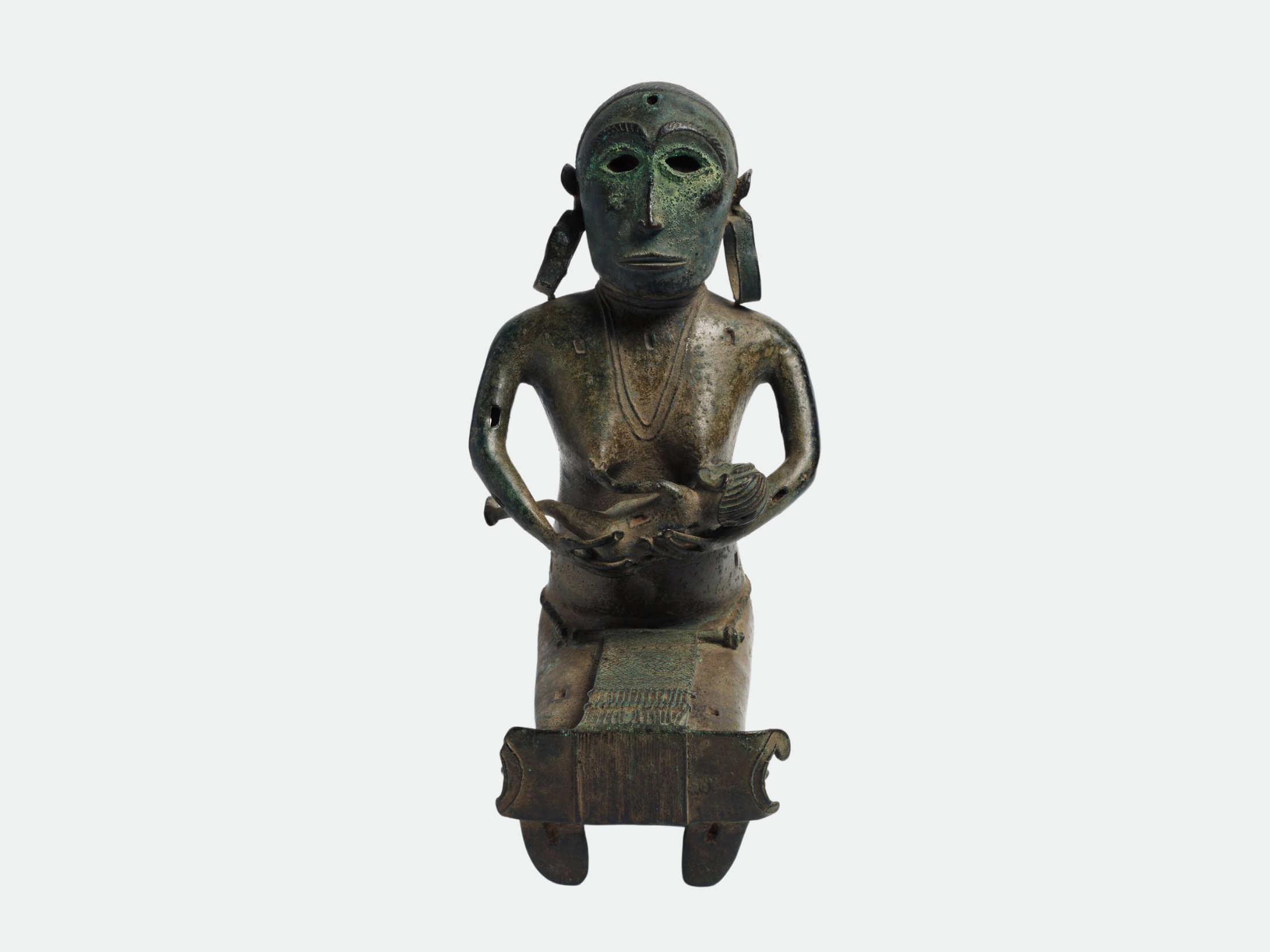
“Mama Wulu,” or the Bronze Weaver, depicting a breastfeeding woman seated at a loom. Originating from Flores, Indonesia, and dating to 556–596 AD, this exquisite bronze highlights both maternal life and the artistry of early Indonesian metalwork.
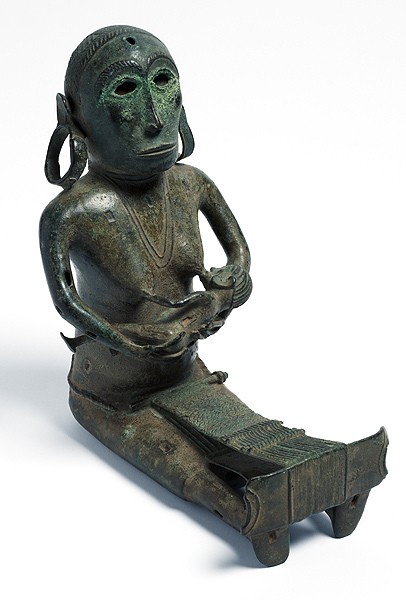
Mama Wulu — also known as “the Bronze Weaver” — is a small but remarkable bronze statuette from 6th-century Indonesia, dated roughly between 556 and 596 AD. The figure shows a mother breastfeeding her child while seated at a traditional loom — weaving cloth even as she tends to her baby.
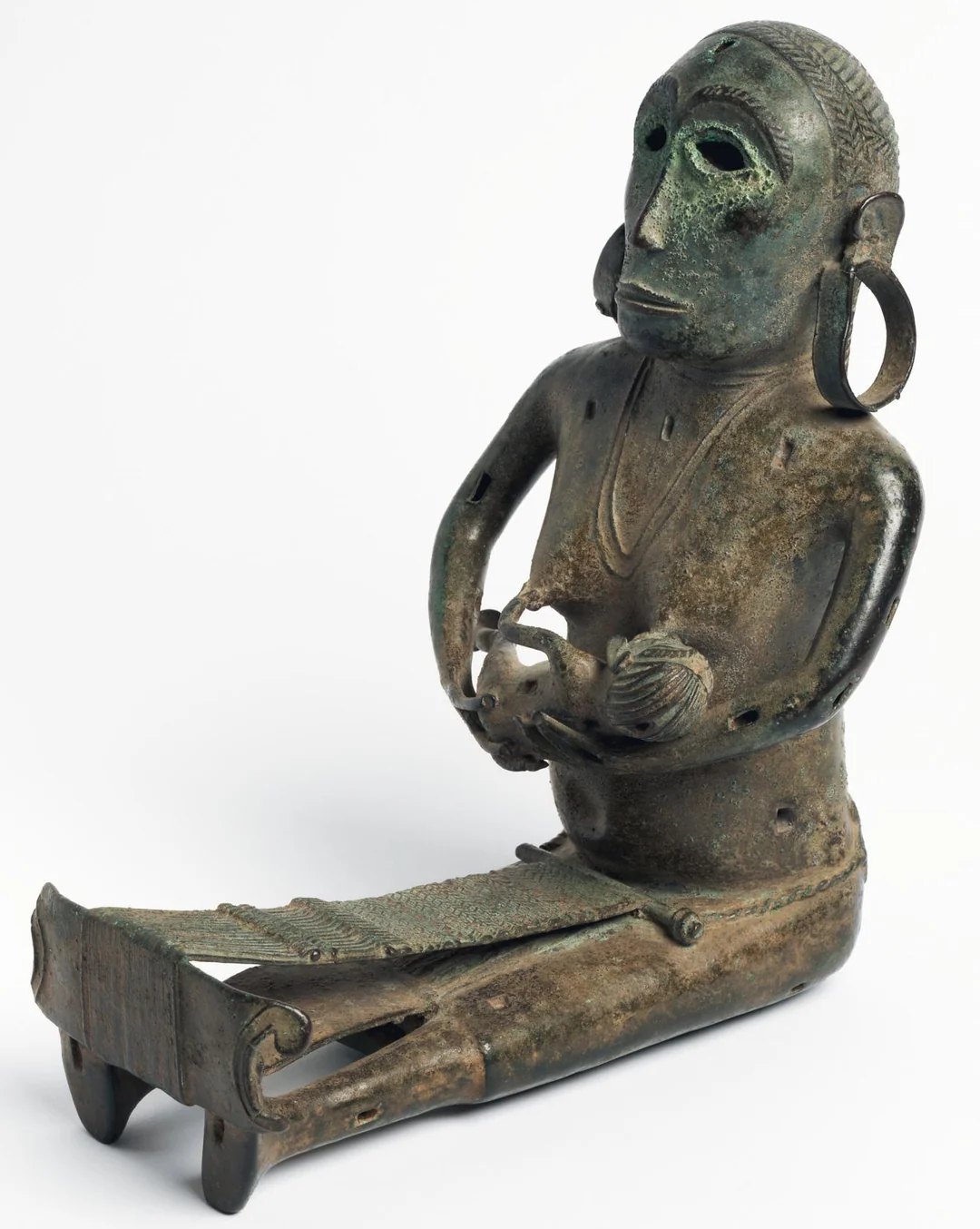
The sculpture is significant because it captures a vivid scene of daily life — weaving and motherhood — and offers insight into early Southeast Asian craftsmanship in textiles and domestic life. Because it was cast in bronze with realistic details and shows textile-weaving techniques, many scholars regard Mama Wulu as an important “masterpiece” of Indonesian art from the late Bronze Age.
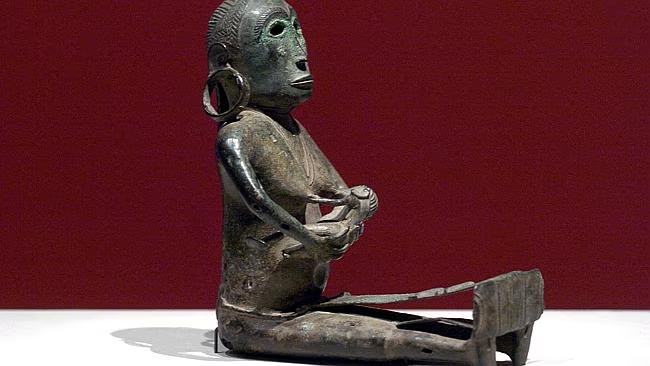
Although the statuette is believed to originate from the island of Flores in Indonesia, some research suggests that the style of the foot-loom depicted may point to influences from other Austronesian-speaking regions.