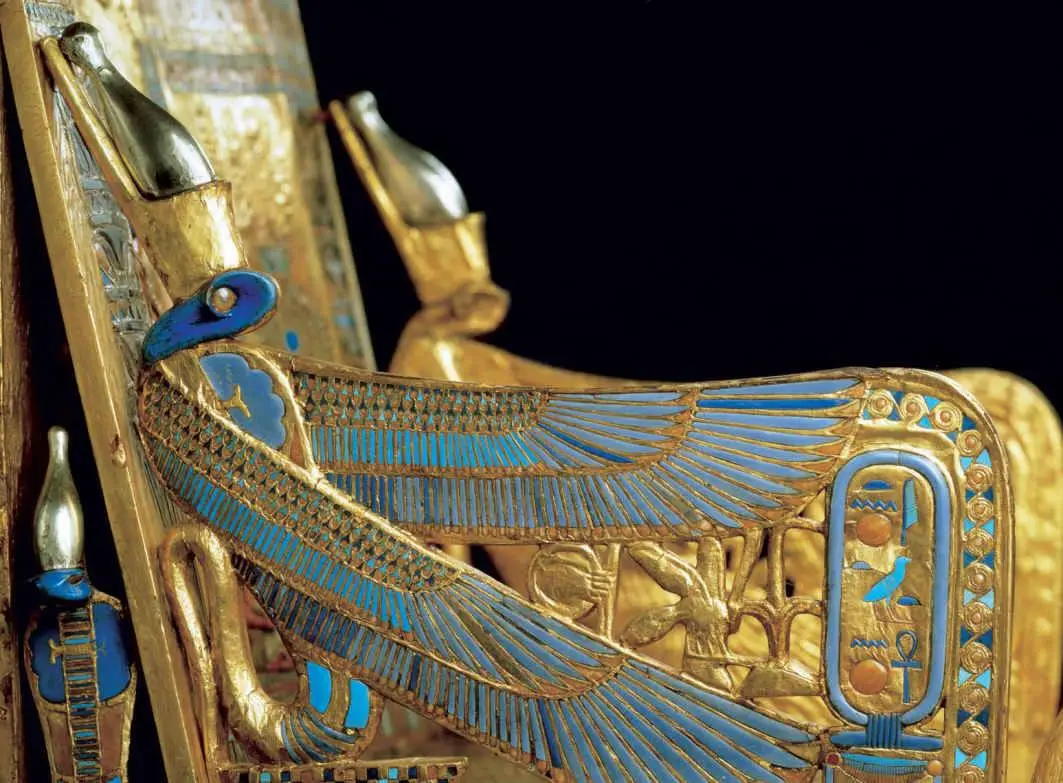
Detail of the Golden Throne of Tutankhamun
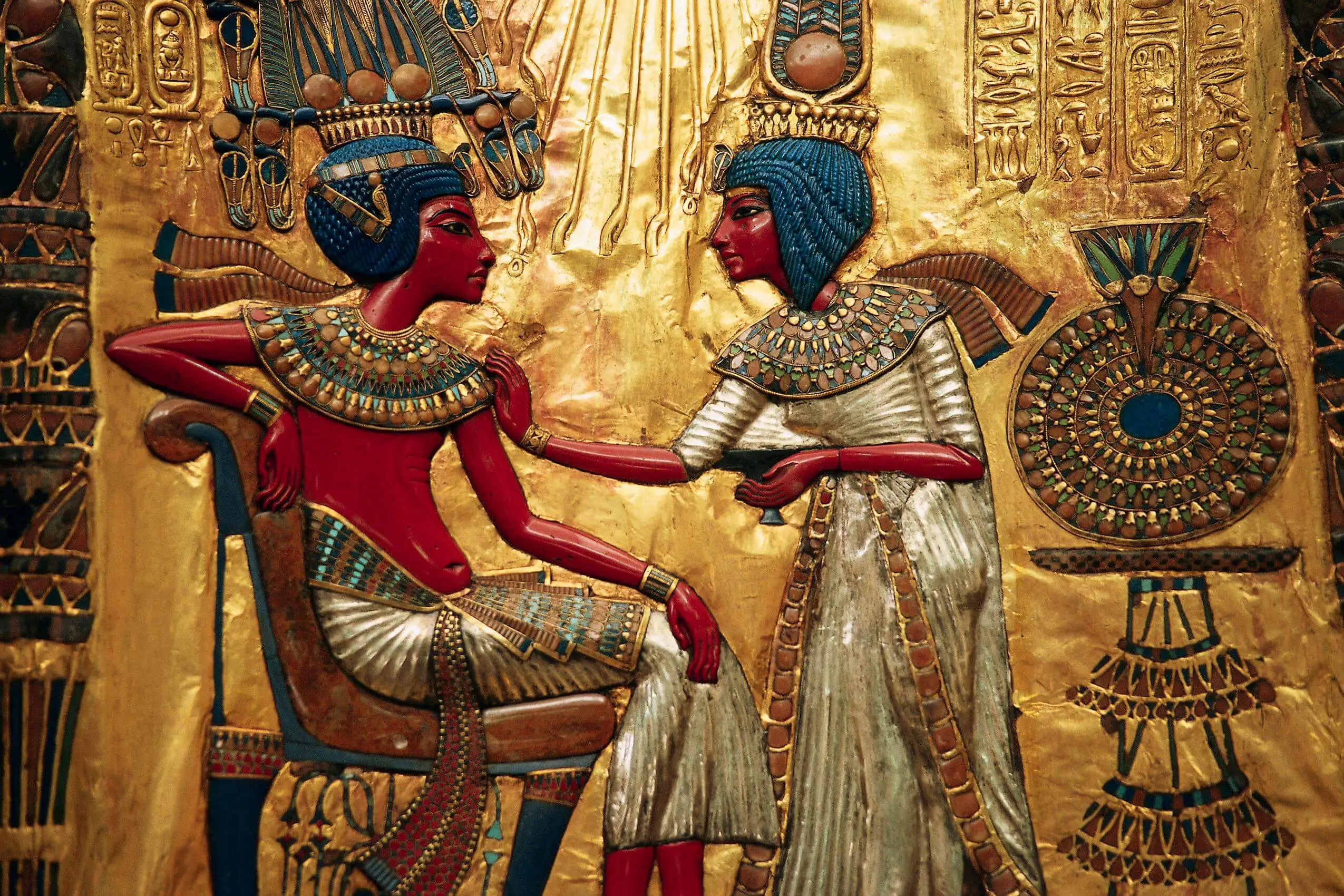
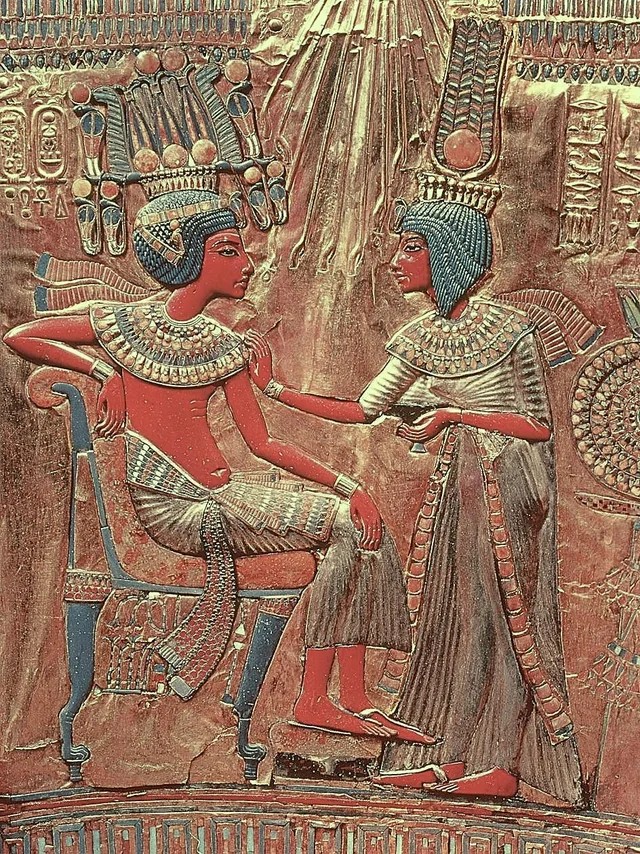
The golden throne of Tutankhamun is a truly exceptional work of art and is regarded as one of the most important and best-preserved pieces of furniture from ancient Egypt. Its colors have remained vibrant for more than three thousand years, a testament to the remarkable skill of Egyptian craftsmen.
This opulent armchair stands out for its technical complexity and abundance of intricate details. Two projecting lion heads guard the front of the seat, while the armrests take the form of winged uraei—rearing cobras crowned with the double Pschent of Egypt—protecting the king’s cartouches.
The throne was discovered in 1922 by the British archaeologist Howard Carter. It was found beneath a hippopotamus-shaped funerary bed in the antechamber of Tutankhamun’s tomb.
In Egyptian hieroglyphs, the throne is called Ist, after the mother goddess Isis, who was commonly depicted with a throne atop her head as her emblem. The piece is constructed from wood, overlaid with gold and silver, and adorned with semi-precious stones and colored glass.
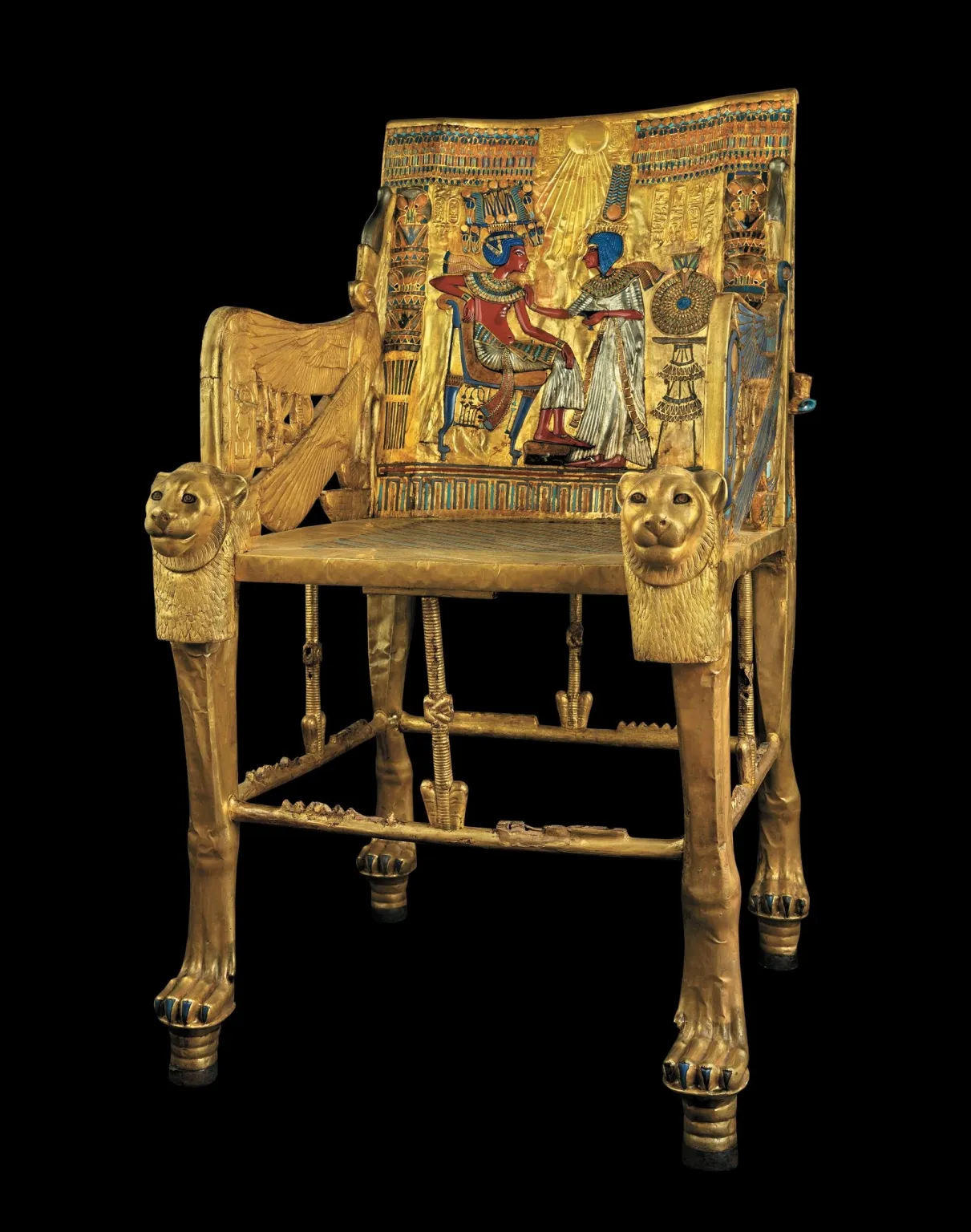
The throne symbolized not only the connection between the realms of gods and humans but also conveyed ideas of majesty, stability, protection, and cosmic balance. Since pharaohs were seen as gods on earth, it is easy to imagine the young Tutankhamun asserting his divine authority while seated upon this magnificent golden throne.
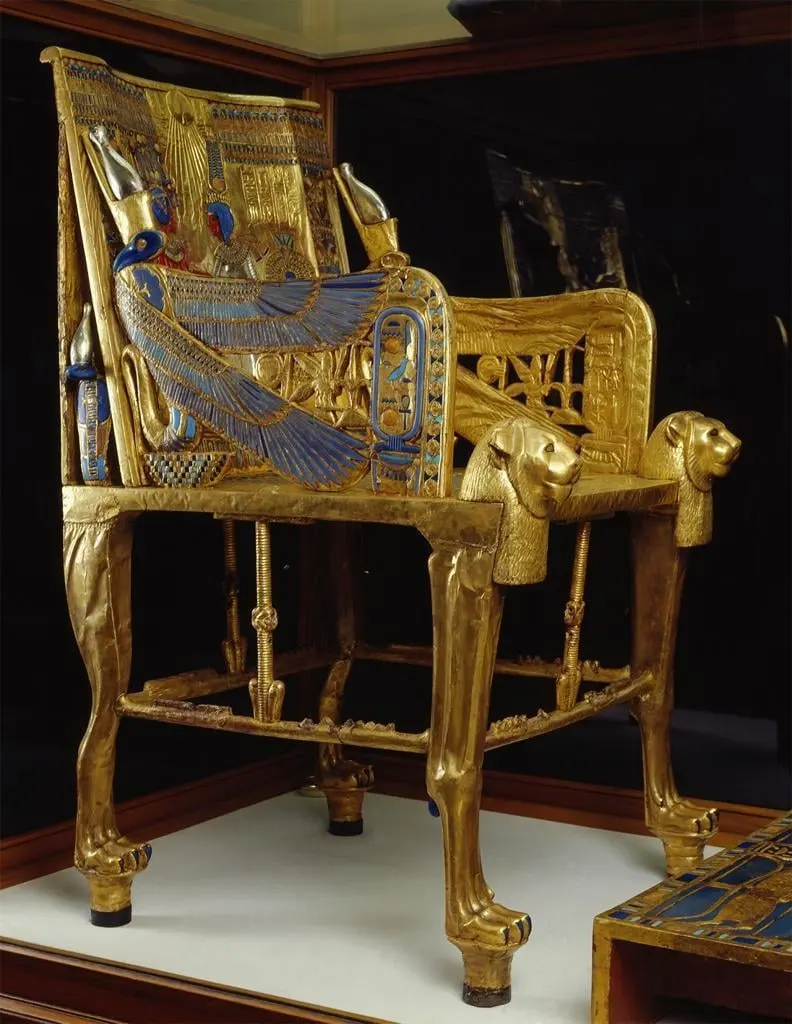
New Kingdom, late 18th Dynasty, reign of Tutankhamun, ca. 1332–1323 BC. From the Tomb of Tutankhamun (KV62), Valley of the Kings, West Thebes. Now in the Egyptian Museum, Cairo.