Statue of Akhenaten and Nefertiti
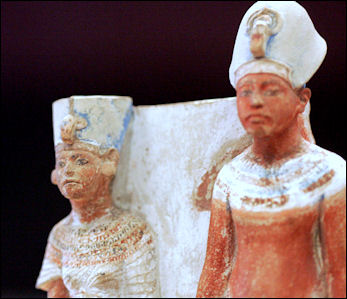
Statue of Akhenaten and Nefertiti
Date: 1353–1337 B.C.
Discovery Place: Tell el-Amarna, Egypt
Current Location: Musée du Louvre, Paris
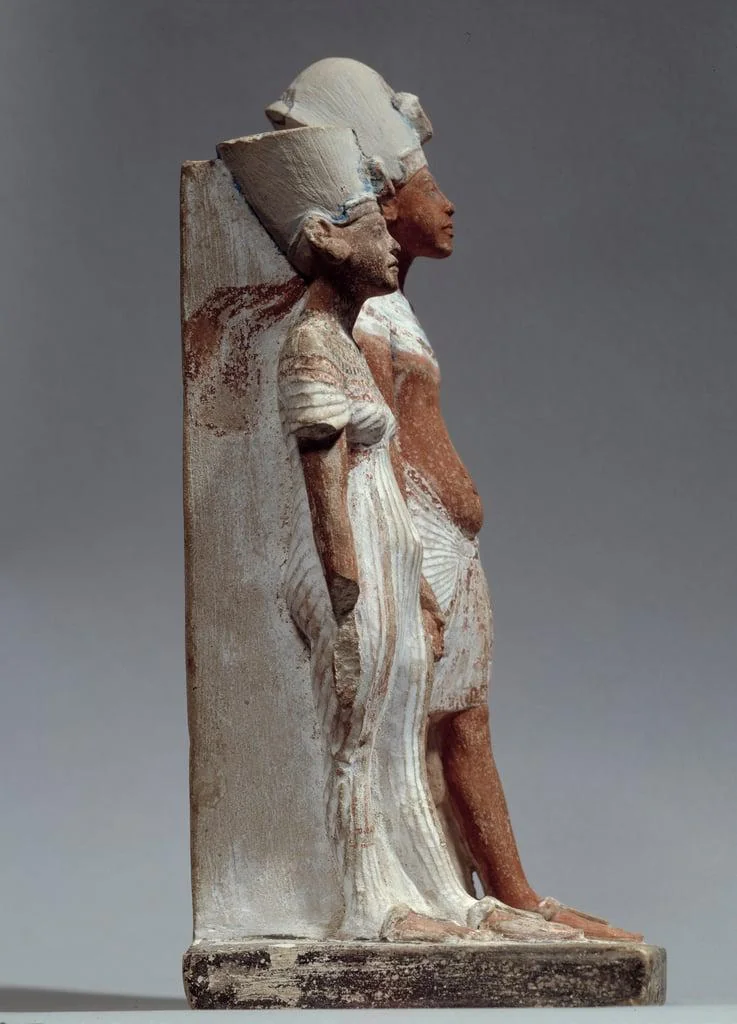
This statue depicts King Akhenaten and his Great Royal Wife Nefertiti, highlighting their close partnership and the distinctive Amarna artistic style
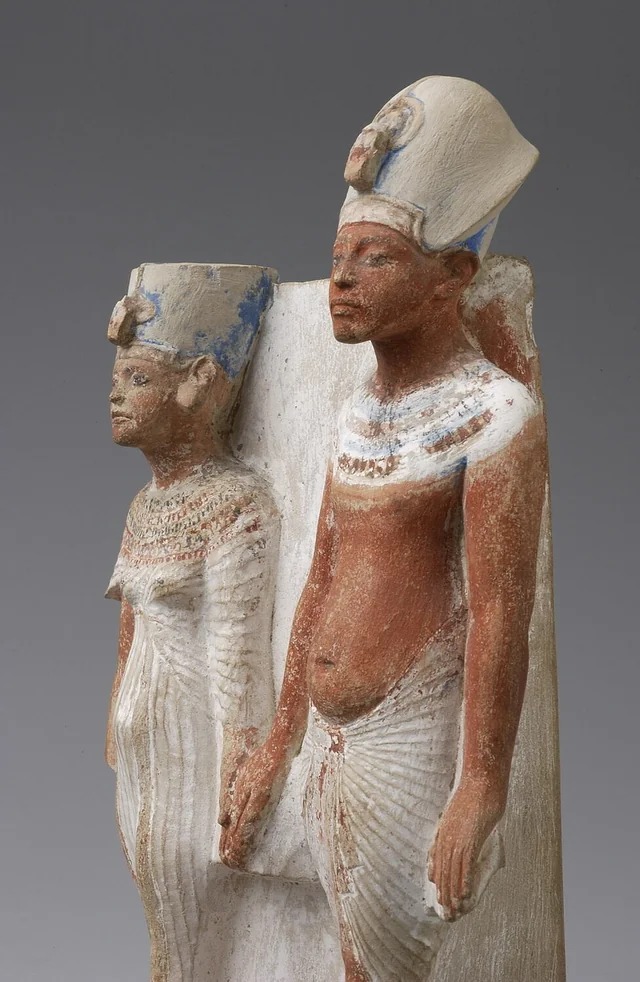
This small painted votive statue portrays King Akhenaten together with his Great Royal Wife, Nefertiti. The royal couple is shown hand in hand—a notably unusual gesture for New Kingdom art—as though advancing forward side by side.
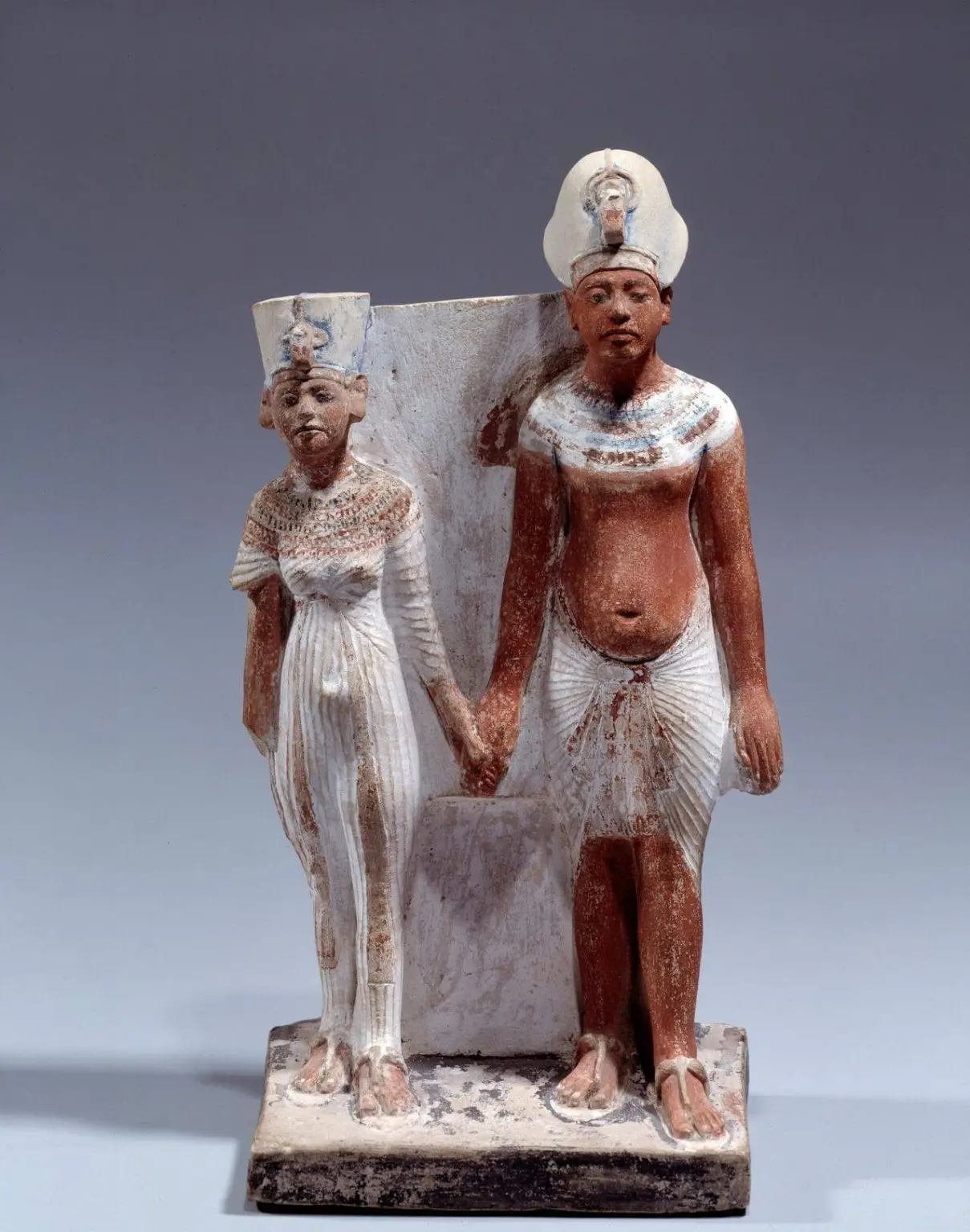
They stand at a slight distance from one another, rigid and upright, gazing straight ahead without the faintest hint of a smile. Both wear garments of exceptionally fine, close-pleated linen and broad collars around their shoulders. As in most official representations, the king appears in the Blue Khepresh Crown, while the queen wears her characteristic tall, flat-topped headdress.
Within Akhenaten’s religious ideology, the traditional Egyptian pantheon was overshadowed by the singular radiance of the Aten. Yet this solar deity was envisioned as distant and transcendent, its rays extending downward to illuminate the world. To bridge the divide between the celestial Aten and humanity, Akhenaten and his family—especially Nefertiti and their daughters—were depicted as the sole intermediaries, the only mortals privileged to receive Aten’s divine favor. In temple and household scenes, they are shown receiving the sun’s life-giving beams, often represented as rays ending in tiny hands offering ankhs, symbols of breath and vitality.