Max’s Hidden Heart Battle: The Defect Almost Too Late to See
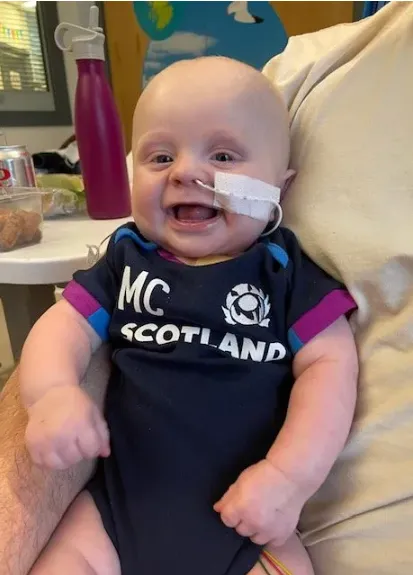
When Angela delivered her baby boy on October 3, 2021, she felt nothing but joy. After a long labor, Max was finally in her arms — tiny, warm, perfect. Like most parents, she believed the hardest part was over. They took him home full of dreams, certainty, and hope that life was just beginning.
For the first few weeks, everything seemed normal. Max fed well, slept peacefully, and showed no alarming signs. But life often hides its sharpest edges behind quiet beginnings.
A Subtle Warning
It started with one small observation. Max’s granny noticed his breathing sounded slightly “off.” Nothing dramatic. Nothing urgent. Just… different. Angela mentioned it casually to their health visitor, expecting reassurance. But the visitor acted immediately. The GP was called, and by that same day, Max’s oxygen levels read 97%. Not terrible, but not perfect. The doctor decided more tests were needed.
Initially, everyone thought it was a simple chest infection — pneumonia, something treatable. Then came the heart scan.
The consultant’s expression changed instantly, the kind of look parents recognize before a word is spoken. Max had a large ventricular septal defect (VSD) — a hole in his heart so significant that he would need open-heart surgery as soon as possible. Angela felt the floor fall away beneath her. In an instant, joy became fear.
Waiting, Fear, and Cancellations
The weeks that followed were brutal. Surgery dates were scheduled, then canceled — three times. Each cancellation tightened the emotional rope they were already hanging from. Anxiety, fear, and helplessness dominated every moment.
Finally, at the end of January 2022, Max was admitted. Surgery day — Angela calls it the worst day of her life — began with watching doctors put Max under anesthesia. Then came the impossible part: waiting while strangers operated on her baby’s heart.
No parent is built for this kind of waiting. Hours passed. Silence stretched endlessly. And then, a phone call shattered her peace: something had gone wrong.
The Emergency
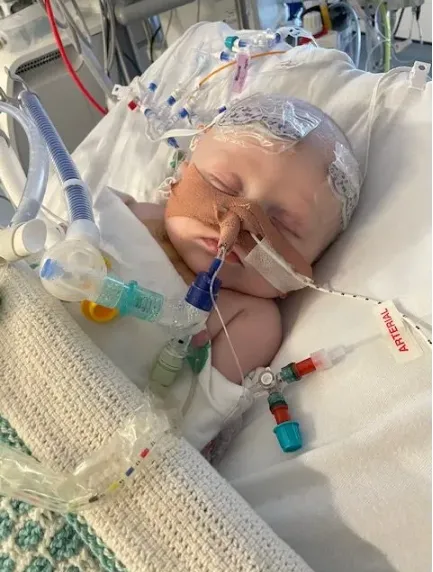
The surgeon explained that Max’s heart orientation was unusual. While patching the hole, an artery had been damaged. Emergency teams mobilized instantly. Chaos unfolded behind the scenes — the type of chaos parents never fully hear about until later.
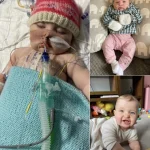
Max spent ten days in the Pediatric Intensive Care Unit. Twice, he went into peri-arrest. Twice, they prepared for ECMO, a machine used when the heart or lungs can no longer function alone. Each moment was a tightrope walk between life and death.
A nurse stayed by Angela’s side during those nights, becoming her anchor. She reminded her to watch the monitors — to focus on the numbers, signs that Max was still fighting, still here. Those tiny numbers became Angela’s lifeline.
Recovery and Hope
Because of the damaged artery, Max’s left ventricle began to enlarge. Doctors had to reopen his chest to relieve the pressure. Seeing your baby’s chest opened once is traumatic. Seeing it happen again pushes a parent beyond fear, leaving survival as the only prayer.
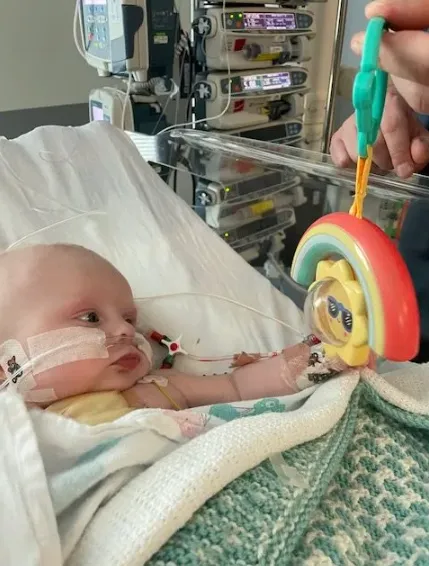
Days later, the ventricle reduced. His chest was closed. An impossible victory. Three more weeks in the cardiology ward followed — alarms, waiting, tiny improvements, setbacks that crushed hope before giving it back. Finally, Max stabilized enough to go home.
Life After the ICU
Now two and a half, Max still takes daily medication to support his heart function. He takes his “medies” five times a day, as casually as other children take vitamins. He is active, joyful, and energetic — a boy who lives loudly despite everything his body has endured.
Even more remarkable, his surgeon plans to write a medical paper on Max’s rare heart orientation — a condition so unusual it may help future children survive what Max barely did. In his struggle, Max is already changing the world.
Lessons in Attention and Love
Angela still shudders at how close they came to losing him — the nights in PICU, the alarms, the moments when his tiny life hung by invisible threads. Yet she remembers every hand that helped hold her up: every nurse, surgeon, and technician who refused to give up on her son.
Max’s survival is a story of timing, intuition, persistence, and medical brilliance. One grandmother’s quiet observation, one mother’s mention, one health visitor’s swift action — all combined to save a life.
Max Today
Max runs, climbs, and laughs with abandon. No one would guess that inside his chest is a patched heart, that his ventricle once swelled dangerously, that machines once kept him alive. His story is not just survival — it is a testament to vigilance, quick action, and the life-saving power of listening.
His parents hope that other families take note: sometimes, it’s the smallest sounds, the faintest signs, the moments of intuition that save lives.
Max’s energy, joy, and bravery prove that little warriors come in tiny bodies — but with a strength that can fill the world.