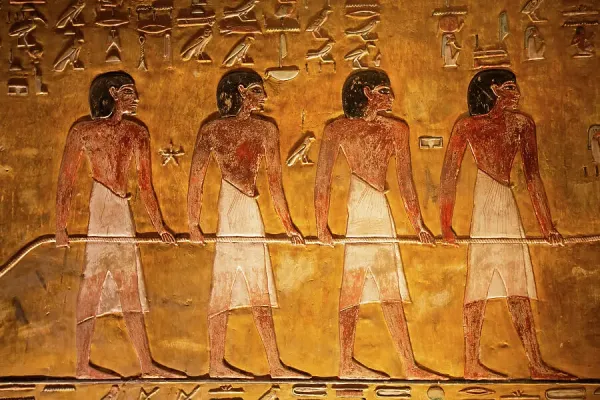
Relief from KV 17, Tomb of Seti I
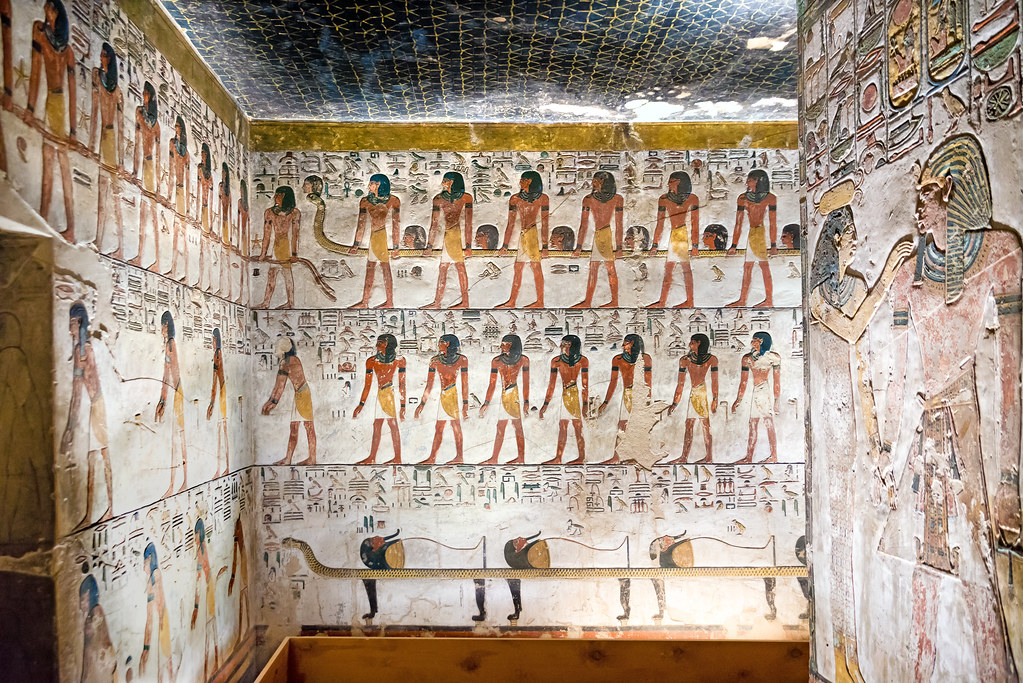
This relief fragment from KV 17 shows a detailed depiction of the Iunmutef priest, a ritual officiant closely associated with funerary rites and the cult of Osiris.
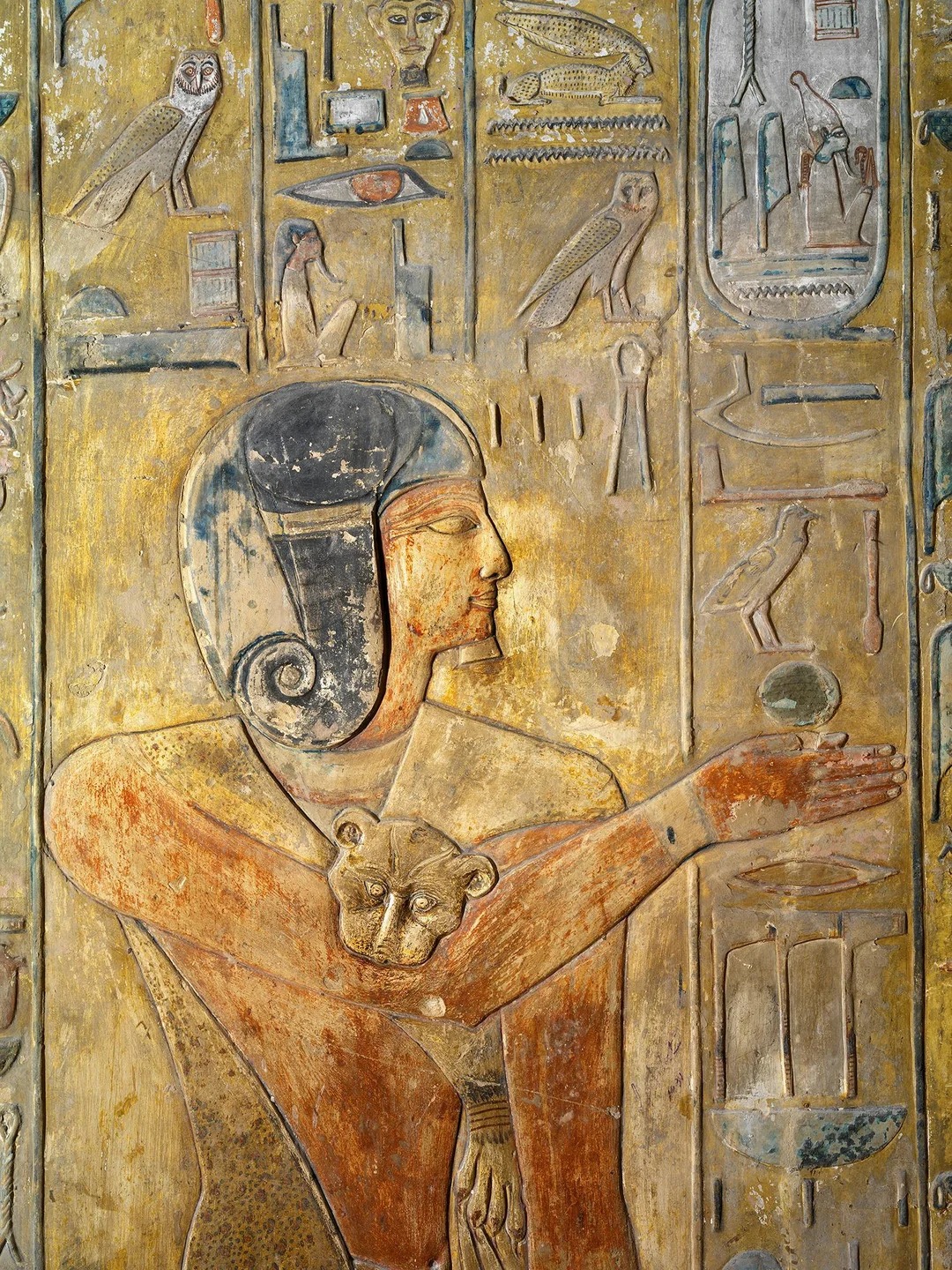
Seti I—who died in 1279 BC—was a king of the 19th Dynasty (1292–1190 BC) and reigned from 1290 to 1279 BC

The Tomb of Seti I, located in the Valley of the Kings on the west bank of the Nile at Luxor, is one of the largest and most beautifully decorated royal tombs of ancient Egypt. Built for Pharaoh Seti I of the Nineteenth Dynasty, the tomb extends deep into the limestone cliffs with a series of corridors and chambers richly adorned with vibrant reliefs.
Its walls are covered with detailed scenes from funerary texts such as the Book of the Dead, the Amduat, and the Book of Gates, designed to guide the king through the afterlife.
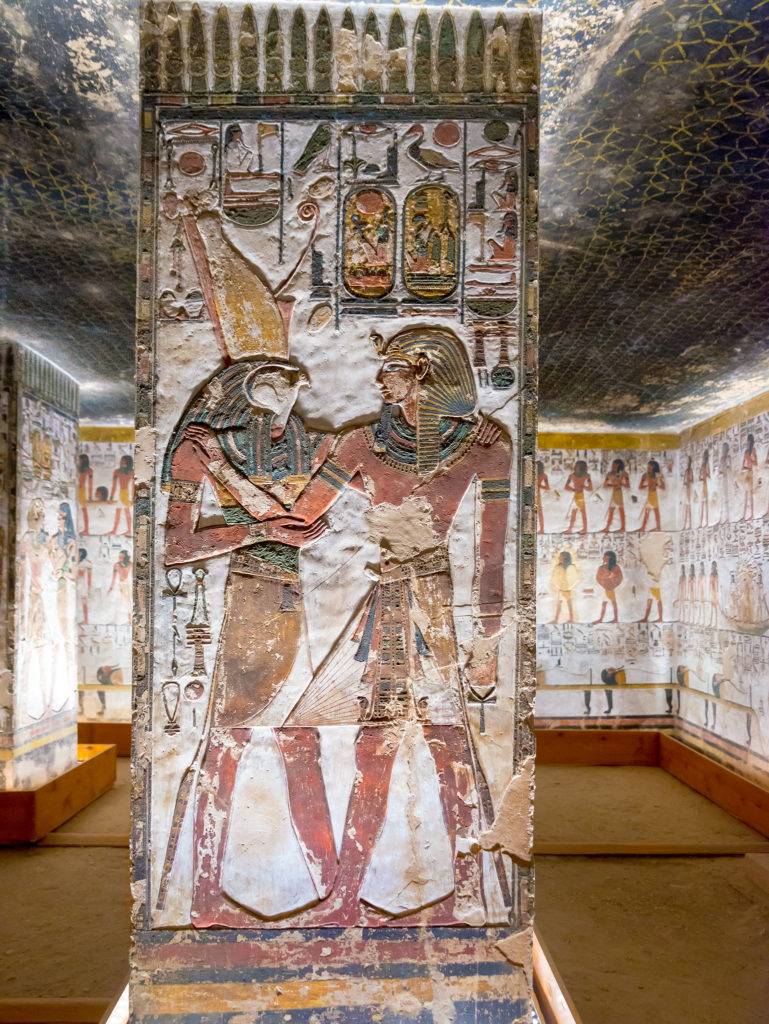
Discovered in 1817 by the explorer Giovanni Battista Belzoni, the tomb is renowned for its exceptional craftsmanship and well-preserved colors, reflecting the high artistic standards of Seti I’s reign. Today, it remains a masterpiece of New Kingdom royal architecture and religious symbolism.