Charlie’s Heart: How One Toddler Survived a Hidden Heart Defect Against All Odds
Charlie was born in February 2020, after a 15-day wait that felt endless to his parents.
When he finally arrived—tiny, delicate, and weighing 7lbs 2oz—there was overwhelming relief. After weeks of anticipation, Charlie was here. He looked perfect. Healthy. Whole.
For a brief moment, everything felt right.
But motherhood has a way of sharpening instincts, and from the very beginning, Charlie’s mum, Beccy, sensed something wasn’t quite right.
The First Quiet Warnings
Feeding was hard from day one.
Charlie struggled to latch while breastfeeding. Formula helped a little, but every feed felt like a battle. He tired easily. What should have been simple moments became exhausting routines.
At his eight-week check, doctors were pleased. Charlie met the expected benchmarks.
But Beccy noticed something others brushed off.
Charlie sweated constantly. Even the smallest movement left him drenched. His clothes were often soaked through, his hair damp against his scalp.
She mentioned it. Reassurance followed.
By six months, weaning began. Charlie showed little interest in food or milk. He ate slowly, often refusing feeds altogether. Weight gain was minimal.
Still, appointments continued. Charts were checked. Charlie learned to sit. Then crawl. Developmental milestones offered reassurance—on paper.
Yet Beccy’s unease never left.
When Illness Became the Norm
Everything escalated once Charlie started nursery.
Exposed to new germs, he caught virus after virus. Coughs lingered. Fevers returned again and again. COVID tests became routine.
Vomiting followed.
Doctors suggested reflux. Medication was prescribed, but it didn’t help. Charlie continued to lose weight. His energy faded.
Beccy returned to the GP repeatedly.
Each visit ended the same way—with reassurance, suggestions of anxiety, or assumptions that Charlie was simply a “poor eater.”
She was dismissed.
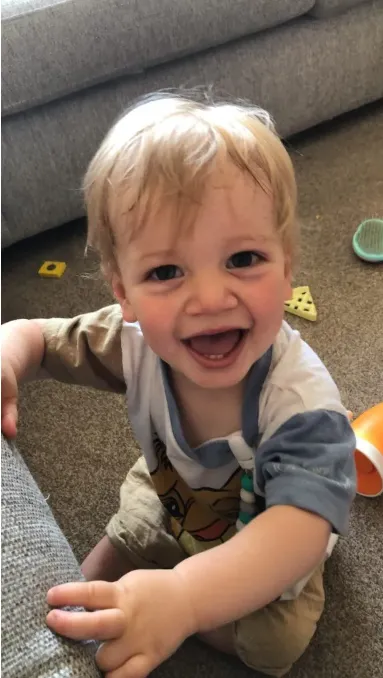
By 17 months, Charlie was visibly struggling. He barely walked. His energy was gone. Vomiting was frequent. His small body looked exhausted.
Something was very wrong.
The Doctor Who Finally Listened
Then came one appointment that changed everything.
A new GP asked one simple question:
“How long have you been worried?”
Beccy’s voice broke.
“Since birth.”
That was all it took.
Charlie was referred immediately to paediatrics.
But even then, time dragged on. Two months passed. Charlie’s weight continued to drop. His symptoms intensified—fussiness, fatigue, breathlessness.
Just weeks before the paediatric appointment, Beccy feared she was running out of time.
The Diagnosis No Parent Expects
At 19 months, a paediatrician finally saw what others had missed.
She listened carefully as Beccy read from the notes she had kept—every symptom, every concern, every dismissal.
Charlie appeared breathless. His energy was low. A heart murmur was detected.
Tests were ordered immediately.
An ECG. A chest X-ray.
Then came the echocardiogram.
Beccy knew before the words were spoken.
Charlie had complete atrioventricular septal defect (AVSD)—a serious congenital heart defect that had gone undetected since birth.
His tiny heart was failing.
Medication for heart failure began straight away.
Shock turned into guilt. Questions flooded Beccy’s mind. How had this been missed? Why hadn’t she pushed harder? How long had Charlie been suffering in silence?
There was no time to dwell.
Charlie needed open-heart surgery—urgently.
A Fight for His Life
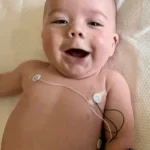
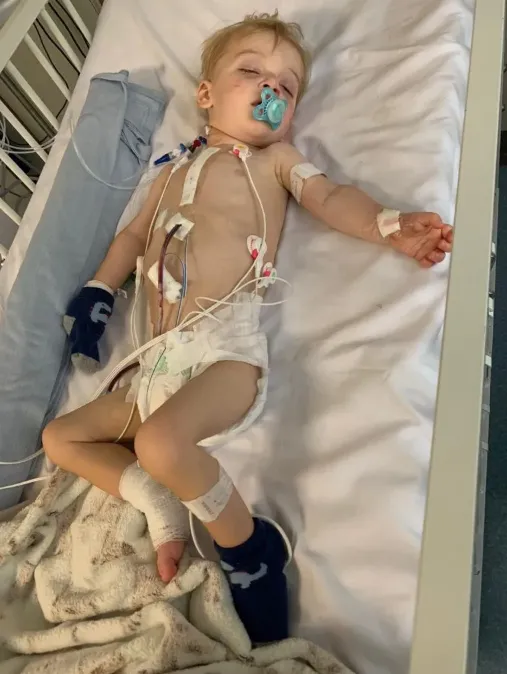
The family was transferred to a specialist cardiac unit. Charlie was admitted to HDU, surrounded by monitors and machines.
Every beep felt like a warning. Every pause felt unbearable.
Two days later, surgery began.
Handing Charlie over to the surgical team was the hardest thing his parents had ever done. His heart would be stopped. His chest opened. His future placed in the hands of strangers.
But Charlie had already proven something important.
He was a fighter.
Inside the operating theatre, surgeons worked for hours—repairing the defect, closing the septal opening, stabilizing his valves.
Outside, time stood still.
The Long Road Back
Charlie’s recovery was far from straightforward.
There were setbacks. His medications needed constant adjustment. Every small dip sent waves of fear through his parents.
Nurses and doctors watched him tirelessly.
After nine long days, his chest was finally closed. The pacing wires were removed. Extubation was successful.
Then came the moment Beccy had dreamed of—holding her son again.
Tiny hands curled into hers. Bottles were offered. Nappies changed. Charlie wore his own clothes for the first time in weeks.
Soon after, the team delivered the words they had hoped for: Charlie no longer needed intensive care.
Five days later, they went home.
A Superhero Scar and a Second Chance
Charlie’s scar became known as his “superhero scar”—a symbol of everything he had survived.
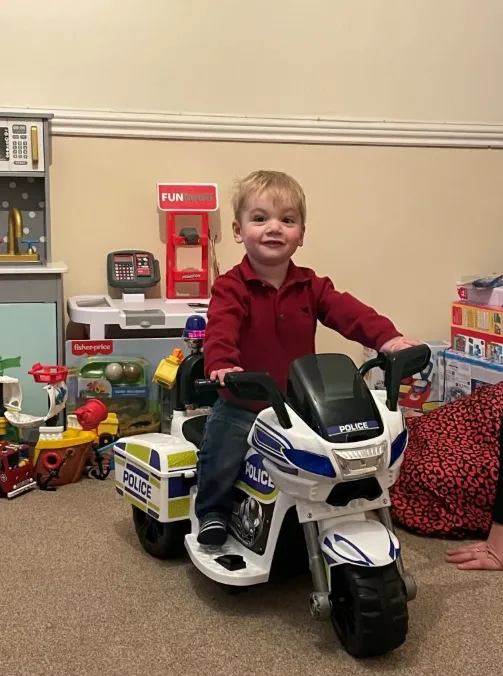
He grew stronger. Louder. Faster.
Running. Playing. Laughing.
His big sister proudly called him the strongest superhero she knew.
Yet the journey isn’t over. Charlie will need ongoing care. Medication remains part of daily life. Further surgery may be needed in the future.
But every milestone is celebrated.
Every ordinary day feels extraordinary.
A Message That Matters
Looking back, Beccy knows that earlier diagnosis could have spared Charlie months of struggle.
But his story highlights something vital: parental advocacy saves lives.
Charlie’s journey also underscores the importance of awareness initiatives like Tiny Tickers’ Think HEART campaign, which teaches parents and professionals to recognize the subtle signs of congenital heart defects.
Because sometimes, the signs are quiet.
And sometimes, listening sooner makes all the difference.
Charlie’s heart once carried a hidden secret. Today, it carries strength, resilience, and hope.
And his story stands as a reminder to every parent:
trust your instincts, speak up, and never stop asking questions.