Tyler — The Toddler Who Faced Cancer on His Second Birthday and Learned How to Live Anyway
It started as one of those moments parents replay in their minds forever.
Sara was watching her toddler, Tyler, bounce happily on the bed when she noticed something that didn’t belong. On his small back was a lump, no bigger than a coin. It didn’t seem to hurt him, but it stopped her heart.
At first, she tried to reason with herself. Children get bumps all the time. Scratches, bruises, unexplained marks — they’re part of growing up. But this felt different.
A mother’s instinct doesn’t shout.
It tightens quietly in the chest.
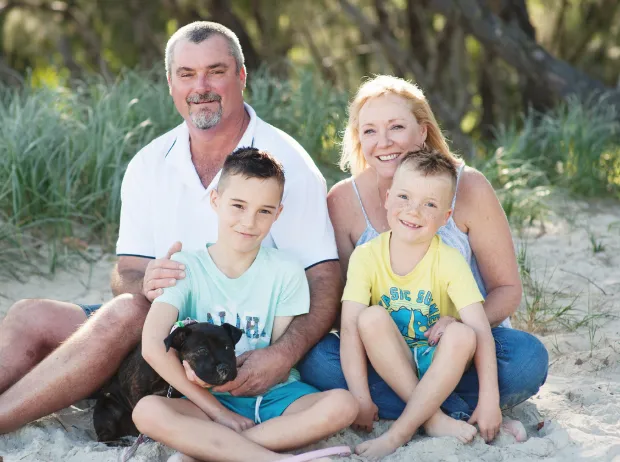
Sara showed the lump to her husband, Craig. Neither of them said much, but both felt the same fear settle in. Life had been busy but good. They were raising two young boys in Cairns, balancing work, routines, and the beautiful chaos of family life.
Tyler was still so small. He loved movement, laughter, and throwing himself into joy without hesitation.
The decision to get him checked came quickly. Fear doesn’t wait for permission.
A Diagnosis That Changed Everything
Craig stayed home with their older son, Caleb, while Sara boarded a plane to Brisbane with Tyler in her arms. Hospitals have a way of shrinking the world. Everything outside fades as corridors, machines, and waiting rooms take over.
Scan followed scan. Blood tests. Imaging. Quiet conversations between doctors just out of earshot.
Sara watched Tyler play with toys in sterile rooms, smiling at him while her hands trembled. Days blurred together. Each time a doctor entered the room, her chest tightened.
Then the words came — delivered gently, but with no way to soften their weight.
Rhabdomyosarcoma. Cancer.
It was Tyler’s second birthday.
There was no cake in that moment. No balloons. No candles. Cancer does not care about milestones or how small a body is.
Doctors explained that treatment needed to begin immediately. Time was no longer measured in weeks or months, but in urgency. Sara listened, nodded, and absorbed almost nothing. Her mind clung to one thought only: keep him alive.
The very next day, Tyler started chemotherapy.
Childhood Inside Hospital Walls
Chemotherapy doesn’t explain itself to children. It simply arrives and stays.
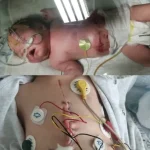
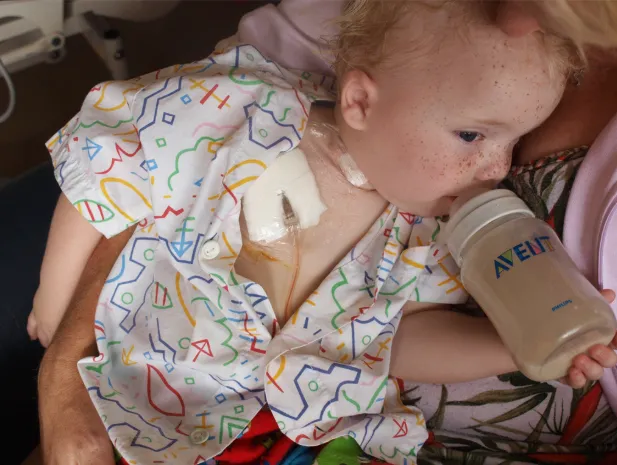
Sara watched nurses connect tubes to her son’s tiny body. Machines hummed where lullabies should have been. Tyler cried some days. Other days, he stared quietly, as if trying to understand why his world had changed.
Flights to Brisbane became routine. Suitcases lived permanently by hospital beds. Sara existed between hospital walls and waiting rooms. Craig lived between work, distance, and the ache of being apart.
Their family was separated by necessity, but love stretched across miles and held on anyway.
Chemotherapy was aggressive. It attacked the cancer without mercy, and Tyler’s body felt every blow. His appetite disappeared. His energy faded. Some days he slept more than he played. Other days, he fought sleep as if refusing to let cancer take anything else.
Sara learned to celebrate the smallest victories — a few bites of food, a laugh, a quiet afternoon without pain.
Living Through Treatment
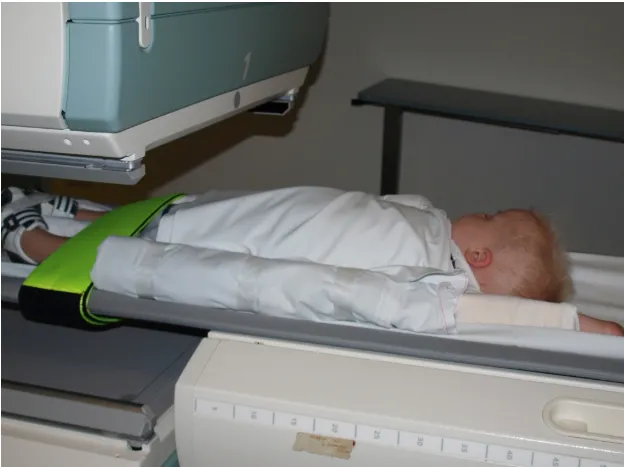
After chemotherapy came radiation. Six long weeks of targeted treatment meant to shrink the tumor further. Radiation required precision and stillness — things toddlers are not built for.
Sara held Tyler before every session, whispering reassurance he couldn’t fully understand. The smell of hospitals became familiar. Appointment schedules shaped their lives.
Doctors spoke about survival rates and treatment plans. Sara focused on mornings, afternoons, and nights. Thinking too far ahead hurt too much.
Side effects arrived quietly and stayed loudly — vomiting, weakness, exhaustion. Doctors warned that childhood cancer survivors often live with lifelong consequences: infertility, heart complications, hearing loss, even secondary cancers.
Fear for the future lived beside gratitude for the present. Sara learned to live one day at a time because anything else felt unbearable.
Eleven months passed. Eleven months of treatment, vigilance, and strength Tyler never asked to carry.
Maintenance chemotherapy followed. The goal was simple: make sure the cancer never came back. Every scan brought anxiety. Every clear result brought cautious relief. “Good news” never felt permanent anymore. It always came with an invisible asterisk.
Life After Cancer
Eventually, treatment ended — not with celebration, but with exhaustion and fragile hope. Life didn’t snap back to normal. Recovery was slow.
Tyler grew stronger piece by piece. Muscles remembered movement. Energy returned in fragments. One day, he rode a bike again. Another day, he swam.
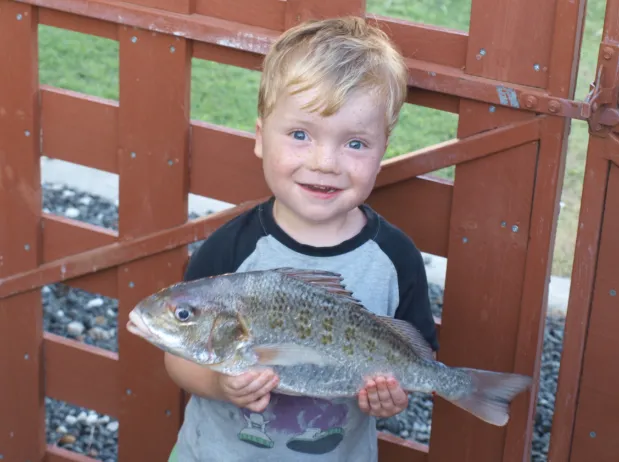
Fishing became his favorite activity, though he never caught anything. Excitement always made him pull the line back too soon. It didn’t matter. Joy had returned.
He helped collect eggs from the family’s chickens. Simple routines felt miraculous.
Seven years passed from his final day of treatment. Seven quiet years without relapse. Cancer didn’t disappear from memory — it simply loosened its grip on daily life.
Sara still remembered every hospital corridor, every long night, every fear she swallowed. Some scars remained invisible. The body healed faster than the heart.
Tyler grew into a boy full of curiosity and movement. Cancer did not define him. He didn’t remember all the pain — his family remembered enough for everyone.
What Survival Really Looks Like
Survival reshaped their lives. It clarified priorities and stripped away everything unnecessary. Sara learned that childhood cancer doesn’t end when treatment does. It lingers in anniversaries, scans, and quiet moments.
But it also leaves strength behind — strength earned the hardest way possible.
Tyler is not a miracle because he survived. He is a miracle because he lives fully.
His story is not about tragedy. It is about endurance. It is about a mother who noticed a small lump and trusted her fear. It is about a family that held together across distance and despair.
It is about a toddler who met cancer before he met memory — and learned, somehow, how to keep going.
Cancer tried to take his childhood. It failed.
Tyler’s life did not return to what it was before.
It became something stronger.
And that is what survival truly looks like.