Lily’s Journey: A Mother’s Story of Hope, Strength, and the Power of Early Detection
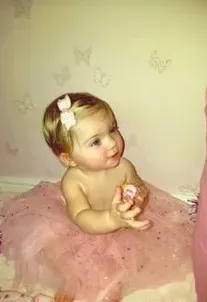
Some pregnancies follow the path you expect. Others quietly change everything.
For Katie and her partner, the news that they were expecting their second child in April 2015 was filled with joy. Their first child was thriving, the pregnancy seemed healthy, and there was no reason to believe that this journey would be anything other than routine.
But one scan—one moment—would alter the course of their lives forever.
This is Lily’s story. And it is a powerful reminder of why early detection saves lives.
A Routine Scan That Changed Everything
Katie’s pregnancy progressed normally until the 20-week anomaly scan, a milestone many parents look forward to with excitement. It was meant to be reassuring—a chance to see their baby growing strong.
Instead, it brought silence.
The sonographer noticed something unusual with the baby’s heart and referred the family to a consultant at their local hospital. Just two days later, their fears were confirmed: there was a moderate-sized hole in the heart, and a high probability of a genetic abnormality.
No parent is ever prepared for words like these.
At 22 weeks pregnant, Katie and her partner were offered an amniocentesis. After careful consideration, they chose a non-invasive alternative. While the results ruled out some genetic conditions, the uncertainty remained heavy and unrelenting.
Their next referral was to Birmingham Women’s Hospital, where specialists could take a closer look at their baby’s heart.
Katie hoped for clarity. What they received was devastating.
The Diagnosis: A Complex and Life-Threatening Condition
At Birmingham Women’s Hospital, detailed scans revealed that their unborn daughter had Double Outlet Right Ventricle (DORV)—a rare and complex congenital heart defect where both the aorta and pulmonary artery arise from the right ventricle instead of the left.
Alongside this, Lily had a large ventricular septal defect (VSD)—a significant hole in the heart.
The reality was brutal.
Doctors explained that Lily would require open-heart surgery between three and six months old just to survive. Even then, they could not guarantee whether her heart could be fully repaired. The severity of her condition meant that every option carried uncertainty.
For Katie, the days that followed were filled with fear, heartbreak, and relentless worry—but also resolve. She knew that the only way forward was to focus on one thing: giving Lily the best possible chance at life.
Lily’s Birth: Hope Wrapped in Fragility
On New Year’s Eve 2015, Lily entered the world.
She was perfect.
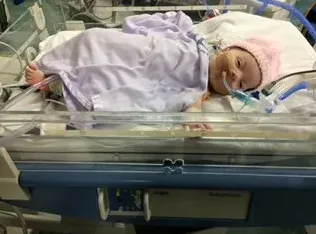
Despite everything the doctors had warned them about, Lily looked like any other newborn—tiny, beautiful, and full of promise. But the joy of her arrival was tempered by reality. Almost immediately, Lily was transferred to the Neonatal Intensive Care Unit (NICU) for close monitoring.
Those early days were agonizing.
Although Lily initially appeared stable, her condition remained fragile. Katie and her partner lived from update to update, holding onto hope while bracing themselves for the unknown. For a brief moment, it seemed possible that things might not be as severe as feared.
But that hope was short-lived.
When Hope Turned to Urgency
At a follow-up cardiology appointment, doctors discovered further complications. Lily’s heart was more complex than originally believed. Her mitral valve was compromised, and there were signs of ventricular disproportion, meaning her heart chambers were not developing evenly.
The news was devastating.
Doctors explained that a full repair might not be possible. Lily’s condition was now considered critical, and without intervention, her chances of survival were uncertain.
Soon after, Lily began to struggle. Feeding became exhausting. She was breathless, failed to gain weight, and gradually became weaker. When a health visitor noticed that Lily had dropped back to her birth weight, alarm bells rang.
Katie and her partner rushed Lily to Birmingham Children’s Hospital A&E.
There, Lily was diagnosed with heart failure.
The First Surgery: A Lifeline
Lily’s tiny heart was under immense strain. Oxygen-rich blood was overwhelming her lungs, causing fluid buildup and making it increasingly difficult for her to breathe.
Doctors made the decision to perform an emergency procedure: fitting a pulmonary artery band to reduce blood flow to her lungs. It was not a cure—but it was a lifeline.
That surgery gave Lily what she desperately needed: time.
After weeks in hospital, Lily stabilized enough to go home. For the first time, the family could breathe—carefully, cautiously—but with gratitude. Still, they knew this was only the beginning. More surgeries lay ahead, and the long-term plan for Lily’s heart remained uncertain.
A Mother’s Resolve: Fighting for Lily’s Future
As Lily grew stronger, Katie’s role evolved. She was no longer just a mother—she became an advocate.
Doctors were still unsure whether Lily would eventually undergo corrective surgery or require a single-ventricle pathway, a complex and lifelong treatment route. The uncertainty was overwhelming, but Katie refused to let fear define their journey.
She asked questions. She pushed for answers. She ensured Lily’s voice was heard.
Through sleepless nights and hospital corridors, Katie held onto one truth: Lily was still here—and still fighting.
The Power of Early Detection
Looking back, Katie knows one thing for certain: the 20-week scan saved Lily’s life.
Early detection allowed doctors to monitor Lily closely from birth, intervene before irreversible damage occurred, and plan life-saving surgery at exactly the right moment. Without that early diagnosis, Lily’s condition could have gone unnoticed until it was too late.
This realization transformed Katie into an advocate for congenital heart defect (CHD) awareness, early screening, and increased research funding.
Early detection doesn’t just change outcomes—it gives children a chance to live.
Looking Ahead with Hope
Lily’s journey is ongoing. There will be challenges, more procedures, and moments of uncertainty. But there will also be milestones, laughter, and strength born from everything she has already overcome.
With the continued support of the incredible team at Birmingham Children’s Hospital, Katie believes Lily’s future is filled with hope.
Her message to other parents is clear:
“If you feel something isn’t right, trust your instincts. Push for answers. Advocate for your child. Never stop fighting.”
A Final Thought: Raising Awareness, Saving Lives
By sharing Lily’s story, Katie hopes to raise awareness of congenital heart defects and the critical importance of early detection. Lily is alive today because her condition was found early—and because her parents refused to give up.
Together, through awareness, advocacy, and research, we can give more children like Lily the chance not just to survive—but to thrive.