The Heartbreaking Truth Behind Elephant Tourism in Thailand: A Call to End the Cruelty
Behind the Smiles: The Dark Reality of Elephant Tourism
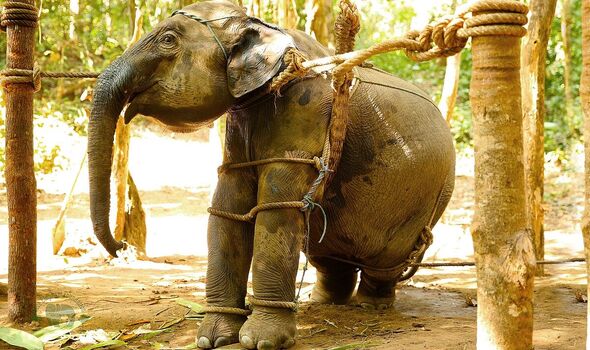
Under Thailand’s scorching sun, elephants stand chained, wounded, and exhausted. Their skin bears scars from metal hooks, their eyes reflect fear and submission. This is the hidden reality behind Thailand’s elephant tourism industry—an industry marketed as magical, ethical, and unforgettable, yet built on cruelty and suffering.
Each year, millions of tourists visit Thailand seeking close encounters with elephants. Many pose for photos, enjoy jungle rides, or watch performances, unaware that their experiences come at a devastating cost. Behind every smiling tourist photo is an animal that has endured years of violence to become obedient enough to entertain humans.
An Industry Built on Suffering
Thailand is home to more than 200 unethical elephant tourism venues, generating an estimated £415 million annually. These venues exist to meet tourist demand for elephant rides, bathing experiences, selfies, and performances. While profitable, the industry relies on brutal training practices that strip elephants of their freedom, dignity, and natural behavior.
Elephants are not naturally submissive animals. They are intelligent, emotional, and deeply social. To make them compliant, handlers must first break their spirit.
The Crushing Cage: Where the Abuse Begins
The cruelty often starts when elephant calves are violently taken from their mothers in the wild. This traumatic separation causes intense psychological distress—for both mother and calf—and marks the beginning of a lifetime of suffering.
The young elephants are placed into a “crushing cage,” a small wooden enclosure designed to restrict all movement. Inside, they are starved, dehydrated, and kept awake for days. Trainers use sharp tools, including wooden and metal weapons, to inflict pain whenever the elephant resists.
This torture can last six months or longer. The goal is simple and horrifying: to break the elephant’s will entirely.
Nearly half of all elephants subjected to this process do not survive. Those who do emerge traumatized, physically damaged, and psychologically broken—ready to be exploited for tourism.
From Victims to Attractions
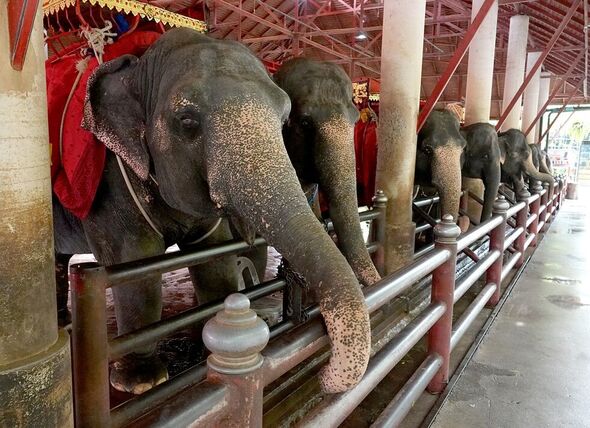
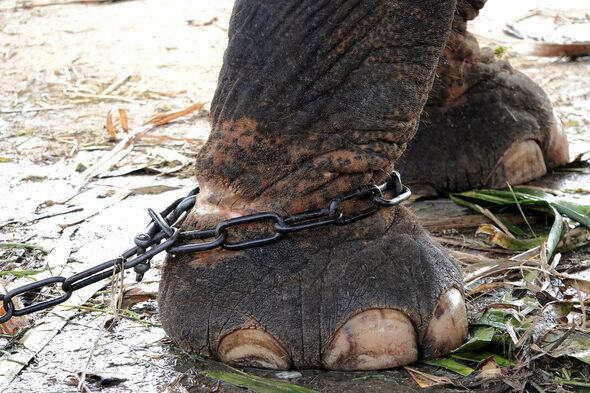
Once “trained,” elephants are forced into a life of servitude. They carry tourists on their backs for hours, perform tricks in shows, or parade through streets for photographs. Chains restrain them when not working, often leaving them unable to move freely for most of the day.
Many show visible signs of trauma, including repetitive swaying—a behavior linked to severe psychological distress. Their suffering is constant, yet largely invisible to tourists who see only the performance, not the pain behind it.
A Disturbing Example: Khao Kheow Open Zoo
One of the most disturbing examples of elephant exploitation is found at Khao Kheow Open Zoo in Chon Buri. Here, elephants are forced to perform underwater “dancing” routines for crowds of cheering spectators.
From behind glass panels, families film and applaud as elephants repeatedly submerge and resurface—acts that are unnatural and stressful. When not performing, these elephants are kept in chains, often dehydrated and malnourished.
Zoo officials claim the chains are necessary for public safety and insist that animal welfare is their top priority. Yet the reality tells a different story: visible wounds, extreme stress behaviors, and routine use of bullhooks—metal tools with sharp spikes designed to inflict pain.
Bullhooks: Tools of Control and Fear
Bullhooks resemble medieval torture devices. Handlers drive their sharp ends into sensitive areas of an elephant’s body—behind the ears, on the trunk, or along the legs—to force obedience.
These tools leave deep wounds, infections, and permanent scars. Their use is not about guidance; it is about domination through fear.
The UK’s Role in the Problem
Despite growing awareness, elephant tourism continues to thrive—partly due to international demand. More than 1,200 UK-based companies reportedly promote trips to 277 elephant venues in Thailand where abuse is routine.
Many tourists unknowingly support these practices, trusting tour operators to offer ethical experiences. This lack of transparency allows cruelty to continue unchecked.
While the UK government has encouraged travelers to choose higher-welfare attractions, enforcement remains weak, and unethical venues continue to operate openly.
Tourism Has the Power to Change Everything
Tourists hold immense power. Every ticket purchased, every photo taken, and every ride booked sends a message of approval. Refusing to participate in elephant rides, performances, or photo opportunities is one of the most effective ways to disrupt this industry.
Ethical alternatives do exist. True sanctuaries allow elephants to roam freely, prohibit riding and performances, and prioritize rehabilitation and conservation. Supporting these sanctuaries helps protect elephants rather than exploit them.
A Call to End the Cruelty
Elephants are not entertainment props. They are sentient beings capable of grief, joy, memory, and deep emotional bonds. They deserve lives free from chains, fear, and violence.
Ending elephant cruelty requires collective action—from tourists, tour operators, governments, and global communities. It means choosing compassion over convenience and education over ignorance.
Choosing a Better Future for Elephants
By supporting ethical wildlife tourism, advocating for stricter regulations, and spreading awareness, we can help dismantle the systems that profit from suffering.
The elephants of Thailand—and countless others worldwide—cannot speak for themselves. But our choices can speak for them.
Their suffering does not have to continue. The time to act is now.