The Decision That Saved My Life: Amputation, Cancer, and Rediscovering Strength
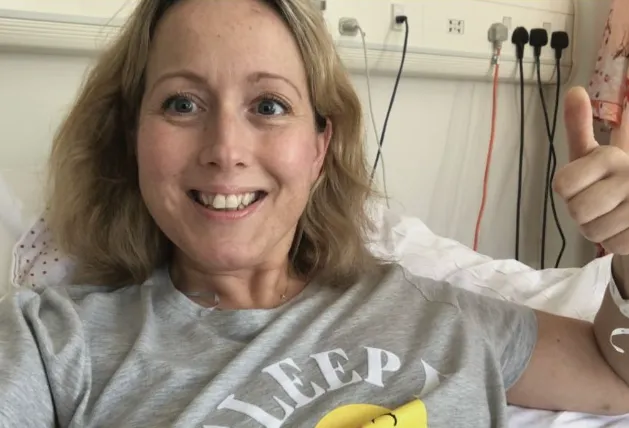
The First Signs: A Pain I Couldn’t Explain
In late 2018, my body began sending signals that something wasn’t right. It started as a dull, persistent pain deep in my hip. At first, I couldn’t even pinpoint where it came from. I told myself it was nothing serious—maybe a pulled muscle, a minor injury, or the result of being active and busy with everyday life.
Like many people, I ignored it.
But the pain didn’t disappear. Over the next 18 months, it slowly intensified, becoming sharper and more disruptive. I visited doctors again and again—eight times in total—each time hoping for answers. Instead, I was reassured. Sciatica. Exercise-related strain. “Nothing sinister.”
I wanted to believe them.
But my body knew the truth long before anyone else did.
The Diagnosis That Changed Everything
In May 2020, my world came crashing down.
After months of unanswered questions, I finally received a diagnosis that no one is ever prepared for: chondrosarcoma, a rare and aggressive form of bone cancer. The tumor was located in the acetabulum, the socket of my hip joint—and it was already the size of my fist.
Suddenly, the pain made sense.
At 45 years old, I was told that immediate, life-saving surgery was my only option. There was no gentle transition into this reality. One moment, I was living with unexplained pain. The next, I was facing cancer.
Cancer During Lockdown: Fighting Alone
Receiving this diagnosis during the COVID-19 lockdown made everything even harder.
Within days, I was rushed into hospital for major surgery. I spent two and a half weeks hospitalized without visitors, isolated from the people who mattered most. My children—just 12 and 14 at the time—couldn’t be there. My family had to support me from a distance, through phone calls and messages.
The physical pain was overwhelming, but the emotional isolation was devastating.
Cancer is frightening. Facing it alone is something I wouldn’t wish on anyone.
Hearing the Words No One Expects
The hardest moment of all wasn’t the surgery—it was the phone call.
After being reassured for so long that nothing was wrong, I was told over the phone:
“You have cancer.”
I couldn’t process it. My mind froze. I replayed every appointment, every dismissal, every time I had doubted myself. How could something this serious have been missed for so long?
Fear, anger, and disbelief collided all at once.
The Surgery: A Risk Worth Taking
Doctors acted quickly. The surgery ahead was complex and high-risk. It involved removing the tumor, part of my pelvis, and reconstructing my hip. There were no guarantees—only hope.
The operation was long and grueling, but it was necessary. It gave me something priceless: a chance to live.
When I woke up, I knew my body would never be the same. But I was alive. And that mattered more than anything else.
Recovery: Facing a New Reality
The weeks and months that followed were some of the hardest of my life.
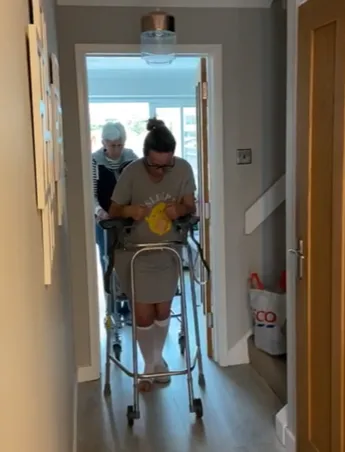
Recovery was excruciating. My mobility was severely limited. I couldn’t climb stairs, walk unaided, or perform even the simplest tasks without help. Our home had to be adapted to accommodate my new physical needs.
I wasn’t just healing from surgery—I was learning how to live in a body that felt unfamiliar and unpredictable.
It was humbling. And terrifying.
The Power of Family and Love
During this time, my family became my lifeline.
My parents moved in to care for me. My fiancé stepped up in ways I will never forget. Friends supported my children, helped with daily tasks, and reminded me that I wasn’t alone—even when I felt like I was falling apart.
Their love carried me through moments when I didn’t think I had the strength to continue.
Rebuilding Through Physical Therapy
Physical therapy became my new routine—and my new challenge.
At first, every movement felt impossible. My body was weak, stiff, and in constant pain. Progress was painfully slow. But with the guidance of dedicated healthcare professionals, I began to rebuild.
Each small achievement—standing longer, walking further, moving with less fear—felt like a victory.
Slowly, hope returned.
Living With Fear and Uncertainty
Even after treatment, fear never truly disappears.
I now undergo regular scans of my pelvis and lungs to monitor for recurrence. Scan days are emotionally exhausting. The waiting. The what-ifs. The silent prayers.
I’ve learned to live with uncertainty—not by ignoring it, but by refusing to let it define me.
Mental Health Matters: Support That Saved Me
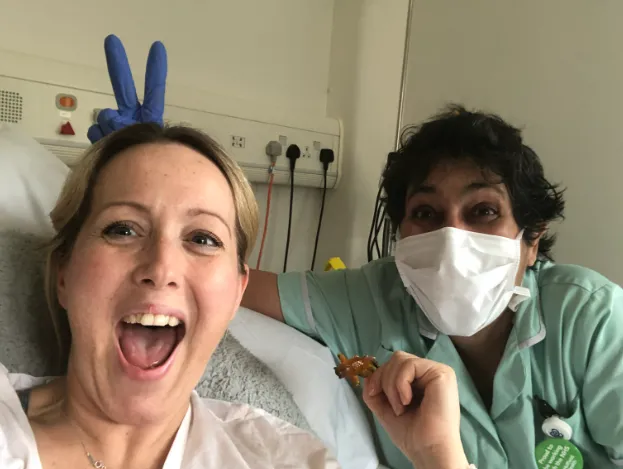
One of the most important parts of my recovery came from Maggie’s Charity, which provided emotional and psychological support during and after my hospital stay.
Cancer doesn’t just attack the body—it invades the mind. Anxiety, fear, and grief are constant companions. Having someone to talk to, to help me process the trauma, made an enormous difference.
Mental health support was not optional—it was essential.
Learning to Live Again
As time passed, I adapted to life with a prosthetic hip.
It wasn’t easy. There were moments of frustration and grief for the life I once had. But I also began to appreciate new victories—short walks with my family, moments of independence, the ability to participate in life again.
I learned patience. And gratitude.
A New Chapter, A New Strength
Cancer changed my life forever—but it didn’t take my spirit.
Today, I look toward the future with hope. I know challenges remain, but I also know how strong I am. I’ve faced pain, loss, and fear—and I’m still standing.
A Message to Others: Don’t Give Up
If you’re facing cancer, illness, or an impossible decision, hear this:
Never give up.
Trust your body. Advocate for yourself. Lean on those who love you. And remember—life can still be meaningful, even when it looks different than you imagined.
Sometimes, the hardest decision truly does save your life.
💛 I didn’t just survive cancer—I rediscovered my strength, my purpose, and my will to live.