Shot More Than a Dozen Times, Texas Barber Hector Serrato Jr. Is Rebuilding His Life With Purpose After Violence
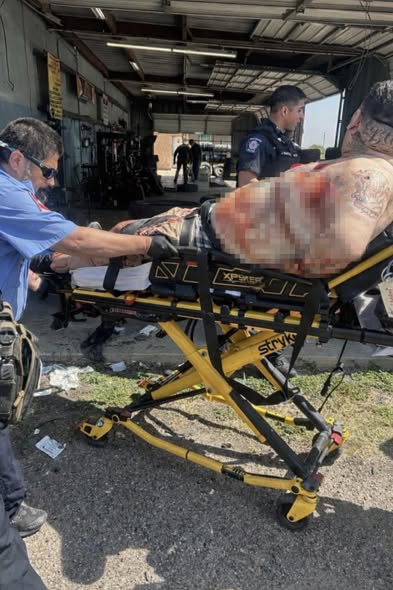
For most of his life, Hector Serrato Jr. was known simply as a barber. In his Texas community, he was the man behind the chair, listening more than he spoke, shaping hair while people shared their days, their worries, their plans. He was also a single father of three, balancing long work hours with the quiet responsibilities of parenthood. His life followed a steady rhythm—work, family, routine—until violence shattered it without warning.
On March 13, that rhythm ended.
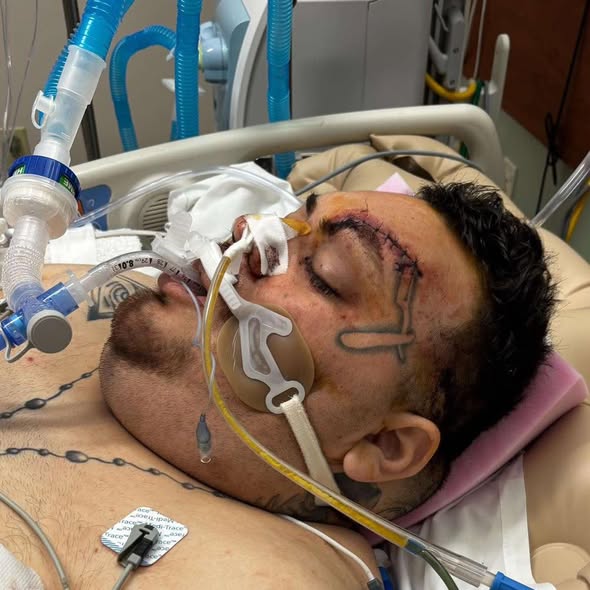
What happened next would leave Hector shot more than a dozen times, fighting for his life in a hospital bed, and ultimately questioning why he survived when the odds were overwhelmingly against him. Now, for the first time, he is speaking openly about the day he nearly died, the months of recovery that followed, and the purpose he believes emerged from unimaginable trauma.
The Day Everything Changed
The robbery that nearly took Hector’s life escalated in seconds. What should have been an ordinary day turned violently personal, and before he could react, gunfire filled the space around him. Bullets struck his body repeatedly—his face, chest, arm, leg, and abdomen—each impact compounding the damage.
Doctors later described the extent of his injuries as extraordinary. One bullet narrowly missed his heart, a fraction of an inch separating survival from death. Another caused catastrophic internal damage, tearing through his intestine and forcing surgeons to remove part of it during emergency surgery. Blood loss was severe. Time was critical.
Within moments, Hector’s life was no longer measured in plans or responsibilities, but in heartbeats and decisions made under pressure.
Between Life and Loss
Hector was placed into a medically induced coma as doctors worked to stabilize him and assess what could be saved. For twenty-one days, he remained hospitalized, suspended between survival and loss. His family was warned to prepare for uncertain outcomes. There were no guarantees—only possibilities, many of them grim.
Physicians did not know if he would wake up. If he did, they could not promise he would walk again, return to work, or live without permanent limitations. The future that once felt predictable vanished, replaced by unanswered questions and cautious hope.
During those weeks, survival was not promised. It was attempted.
Waking to a New Reality
When Hector finally regained consciousness, relief quickly gave way to reality. The pain was immediate, but so was the awareness that his body had been permanently changed. Simple movements required effort. Strength was gone. Independence was limited.
Recovery was not a single moment, but a process that demanded patience and endurance. Physical therapy became routine. Emotional healing proved just as demanding. The violence he survived left scars that extended beyond his body, forcing him to confront fear, anger, and grief all at once.
Healing, Hector learned, is not passive. It is work.
Learning to Live Again
Ten months after the shooting, Hector is standing on his feet again—something that once felt impossible. He has returned to the barber chair, though not in the way he remembers. His movements are slower. His hand is still regaining strength and coordination. Progress comes in small, deliberate increments.
He is also learning to live with an ileostomy, adapting daily life to a body that no longer functions as it once did. Recovery did not restore him to who he was before the violence. It introduced him to someone new.
That adjustment has required humility, persistence, and acceptance.
“Blessed,” Not Lucky
People who hear Hector’s story often struggle to describe it. Some call him a miracle. Others attribute his survival to luck. Hector chooses a different word.
He says he is blessed.
For him, the distinction matters. Being blessed does not mean being spared pain. It means being given life when it could have been taken. His survival did not erase suffering—it gave him the opportunity to live beyond it.
That perspective has reshaped how he views time. Days are no longer assumed. Moments with his children carry a weight they never held before. He believes they are the reason he kept fighting when his strength failed. When his body could not push forward, love did.
Choosing Purpose Over Silence
For months after leaving the hospital, Hector said nothing publicly about what he endured. Trauma has a way of shrinking the world, making survival feel private rather than meaningful. He believed his story did not matter—that simply living was not something worth sharing.
But time changes perspective.
Hector began to realize that silence can isolate not only the survivor, but those still searching for hope. He started to see his survival not as a coincidence, but as a responsibility.
If a man shot more than a dozen times could stand again, return to work, and choose faith over bitterness, then perhaps hope could exist for others facing impossible odds.
Giving Back as a Form of Healing
Today, Hector offers free haircuts to members of his community. He does not frame it as charity. He sees it as gratitude in action. Giving back has become part of how he heals, a way to stay grounded in purpose rather than pain.
He believes purpose is not something you wait to discover. It is something you practice.
Service, connection, and presence have replaced fear as the foundation of his days.
Refusing to Be Defined by Violence
Hector does not deny the anger or fear that could have consumed him. He acknowledges the temptation to let bitterness shape the rest of his life. But he made a deliberate choice to move in another direction—one guided by faith, intention, and forgiveness, even when it felt undeserved.
He believes God left him here for a reason, even if that reason continues to unfold. Holding onto that belief has allowed him to move forward without being trapped by what was taken from him.
Living With Purpose After Survival
Today, Hector Serrato Jr. is not asking for admiration or sympathy. He is telling the truth about survival—how painful it is, how incomplete it can feel, and how deliberate it must become to mean something.
His body carries scars. His days carry challenges. But his life now carries clarity.
Violence tried to end his story. Instead, it forced him to ask a deeper question: what does it mean to live when you know how easily life can be lost?
For Hector, the answer is simple, even when the path is not. Life is not about avoiding suffering. It is about choosing what you do after it arrives.
And now, he is ready to live that purpose out loud.