He Watched Cancer Steal His Wife in Real Time—And Used a Camera to Tell the Truth About Love and Caregiving
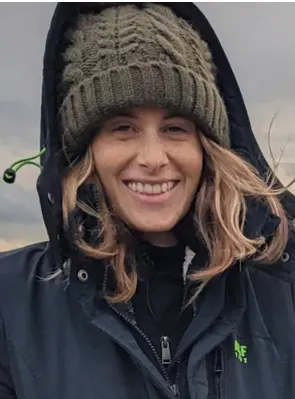
When Mark Burkholder looks back on the years he spent caring for his wife Paige after her cancer diagnosis, he does not describe them as brave or inspiring. He does not frame them as a heroic fight or a story of strength.
He remembers them as quiet. Exhausting. Intimate. And brutally honest.
They were years shaped by long nights on the couch, by pain that never fully paused, by a love that demanded presence more than hope. There were no cinematic victories. No neat arcs. Just endurance, tenderness, and the slow understanding that cancer does not simply threaten life—it dismantles it, day by day, in plain sight.
That truth is why, as Paige’s body gradually declined, Mark picked up a camera. Not to shock. Not to perform grief. But to witness what cancer actually looks like when no one is watching.
A Diagnosis That Rearranged Everything
Paige was just thirty-two years old when she was diagnosed with cholangiocarcinoma, a rare and aggressive cancer of the bile ducts in the liver. The diagnosis came in 2022, shortly after she and Mark had moved to the San Juan Islands off the coast of Washington State.
The move was meant to be a fresh start.
Paige, a history teacher, had accepted a new job. Mark, a writer and marketer, followed with the belief that this quieter life would give them space to reconnect, to build something steady together. Instead, it became the place where everything began to unravel.
The first symptoms were easy to dismiss. Stomach discomfort. Back pain. The kind of aches people carry on with every day. But the pain intensified, and when Paige went in for scans, Mark sensed the shift before she ever spoke.
They met at a coffee shop afterward. When Mark saw her face through the window, he knew. Something fundamental had broken open.
The scan revealed a mass on her liver, described bluntly as a tumor the size of a softball—almost certainly cancer. By the time treatment began months later, it had grown to the size of a football.
Refusing the Language of False Hope
Paige started chemotherapy around Christmas, driving through blizzard conditions to reach her first appointment. Even then, she tried to soften the truth when speaking to friends and family, framing the diagnosis as something she would live with.
Mark couldn’t do that.
As her caregiver, he felt his responsibility was not to sell hope, but to live in reality. He understood that pretending cancer was a battle Paige could simply “win” would not make the suffering easier. It would only make it lonelier.
That belief shaped every decision that followed.
Mark grew increasingly frustrated with how cancer is portrayed online—compressed into a single image of resilience, stripped of context, pain, and time. He watched patients and caregivers scroll past stories of bravery while living something far messier and far more exhausting.
Cancer, as Mark saw it, was not a heroic fight.
It was trench warfare.
Relentless. Grinding. Unforgiving.
Documenting What No One Wants to See
So Mark began documenting their life as it actually was.
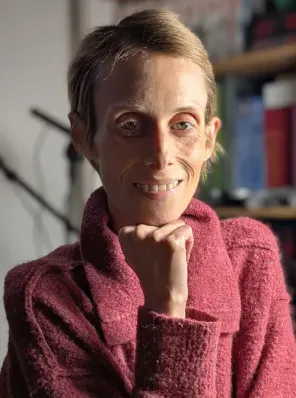
Paige resting in bed. Paige enduring treatment. Paige aging rapidly as the disease tightened its grip. Her face changed. Her body weakened. Time seemed to accelerate around her.
They did not share any of it publicly while she was alive. There was no energy for that, no desire to revisit the worst moments while still living inside them. The camera was not for an audience.
It was for honesty.
Mark wanted a record that reflected the truth—what it meant to love someone through decline, to witness their suffering without turning away, to stay when staying cost everything.
“Aging in Fast Forward”
Paige died at home at thirty-five, after living with cancer for three years.
Three days later, Mark posted his first video online.
He did not anticipate what would happen next.
Hundreds of thousands of people watched. Then millions. When he described cancer as “aging in fast forward,” the phrase landed with devastating clarity. The comments filled with grief, recognition, and relief.
People were not shocked.
They were seen.
For many, Mark’s words gave language to an experience they had carried silently—watching someone they loved age, weaken, and disappear at a speed that felt unnatural and cruel.
The Invisible Weight of Caregiving
As Mark continued sharing, he realized the story people needed most was not only about cancer, but about caregiving.
He spoke openly about the toll of being present twenty-four hours a day. About never fully resting. About always listening for the sound of pain, nausea, or fear in the next room.
He talked about the invisible labor: managing medications, tracking symptoms, advocating with doctors, coordinating appointments, and absorbing emotional weight without release. He described what it feels like to love someone while watching them slip away in real time.
Caregiving, Mark explained, ages you too.
Making Space for Help
Mark also began offering practical advice—grounded, unglamorous, necessary.
How to ask for help in ways people can actually respond to.
How to organize support so it doesn’t dissolve into vague promises.
How to communicate clearly with medical teams when time is limited and energy is scarce.
His message was simple but radical: honesty allows help to exist.
When suffering is hidden behind bravery, people assume you don’t need support. When the truth is visible, community has permission to step in.
Radical Honesty as an Act of Love
Today, Mark describes his mission as radical honesty about illness, grief, and caregiving.
Not to strip meaning from suffering—but to restore dignity to those living inside it.
His photographs of Paige are not meant to be comfortable. They are meant to be real. They challenge the idea that love must always look strong or hopeful. Sometimes love looks like staying. Like witnessing. Like refusing to look away when the ending is unavoidable.
Through his work, Mark has uncovered something heartbreaking and universal: almost everyone has lost someone, and many have done so quietly, without language for the depth of what they carried.
His storytelling gives that language back.
It says you are not weak for struggling.
You are not failing because you need help.
And you are not alone in the long, silent hours of caregiving that so rarely make it into the story.
Mark did not document Paige’s illness to be remembered.
He did it so others would feel less alone.
And in telling the truth—fully, painfully, and without polish—he has given love a language that does not disappear when hope runs out.