A Father’s Perspective on Raising a Son With Down Syndrome
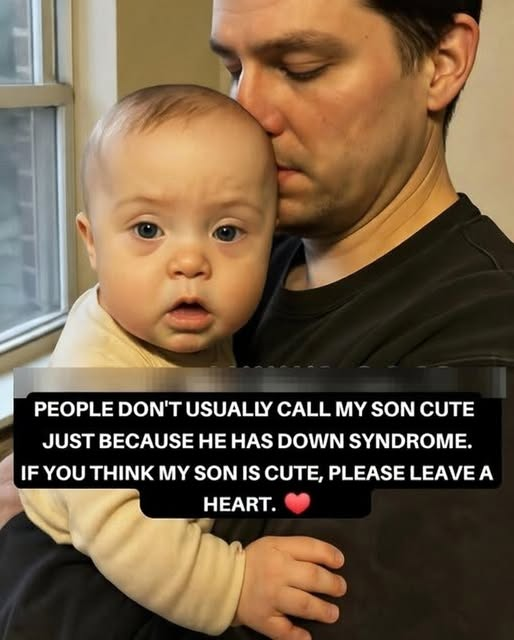
When Dawny was born, his father knew life would be different. What he did not expect was how quickly the world would respond—not with curiosity or warmth, but with judgment.
Dawny was born with Down syndrome, a genetic condition that affects physical and intellectual development. While medical professionals provided information and guidance, everyday social interactions revealed a different challenge: how society often views children with disabilities before truly seeing them as children.
“People don’t usually call my son cute,” his father shared. “Not because he isn’t—but because he has Down syndrome.”
Living With Public Perception
Parents of children with disabilities often describe subtle but painful experiences: longer stares, fewer smiles, and silence where compliments are typically offered. Dawny’s father noticed these reactions early. In public spaces, people hesitated. Some avoided eye contact altogether.
Down syndrome affects approximately one in every 700 births worldwide, according to health organizations. Despite increased awareness, misconceptions remain common, especially in everyday social settings.
For Dawny’s father, these moments were not about seeking validation, but about recognizing how quickly a diagnosis can overshadow a child’s individuality.
Seeing a Child Before a Diagnosis
At home, Dawny is not defined by medical terminology. His father describes him simply as a baby—curious, expressive, and affectionate. He notices the way Dawny relaxes when held, the way his eyes follow movement, and the calm that comes from close contact.
“I don’t see a condition,” he says. “I see my son.”
That distinction shapes how he responds to the outside world. Rather than correcting strangers or confronting negative reactions, he focuses on modeling pride and affection. He believes that visibility, not argument, is what changes perceptions.
Parenting Beyond Stereotypes
Raising a child with Down syndrome does involve additional responsibilities. Medical checkups, developmental monitoring, and early intervention programs are often part of daily life. Dawny’s father acknowledges these challenges but emphasizes that they do not define the relationship he has with his son.
“There are extra appointments,” he says. “But there is also extra perspective.”
Studies show that children with Down syndrome can thrive emotionally when raised in supportive environments. Family acceptance and advocacy play a critical role in long-term development, particularly in building confidence and social inclusion.
The Role of a Parent as Advocate
For Dawny’s father, advocacy begins with how he talks about his son. He does not minimize the diagnosis, but he refuses to let it be the headline.
In social media posts and daily conversations, he highlights Dawny’s presence rather than his condition. By doing so, he challenges the idea that children with disabilities should be viewed through a lens of limitation.
“People decide what they see very quickly,” he says. “Sometimes they just need time—and example—to see more.”
Shifting the Narrative
Disability advocates note that representation matters. When parents openly express pride and love, it helps counter long-standing stereotypes that frame disability as tragedy rather than difference.
Dawny’s story reflects a broader issue faced by many families: the gap between clinical understanding and social acceptance. While medical care has advanced significantly, social attitudes often lag behind.
Changing that narrative, experts say, starts with everyday moments—how children are spoken to, looked at, and included.
A Childhood Defined by Love
At the center of Dawny’s life is a consistent presence: his father. The photograph of the two of them captures a quiet moment—one that reflects routine care rather than extraordinary circumstance.
For Dawny, being held, comforted, and protected is not symbolic. It is simply daily life.
His father hopes that as Dawny grows, he will encounter a world more willing to see ability before assumption. Until then, he intends to remain both parent and protector.
A Broader Message
While Dawny’s experience is personal, it echoes the stories of many families raising children with disabilities. It raises questions about how society defines beauty, worth, and normalcy—and who gets to decide.
The father’s message is straightforward: children should not have to overcome public perception in order to be treated with kindness.
“They deserve that from the start,” he says.
Looking Forward
As awareness around Down syndrome continues to grow, families like Dawny’s hope that understanding will follow. Progress, they believe, comes not only through policy or education, but through visibility and everyday acceptance.
For Dawny’s father, the goal is simple. He wants his son to grow up knowing he is valued—not in spite of who he is, but because of it.
And in a world quick to judge, that message begins at home.