Worth $834.8 Billion, Elon Musk Laments That Money Can’t Buy Happiness
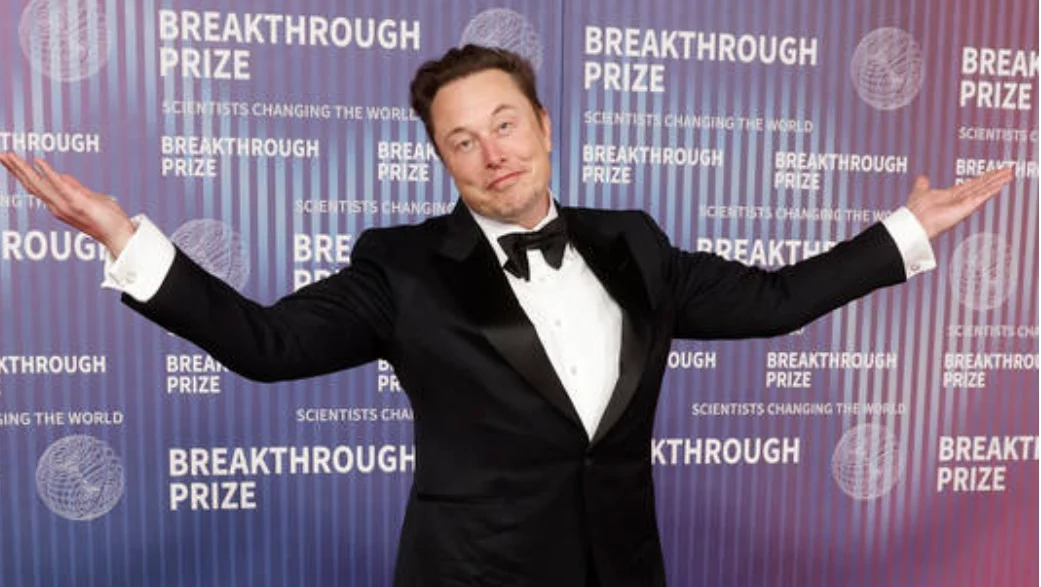
Despite standing at the pinnacle of fame and fortune with an estimated net worth of $834.8 billion, billionaire entrepreneur Elon Musk has stirred public debate by admitting that immense wealth does not necessarily bring happiness.
Recently, Musk—the CEO of Tesla and SpaceX—surprised followers by posting a message on X: “Whoever said money can’t buy happiness really understands this,” accompanied by a sad-face emoji. The post appeared to suggest that, despite his vast fortune, Musk still struggles to find inner fulfillment.
According to Forbes, Musk’s total wealth has reached $834.8 billion, placing him far ahead of the world’s second-richest individual, Google co-founder Larry Page. Since the beginning of the year alone, Musk’s fortune has grown by approximately $49 billion, driven by soaring valuations at SpaceX and news of its merger with his artificial intelligence venture, xAI. In addition, a record-breaking compensation package approved by Tesla shareholders late last year could eventually push his wealth toward the $1 trillion mark.
Yet extreme wealth appears not to correlate with personal satisfaction for the tech billionaire. Musk’s remarks are seen not merely as a moment of melancholy, but as a reflection of a broader psychological reality: the limits of money in purchasing happiness.
Musk’s comments have since drawn analysis from experts. Business Insider quoted Associate Professor David Bartram, a sociologist at the University of Leicester, who said the relationship between money and happiness follows the principle of diminishing marginal returns.
“When someone already possesses millions of dollars, additional income has little meaningful impact on happiness levels,” Bartram explained. “For the ultra-wealthy, genuine fulfillment often comes from contributing to society and forming authentic human connections, rather than watching numbers grow in a bank account.”
Echoing this view, Matthew Killingsworth, a senior research fellow at the University of Pennsylvania, highlighted an intriguing paradox. While his 2021 research found that higher income generally leads to greater happiness, he later noted in 2024 that the threshold for happiness keeps rising. This creates an endless cycle in which even the world’s richest individuals may feel that it is never enough.
Musk himself has repeatedly shared his philosophy on life and wealth. Speaking with Nikhil Kamath on the podcast “People by WTF,” he emphasized the belief that “people should aim to create more value than they take.”
According to Musk, the pursuit of wealth mirrors the pursuit of happiness: focusing obsessively on money leads to failure. Instead, he advises people to concentrate on building products and services that genuinely benefit society. “When real value is created,” Musk concluded, “money will naturally follow as a consequence.”
Though controversial, Musk’s reflections serve as a powerful reminder that in a world driven by material temptation, true happiness may lie in simple, intangible values—ones that no billion-dollar check can ever buy.