Alabama Enacts Child Predator Death Penalty Act, Expanding Capital Punishment for Crimes Against Children
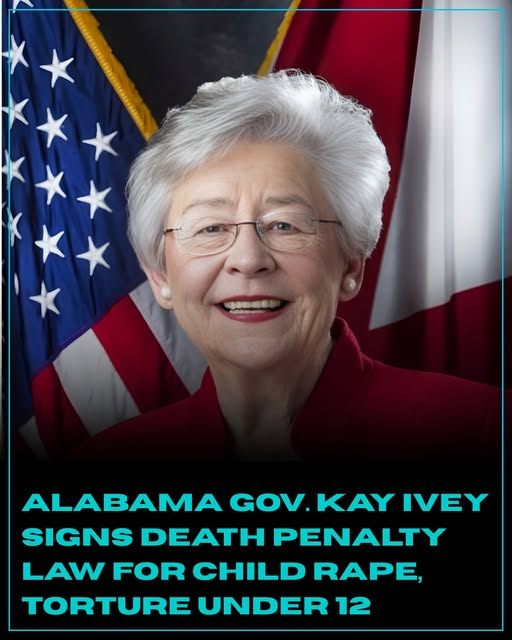
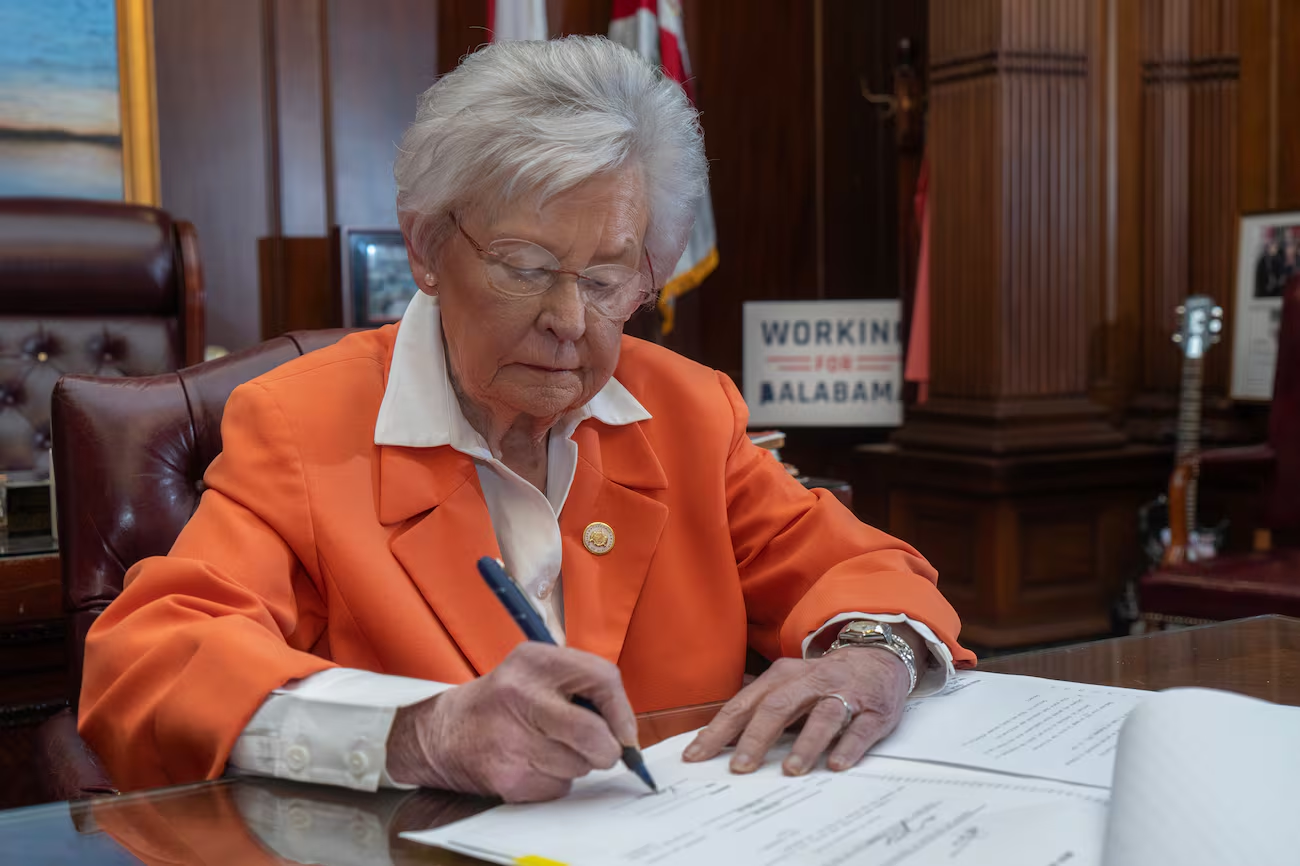
MONTGOMERY, Alabama — In a move that underscores Alabama’s increasingly hardline stance against crimes involving children, Governor Kay Ivey on Thursday signed the Child Predator Death Penalty Act into law, expanding the state’s death penalty to include certain sex crimes committed against minors under the age of 12.
The legislation, which passed overwhelmingly through both chambers of the Alabama Legislature last week, marks one of the most severe criminal justice measures enacted in the state in recent years. Supporters say it sends a clear and uncompromising message: Alabama will impose the harshest punishment available on those who commit the most heinous crimes against children.
“For too long, the most vulnerable of our society have lacked the most stringent legal protection from child predators,” Governor Ivey said following the signing. “Those who target the youngest among us for the vilest crimes will soon be met with the harshest punishment under the law.”
What the New Law Does
The Child Predator Death Penalty Act strengthens criminal penalties for individuals convicted of first-degree rape, first-degree sodomy, and first-degree sexual assault involving victims under the age of 12.
Under the new law, these crimes are now classified as capital offenses, meaning they are punishable by life imprisonment without the possibility of parole or the death penalty, depending on the outcome of sentencing proceedings.
The legislation is scheduled to take effect on October 1, 2026.
Alabama now joins a small number of states that have enacted or considered laws allowing capital punishment for certain child sex crimes, a move that is likely to draw both national attention and legal scrutiny.
Overwhelming Legislative Support
The bill passed with decisive margins in both chambers of the state legislature. The Alabama House of Representatives approved the act by a vote of 73–6, while the Senate passed it 33–1, reflecting strong bipartisan support.
The measure was sponsored by Matt Simpson, a Republican from Daphne, and April Weaver, a Republican from Brierfield.
“This law sends a clear message that we will not stand by while young lives are shattered,” Rep. Simpson said in a statement. “Those who commit such unspeakable crimes will be prosecuted to the fullest extent of the law.”
Sen. Weaver echoed those sentiments, calling the legislation a necessary response to crimes she described as “beyond comprehension.”
“We are putting these sick individuals on notice that a cell on death row awaits them if they abuse the most innocent and defenseless among us,” Weaver said. “Alabama now has zero tolerance for those who prey on our children.”
A Moral Line in the Sand
Supporters of the law argue that crimes involving sexual violence against children represent a unique moral boundary — one that warrants the most severe punishment society can impose.
Advocates say the act reflects growing frustration among lawmakers and the public over what they view as insufficient penalties for crimes that permanently traumatize young victims and their families.
For many parents and child advocates, the legislation is about more than punishment; it is about protection, deterrence, and a public declaration of values.
“Children cannot protect themselves,” Governor Ivey said. “It is the duty of the state to ensure that those who harm them face consequences commensurate with the damage they cause.”
Legal and Constitutional Questions Ahead
While the law has drawn strong support within Alabama, it also raises complex legal questions at the federal level.
The U.S. Supreme Court ruled in 2008 that the death penalty for crimes where the victim did not die violates the Eighth Amendment’s prohibition on cruel and unusual punishment. That decision effectively barred capital punishment for child rape nationwide.
Supporters of the Alabama law argue that evolving legal interpretations, public sentiment, and the severity of such crimes may prompt courts to reconsider or narrow that precedent. Critics, however, say the law is likely to face immediate constitutional challenges.
Legal scholars expect the act to become the subject of lengthy court battles, potentially reaching federal appellate courts and, eventually, the Supreme Court.
State officials have acknowledged the likelihood of legal challenges but say the law is designed to assert Alabama’s position and protect children to the fullest extent possible under the law.
A Broader National Conversation
The passage of the Child Predator Death Penalty Act comes amid a broader national debate over criminal justice, victims’ rights, and the limits of capital punishment.
While some states have moved away from the death penalty altogether, others — including Alabama — have taken steps to expand or reinforce its use in cases involving particularly egregious crimes.
Public opinion remains deeply divided. Advocates for harsher penalties argue that extreme crimes demand extreme consequences. Opponents caution that expanding capital punishment risks wrongful convictions, disproportionate sentencing, and constitutional violations.
Still, few crimes provoke as visceral a reaction as those involving sexual violence against children.
“This is one of the rare issues where there is near-universal moral outrage,” said one Alabama lawmaker during floor debate. “The question is not whether the crime is evil — it is how the law should respond.”
Impact on Victims and Families
For families affected by child sexual abuse, the law carries symbolic weight, even if its long-term legal fate remains uncertain.
Survivors and advocates say strong legal language can validate victims’ experiences and affirm that the state recognizes the gravity of the harm inflicted.
“These crimes don’t end when the abuse stops,” said a child advocacy volunteer in Montgomery. “They echo for decades. For some families, knowing the law takes this seriously matters.”
The legislation also directs attention to the need for prevention, reporting, and victim support — areas many advocates say must be strengthened alongside punitive measures.
What Comes Next
With the law set to take effect in October, state prosecutors, defense attorneys, and courts will begin preparing for its implementation. Training, procedural updates, and guidance will be required to determine how cases qualifying under the new statute are charged and prosecuted.
At the same time, civil rights organizations and legal advocacy groups are expected to challenge the law in court, arguing it conflicts with existing Supreme Court precedent.
Governor Ivey and legislative sponsors have indicated they are prepared to defend the act.
“Alabama has taken decisive action,” Rep. Simpson said. “Now we will stand by it.”
A Law Rooted in Protection and Punishment
At its core, the Child Predator Death Penalty Act reflects a fundamental tension in criminal justice: the balance between punishment and constitutional limits, between moral outrage and legal restraint.
For Alabama’s leaders, the line has been drawn firmly in defense of children.
“Those who commit the most horrific offenses against minors,” Governor Ivey said, “will face the maximum punishment our legal system permits.”
As the law moves toward implementation — and inevitable legal scrutiny — it stands as one of the most forceful statements Alabama has made about how it intends to confront crimes against its youngest and most vulnerable residents.