🚢😱 Minneapolis Port “Raid” Claims: What’s Confirmed — and What Isn’t
🚢😱 Minneapolis Port “Raid” Claims: What’s Confirmed — and What Isn’t
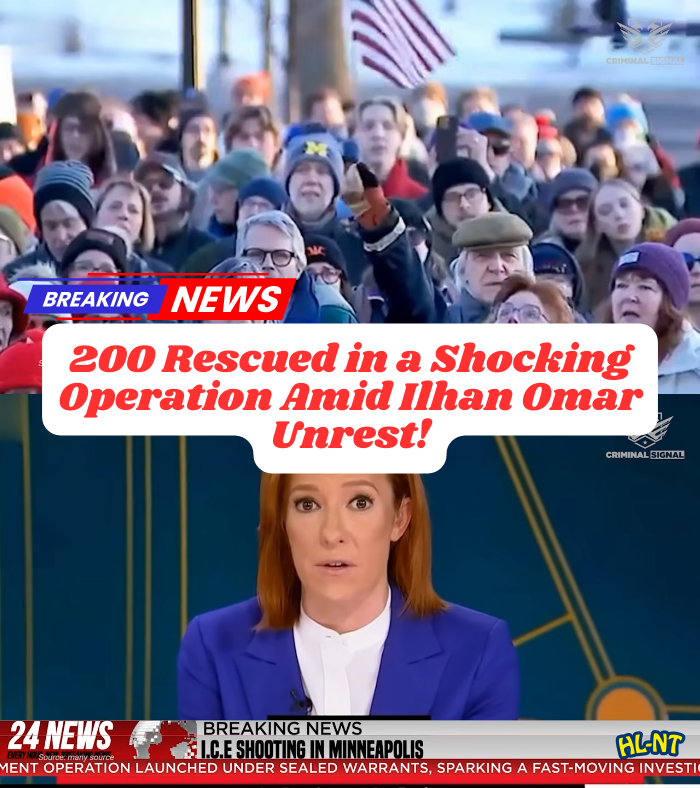
Viral posts are circulating online about a dramatic federal operation at a so-called “Minneapolis Port,” alleging that 200 individuals were rescued in a sweeping raid connected to unrest involving Congresswoman Ilhan Omar.
The claims further suggest that the Federal Bureau of Investigation (FBI) carried out a massive enforcement action targeting a hidden criminal network operating at the port. 🚨
However, as of now, there are no widely verified official reports confirming an FBI raid in Minneapolis involving 200 rescues tied to political unrest.
Let’s break down what is known — and what appears to be unverified speculation.
 🔍 Is There Confirmation of a Large-Scale FBI Port Raid?
Major federal operations involving:
-
Hundreds of rescued individuals
-
Large-scale coordinated raids
-
Politically linked unrest
-
Multi-agency enforcement actions
typically generate:
-
Official FBI press releases
-
Federal court filings
-
Indictments or criminal complaints
-
Coverage from multiple national news outlets
At present, no such widely documented evidence confirms the specific viral claims being shared.
When enforcement actions involve 200 rescues, documentation and formal announcements are normally substantial and publicly accessible.
🌊 Does Minneapolis Have a “Port”?
Minneapolis, located in the state of Minnesota, sits along the Mississippi River and does have river-based shipping infrastructure.
However:
-
It is not a coastal ocean port.
-
It does not operate as a major international seaport like coastal cities.
-
The phrase “Minneapolis Port raid” may reflect misunderstanding or exaggeration.
River terminals and shipping facilities exist along the Mississippi, but the dramatic framing of a large-scale “port raid” may contribute to confusion.
🏛️ The Political Angle
Some viral narratives attempt to connect the alleged raid to unrest involving Congresswoman Ilhan Omar.
However:
-
There are no verified public reports confirming a direct link between Omar and a large-scale port rescue operation.
-
Political names are often inserted into viral stories to increase engagement and amplify attention.
-
Serious allegations involving elected officials typically result in documented investigations and public records.
Without confirmed statements, these connections remain speculative.
📱 Why Stories Like This Spread Quickly
Dramatic claims gain traction for several reasons:
-
High numbers (e.g., “200 rescued”)
-
Federal agency involvement
-
Political figures mentioned
-
Language suggesting hidden crises
-
Visual or emotional framing
Social media algorithms tend to amplify emotionally charged content — especially when it combines crime, politics, and secrecy.
But virality is not verification.
⚖️ What Would Verification Look Like?
If an operation of this magnitude occurred, credible confirmation would likely include:
-
An official FBI statement
-
Press conferences or agency briefings
-
Publicly filed criminal cases
-
Consistent reporting across major news organizations
-
Court documents detailing charges
Until those elements appear, caution is appropriate.
🧩 Context: Federal Operations Do Happen
It’s important to note:
-
Federal agencies do conduct rescue operations.
-
Human trafficking investigations occur nationwide.
-
Multi-agency enforcement efforts are common.
However, each verified operation is accompanied by official documentation.
The absence of such documentation in this case raises questions about the accuracy of the viral narrative.
👀 Final Takeaway: Fact vs. Amplification
At this time:
-
There is no widely verified confirmation of an FBI raid at a “Minneapolis Port” involving 200 rescues.
-
There is no confirmed documentation linking such an operation to political unrest involving Ilhan Omar.
-
The terminology and framing of the claim warrant careful scrutiny.
In fast-moving digital news cycles, dramatic headlines can travel faster than verified facts.
Before drawing conclusions, rely on:
-
Official statements
-
Court filings
-
Credible, multi-source reporting
If verified details emerge, they will clarify what actually occurred — and whether the viral narrative aligns with documented reality. 🔎