Grant Amato’s Descent Into Madness: The True Crime Story of Grant Amato
- KimAnh
- February 26, 2026

In January 2019, a quiet Florida community was shaken by a crime so disturbing it quickly captured national attention. At the center of it was Grant Amato, a 29-year-old man whose obsession with an online cam model spiraled into financial ruin, delusion, and ultimately, the murder of his entire family.
This true crime case is not just about violence — it is about fixation, fantasy, and the devastating consequences of unchecked obsession.
The Beginning of the Obsession
Grant Amato’s downward spiral began in 2016 when he became fixated on Silviya Ventsislavova, a Bulgarian cam model who performed online under the name “Silvie.”
At first, Amato was simply a paying viewer. Like many cam site users, he spent hours watching livestreams and interacting in chat rooms. But what began as entertainment soon evolved into something far darker.
Amato developed an intense emotional attachment. He believed he had a meaningful connection with Silviya — despite the relationship being purely transactional.
Over time, he sent her nearly $200,000. The money did not come from his own income. Much of it was stolen from his family.
Financial Collapse and Family Intervention
Amato lived with his parents, Chad and Margaret Amato, in Chuluota, Florida. He had once worked as a nurse but was no longer employed at the time of the murders.
As his obsession deepened, his family began noticing alarming changes:
-
He became reclusive
-
He spent countless hours online
-
He avoided real-world responsibilities
-
Money began disappearing
When his parents discovered he had drained family funds to send money overseas, they were furious and devastated. They confronted him, demanded repayment, and eventually cut him off financially.
They even sent him to a treatment facility in an attempt to address what they saw as an addiction to online fantasy and pornography.
But intervention only intensified his anger.
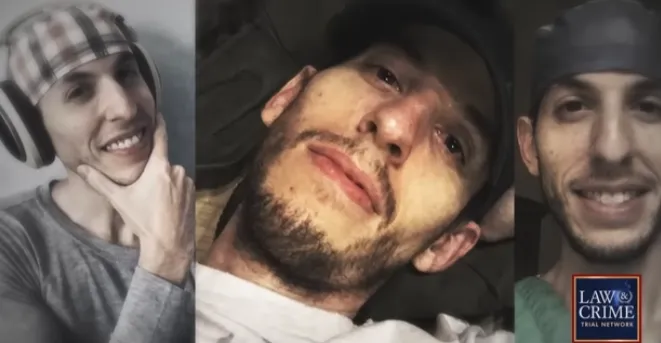
January 25, 2019: A Family Destroyed
On January 25, 2019, tragedy unfolded.
Grant Amato shot and killed his father, Chad. He then murdered his mother, Margaret. Finally, he killed his younger brother, Cody.
Each victim was shot multiple times.
After committing the murders, Amato staged the scene to resemble a murder-suicide. He placed a gun in his father’s hand, attempting to convince investigators that Chad had killed the family before turning the weapon on himself.
But the staging was flawed.
Detectives quickly identified inconsistencies in the crime scene. Ballistics evidence and blood pattern analysis contradicted the murder-suicide narrative.
The Investigation Unravels the Truth
Financial records became a key focus of the investigation. Authorities uncovered the massive wire transfers sent to Silviya Ventsislavova.
Digital evidence revealed the scale of Amato’s obsession — hours of online communication, payment receipts, and attempts to continue funding the relationship despite being cut off.
Investigators determined that after being financially restricted and confronted by his family, Amato felt humiliated and enraged. Rather than accepting responsibility, he chose violence.
He was arrested on January 28, 2019.
During questioning, Amato eventually admitted to the killings.
Motive: Obsession, Delusion, and Revenge
Prosecutors argued that the motive was crystal clear:
-
Financial desperation
-
Anger at being cut off
-
Obsession with maintaining his fantasy relationship
Amato believed his family had sabotaged his “future” with Silviya. He viewed their intervention not as protection, but as betrayal.
This distorted perception fueled a deadly decision.
What makes the case especially chilling is that Amato reportedly showed little emotional reaction when discussing the murders. Prosecutors portrayed him as calculating rather than impulsive.
The Trial and Death Sentence
In 2020, Grant Amato stood trial for three counts of first-degree murder.
The prosecution presented overwhelming evidence:
-
Financial transfers totaling nearly $200,000
-
Digital records of his obsession
-
Ballistics and forensic contradictions to the staged scene
-
Testimony about his anger toward his family
The defense attempted to argue mental health struggles. However, the jury found the murders to be premeditated.
On April 8, 2020, Grant Amato was convicted on all counts and sentenced to death.
The verdict delivered legal justice — but it could not undo the devastation left behind.
A Community Left in Shock
The Amato family had been well-known and respected. Friends described them as supportive, loving, and deeply concerned about Grant’s well-being.
Their attempts to intervene came from care — not cruelty.
The case forced difficult conversations about:
-
Online addiction
-
Financial manipulation
-
Emotional delusion
-
The blurred line between fantasy and reality
It also highlighted how isolation and unchecked obsession can escalate into catastrophic violence.
The Psychological Element
Experts analyzing the case pointed to several contributing factors:
-
Compulsive online behavior
-
Emotional dependency on a transactional relationship
-
Narcissistic thinking patterns
-
Inability to accept consequences
Amato’s fantasy world became more real to him than his actual life. When that fantasy was threatened, he chose to eliminate what he perceived as the obstacle — his own family.
This level of distorted reasoning is what makes the case so disturbing.
A Tragic Legacy
The murders of Chad, Margaret, and Cody Amato remain one of Florida’s most chilling family annihilation cases.
It is a story of:
-
Obsession overtaking reason
-
Financial deceit spiraling into violence
-
A son turning against those who tried to help him
Grant Amato’s actions permanently destroyed his family’s legacy. What should have been a story of support and recovery became one of betrayal and death.
Final Reflection
The Grant Amato case is a cautionary tale about the dark side of digital obsession. It demonstrates how fantasy, when left unchecked, can consume reality — and how resentment can morph into deadly rage.
Three innocent lives were lost because one man refused to confront his own failures.
Justice has been served in a legal sense. But for the Amato family and the community they left behind, the scars will never fully heal.
And the haunting question remains: how did an online obsession escalate into triple murder?
It’s a reminder that sometimes the most dangerous spirals begin quietly — behind a screen.