Lindsey Mae Swan: A Family’s Plea to Protect the Next Child
- KimAnh
- February 26, 2026
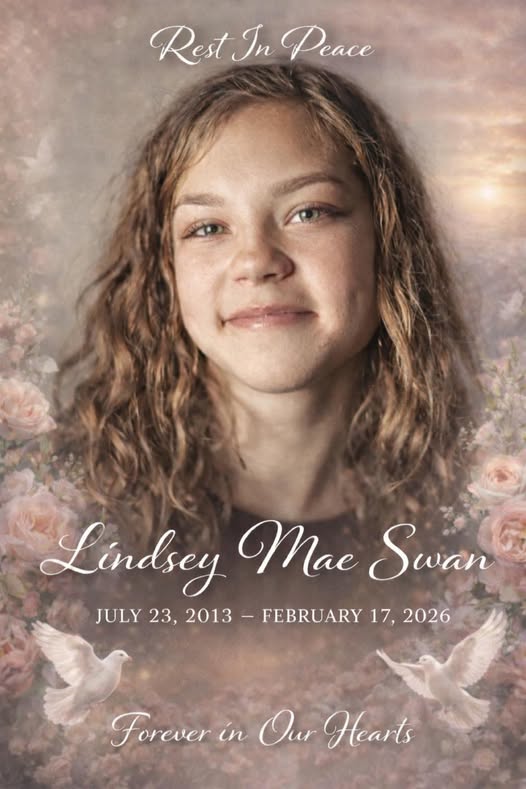
“It’s too late for me… Please talk to someone even if they look and act OK… They might make it because of you.”
These heartbreaking words were written in a journal by 12-year-old Lindsey Mae Swan before her passing.
Today, her family in Huntsville is sharing her story with one goal: to raise mental health awareness and help prevent another child from suffering in silence.
Lindsey’s death has shaken her family, friends, and school community. But through their grief, her loved ones are determined to turn tragedy into purpose — carrying forward Lindsey’s final message as a call to action.
A Bright Light Gone Too Soon
Lindsey was known for her vibrant personality and wide range of talents. She loved singing in the choir, performing in theater productions, playing volleyball, and practicing gymnastics. She enjoyed simple pleasures too — especially watching sunsets and spending time with friends.
Nicknamed “Sweet Pea” and “Stitch,” Lindsey had a warmth that drew people in. She was rehearsing for a school production of The Lion King and had recently been invited to join her school’s prestigious Girls Engaged in Math and Science (GEMS) team — achievements that reflected both her creativity and intelligence.
To those around her, Lindsey appeared to be thriving.
But behind the smiles and accomplishments, she was quietly battling emotions that few could see.
The Hidden Reality of Youth Mental Health
Lindsey’s passing stunned her community because there were no obvious warning signs visible to most people. Her story highlights a difficult truth: children and teens struggling with mental health challenges often mask their pain.
Young people may:
-
Continue performing well in school
-
Participate in extracurricular activities
-
Laugh and socialize with friends
-
Appear confident and energetic
Yet internally, they may feel overwhelmed, isolated, or hopeless.
Lindsey’s final journal entry serves as a powerful reminder not to assume someone is “fine” simply because they appear okay on the surface.
A Mother’s Message: Listen and Act
Lindsey’s mother, Brittany, has spoken publicly about her daughter’s message. For the Swan family, this is not about assigning blame. It is about awareness and prevention.
“We just want people to hear her,” Brittany shared. “If we can save even one child, then her words matter.”
The family urges parents, teachers, coaches, and friends to take any comments about self-harm or hopelessness seriously. Statements that may seem dramatic or fleeting could be warning signs.
Key red flags to watch for include:
-
Talking about feeling worthless or like a burden
-
Expressing thoughts about not wanting to live
-
Withdrawing from friends and activities
-
Sudden mood changes
-
Giving away prized possessions
Intervening may feel uncomfortable. It may risk awkward conversations. But it could also save a life.
Turning Grief into Advocacy
The Swan family is channeling their heartbreak into advocacy for youth mental health awareness. They hope Lindsey’s story encourages:
-
Open conversations about emotions
-
Reduced stigma around asking for help
-
Early intervention when warning signs appear
-
Stronger school and community support systems
Lindsey’s message emphasizes compassion. Her words ask people to check in on one another — even when everything looks normal on the outside.
Her story reminds us that prevention starts with listening.
The Importance of Reaching Out
Mental health struggles do not discriminate. They affect children from all backgrounds, including high-achieving students, athletes, performers, and leaders.
If a child or teen expresses distress, the safest response is to:
-
Take their words seriously
-
Stay calm and listen without judgment
-
Ask directly if they are thinking about harming themselves
-
Seek professional help immediately
Talking openly about mental health does not “plant ideas.” Research shows that asking direct, compassionate questions can reduce risk and open the door to support.
Community Support and Collective Responsibility
Lindsey’s classmates and teachers are grieving deeply. Schools often struggle with how to process such loss, especially when it involves young students.
Communities can support children by:
-
Encouraging mental health education in schools
-
Providing access to counselors and therapists
-
Hosting awareness events and workshops
-
Promoting kindness and peer support initiatives
Every adult in a child’s life plays a role in creating a safe emotional environment.
Resources for Immediate Help
If you or someone you know is struggling with thoughts of self-harm or suicide in the United States, you can call or text 988, the Suicide & Crisis Lifeline. Support is free, confidential, and available 24/7.
If you believe someone is in immediate danger, call emergency services right away.
Reaching out for help is a sign of strength — not weakness.
Honoring Lindsey’s Legacy
Lindsey’s life, though short, carried meaning and impact. She was creative, intelligent, compassionate, and full of dreams. Her story is not defined solely by how she died, but by the love she shared and the message she left behind.
Her final words are now a plea to all of us:
-
Check in on the quiet child.
-
Listen to the friend who jokes about not wanting to be here.
-
Ask the difficult questions.
-
Take concerns seriously.
One conversation can change a life.
A Final Call to Action
The loss of Lindsey Mae Swan is a tragedy no family should endure. But her message offers hope — hope that awareness can grow, that stigma can fade, and that lives can be saved.
To parents, educators, and community members: create space for honest conversations. Make sure children know they are heard, valued, and supported.
To young people who may be struggling: you are not alone. Your feelings matter. Help is available.
Lindsey’s family asks that her story be shared — not for sympathy, but for impact.
If her words encourage even one person to speak up or reach out, then her legacy becomes one of protection and compassion.
And in that, her light continues to shine.