Marble Goddess in a Roman Home: Artemis Statue Unearthed in Ancient Ephesus
- SaoMai
- March 2, 2026
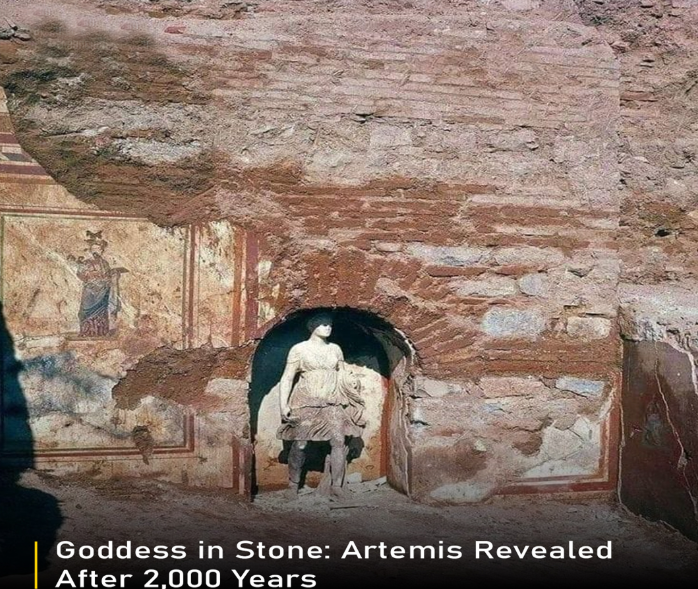
Archaeologists excavating the legendary city of Ephesus, near modern Selçuk, have uncovered a stunning marble statue of Artemis — known to the Romans as Diana. Dating to the 2nd century A.D., the sculpture was discovered carefully placed inside a wall niche at the Casa con le Terrazze, an opulent Roman residential complex overlooking the ancient city.
The context of the discovery makes it especially compelling. Rather than standing in a grand public temple or civic monument, the statue was positioned within a private domestic setting. Its placement strongly suggests that it formed part of a household shrine — a sacred corner where residents honored their chosen deities in daily rituals. In the Roman world, religion was not confined to public ceremonies; it permeated homes, meals, and family life.
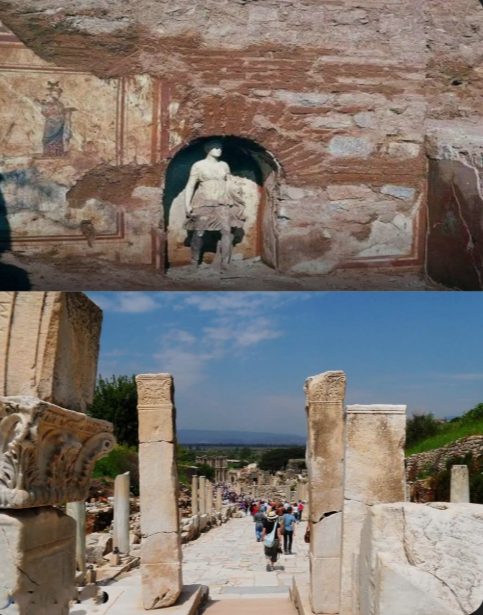 Ephesus was uniquely tied to Artemis. The city was home to the magnificent Temple of Artemis, one of the Seven Wonders of the Ancient World. Pilgrims traveled from across the Mediterranean to worship there, and the goddess was revered as a protector, a symbol of fertility, and a guardian of the city itself. While the Ephesian Artemis developed distinct local characteristics, blending Greek and Anatolian traditions, her presence in a Roman villa centuries later demonstrates the enduring strength of her cult.
The statue’s craftsmanship reflects the refined artistry of Roman sculptors. Carved in marble with elegant detailing, it embodies both divine authority and aesthetic grace. Such pieces were not merely decorative; they were statements of identity, piety, and status. Owning a finely crafted representation of a major deity signaled both wealth and devotion.
The Casa con le Terrazze itself was a luxurious complex, likely inhabited by elite residents. The integration of sacred imagery into its architecture highlights how seamlessly art, faith, and everyday living intertwined. Religion was not separate from domestic comfort — it was embedded in the very walls.
This discovery offers a rare, intimate glimpse into spiritual life in Roman Ephesus. Beyond grand temples and monumental ruins, it reveals how ordinary — or rather, privileged — households expressed reverence within their private spaces. In a quiet niche overlooking the ancient city, the goddess once stood watch, reminding her devotees that the divine was always close at hand.