China’s Hanging Coffins: A 3,000-Year-Old Cliffside Mystery Finally Revealed
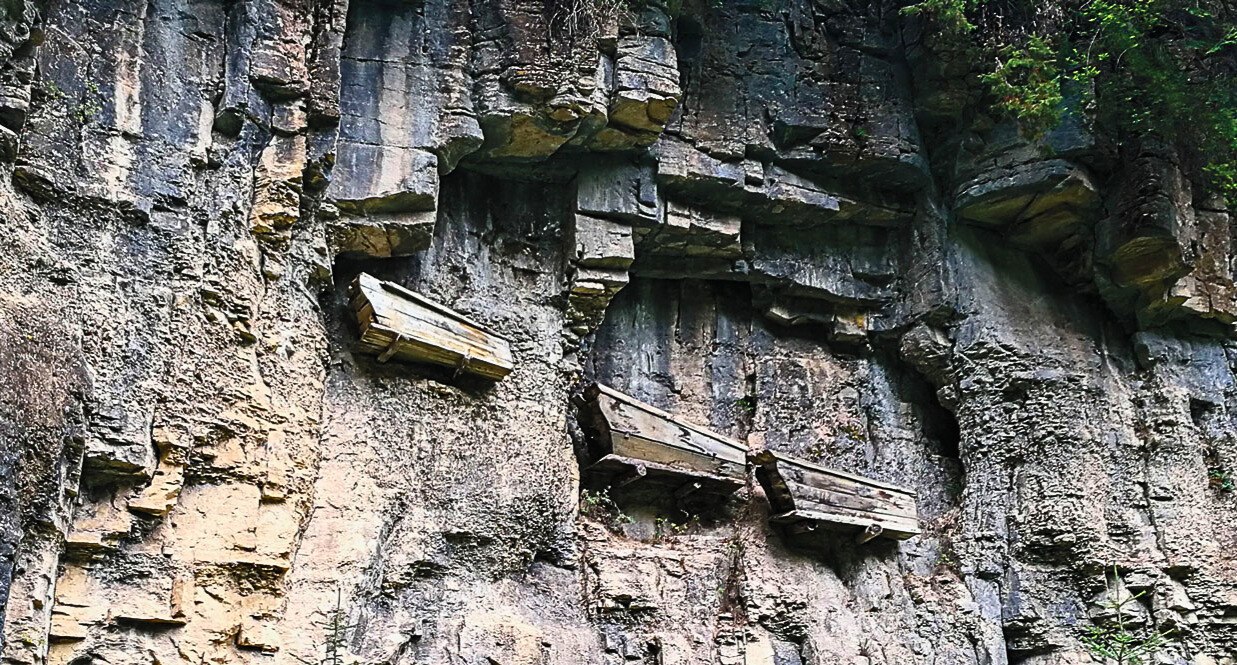
High above river valleys in southwestern China, wooden coffins cling to sheer cliff faces — suspended in places so steep and inaccessible that even modern climbers struggle to reach them. For centuries, these extraordinary burials have puzzled travelers and scholars alike. Who placed them there? How were they lifted? And why choose such perilous heights for the dead?
Now, archaeologists have pushed the origins of this breathtaking funerary tradition back 3,000 years, tracing it to the ancestors of the ancient Bo people.
The most famous examples are found along the cliffs of the Yangtze River and in remote valleys of Sichuan and Yunnan provinces. Some coffins are wedged into natural crevices; others rest on wooden beams inserted directly into rock walls. From below, they appear almost impossibly positioned — hovering dozens or even hundreds of feet above the ground.
For generations, legends tried to explain them. Some believed they were placed high to protect the dead from animals or grave robbers. Others suggested the elevation brought the deceased closer to the heavens. But without firm dating, the beginnings of the practice remained uncertain.
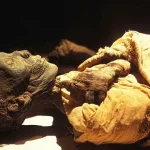
 Recent archaeological work, combined with radiocarbon analysis, has now confirmed that the tradition began around 1,000 BCE. Even more groundbreaking, genetic testing of human remains has linked some of those buried in the hanging coffins to populations associated with the ancient Bo people — an ethnic group recorded in Chinese historical texts but largely lost after conflicts during the Ming dynasty.
This genetic evidence provides rare biological confirmation of cultural continuity. It suggests that the dramatic cliff burials were not isolated acts, but part of a long-standing mortuary system passed down through generations. The Bo and their ancestors appear to have maintained a distinctive identity, expressed in death through this awe-inspiring practice.
 The engineering challenge alone is staggering. Researchers believe elaborate scaffolding systems, rope mechanisms, and wooden frameworks were likely used to haul the coffins upward. In some cases, narrow paths carved into cliff faces hint at carefully planned construction. These were not hurried burials — they were deliberate, labor-intensive ceremonies requiring coordination and skill.
Beyond the technical achievement lies a deeper spiritual dimension. Elevating the dead may have symbolized transcendence, status, or a protective separation between the worlds of the living and the ancestral realm. The cliffs themselves — towering, enduring, and closer to the sky — may have been seen as sacred thresholds.
Today, the hanging coffins remain one of China’s most haunting archaeological sights. Suspended between earth and sky, they embody a blend of engineering mastery, cultural identity, and spiritual imagination. Thanks to modern science, we are finally beginning to understand not just when this tradition began — but who the people were that dared to carry their dead into the clouds.