Miniature Worlds for Eternity: The 4,000-Year-Old Afterlife of an Egyptian Official
- SaoMai
- March 2, 2026
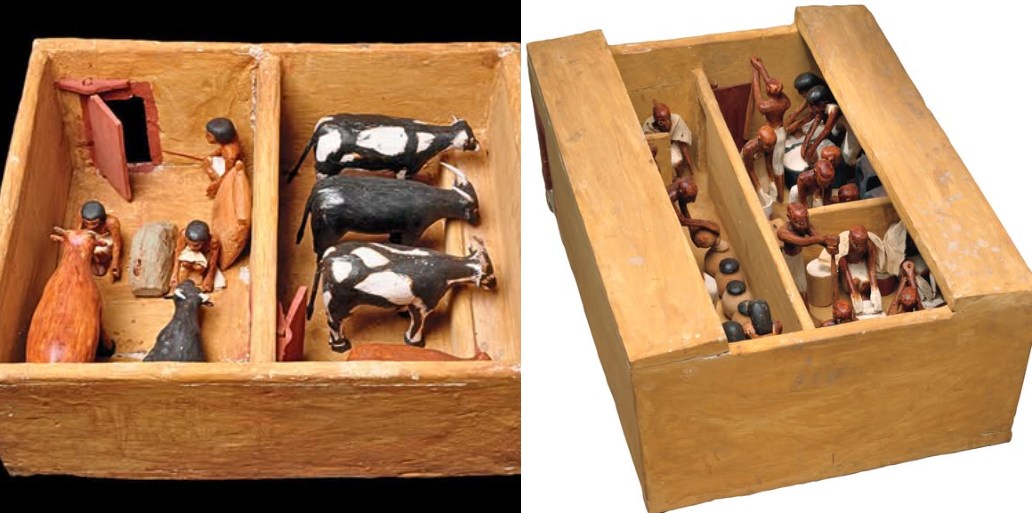
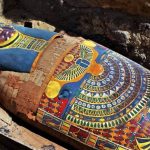
Four thousand years ago, an Egyptian official prepared carefully for eternity — not just with prayers and inscriptions, but with entire miniature worlds designed to follow him into the afterlife. Inside his tomb, archaeologists discovered exquisitely crafted wooden models: a lush garden shaded by trees, a fully stocked granary, a bustling bakery-brewery with workers shaping dough and tending ovens, and even a stable crowded with well-fed cattle. These were not toys. They were eternity, carved in wood.
Such models are known from tombs of the Middle Kingdom, particularly at sites like Beni Hasan, where high-ranking officials were buried with detailed representations of daily life. 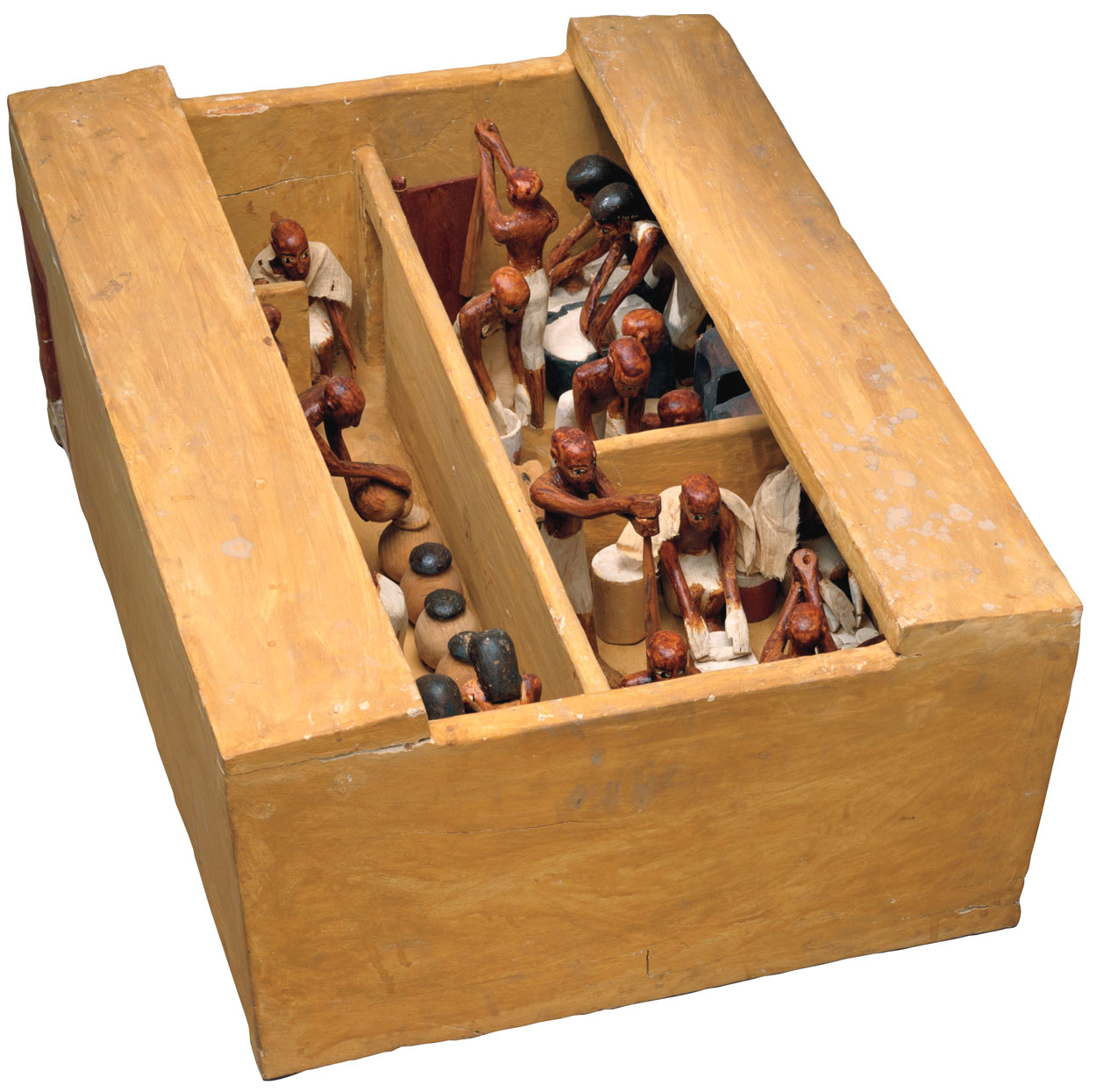 Rather than depicting grand military victories or divine scenes, these objects focus on the rhythms of survival — agriculture, food production, livestock management. The granary ensured grain would never run out. The bakery-brewery guaranteed bread and beer, staples of ancient Egyptian life. The cattle symbolized wealth and sustenance. The garden offered shade, beauty, and renewal.
In ancient Egyptian belief, the afterlife was not an abstract cloudlike realm. It was envisioned as a perfected continuation of earthly existence. The soul — particularly the ka, a vital spiritual essence — required nourishment and familiar surroundings. Tomb paintings and offerings helped sustain it, but these three-dimensional models may have served an even deeper purpose. Archaeologists believe they functioned as magical substitutes: supernatural spaces the deceased could inhabit, visit, or draw sustenance from eternally.
The craftsmanship is astonishing. In the bakery scenes, tiny workers knead dough, carry baskets, and monitor ovens with remarkable realism. In the stable, individual cows are shaped with care, reflecting the importance of livestock to status and economy. 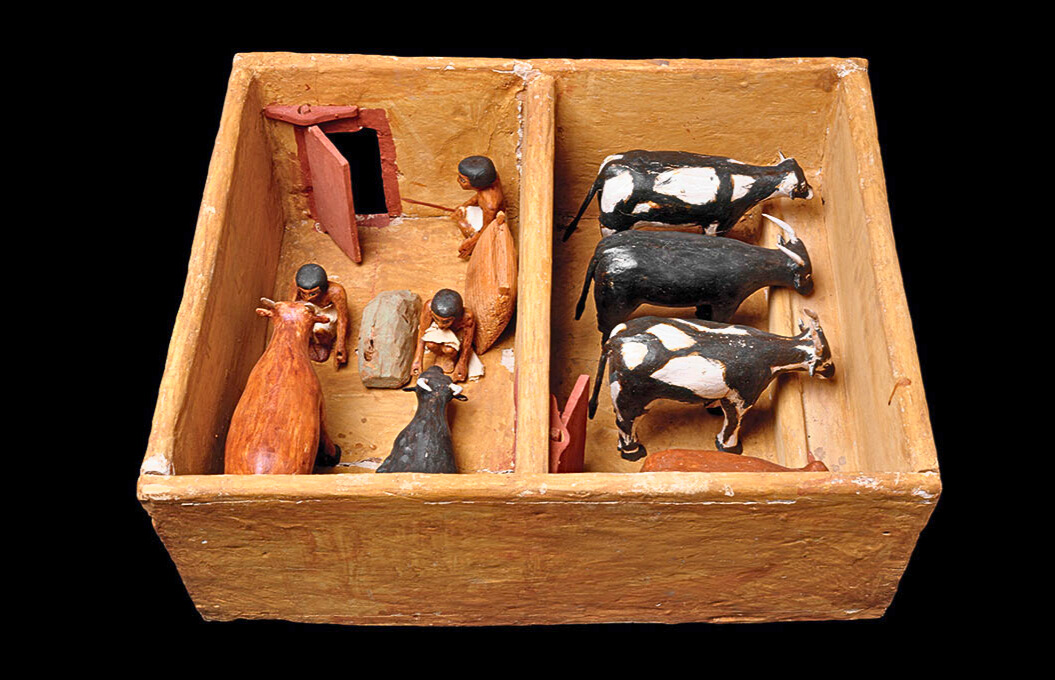 These miniature laborers were thought to perform their tasks forever, ensuring the tomb owner would never face hunger or want.
This practice reflects a profound cultural truth: for ancient Egyptians, preparation for death was preparation for continuity. Wealth and status did not end at burial — they transformed into symbolic, magical guarantees of stability in the next world.
These models offer something rare to modern eyes. They are intimate snapshots of daily life 4,000 years ago, preserved not through disaster but through deliberate devotion. Through them, we glimpse how bread was baked, how grain was stored, how cattle were kept — and how deeply the living wished to carry the comforts of home into eternity.
In these small wooden rooms, an entire worldview survives: one where life, labor, and the promise of renewal were carefully packed for a journey beyond the horizon of death.