A Stone Garden from Deep Time: The 345-Million-Year-Old “Sea Lily” Frozen in Motion
- SaoMai
- March 3, 2026
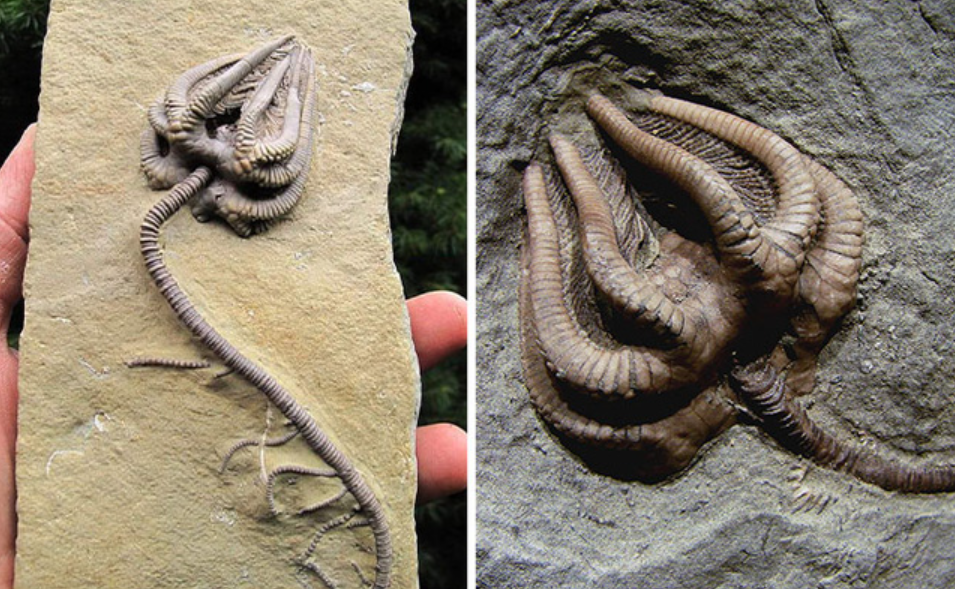
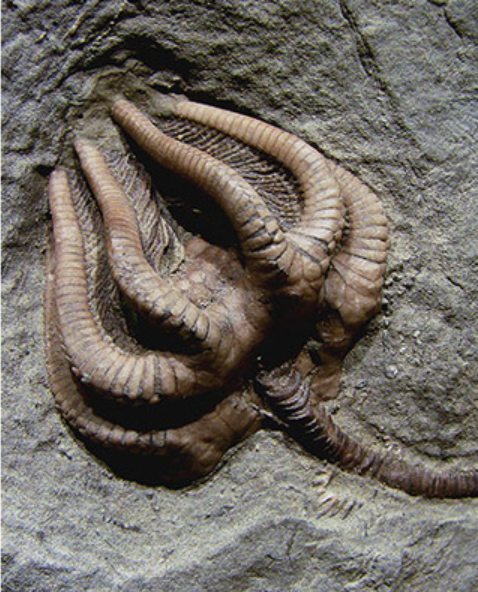
Suspended in stone for 345 million years, this extraordinary fossil is not a flower — it is an animal. The species, Agaricocrinus americanus, belonged to a group of marine echinoderms commonly known as crinoids, or “sea lilies.” During the Carboniferous Period, long before dinosaurs or mammals existed, vast underwater meadows of these elegant creatures swayed in warm, shallow seas, anchored to the seafloor by slender stalks.
At first glance, Agaricocrinus resembles a delicate blossom carved from stone. Its cup-shaped body, known as the calyx, sits atop a segmented stem, while long, branching arms radiate outward in graceful symmetry. Lining those arms were countless tiny, hair-like structures called pinnules, which dramatically increased the animal’s feeding surface.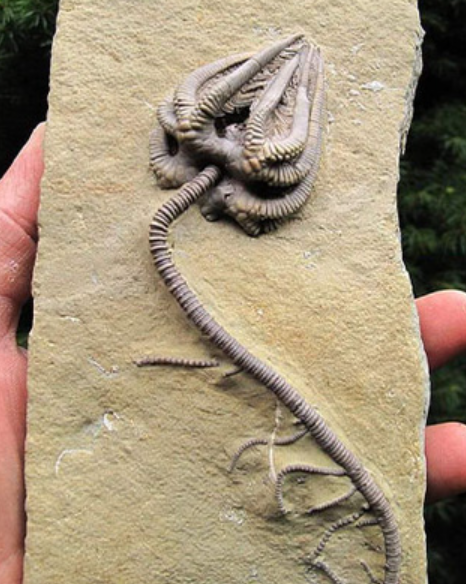 Together, these intricate appendages formed a living net, capturing microscopic plankton drifting in ancient currents. In life, entire colonies would have moved gently with the tides, creating one of the ocean’s most tranquil and mesmerizing spectacles — a silent ballet beneath Carboniferous waves.
What makes this fossil so breathtaking is its state of preservation. Fine mud rapidly buried the organism, acting like a natural snapshot that captured astonishing anatomical detail. Even the most fragile structures — the delicate arms and minute pinnules — remain visible. Such completeness is exceptionally rare in the fossil record, especially for organisms composed of many small, articulated plates that typically disarticulate soon after death. This specimen offers a nearly perfect window into crinoid anatomy and the structure of ancient marine ecosystems.
 Agaricocrinus thrived in a world profoundly different from our own. During the Carboniferous, much of what is now North America lay beneath shallow tropical seas. These waters teemed with early sharks, armored fishes, and formidable marine arthropods. Dense crinoid colonies acted as ecosystem engineers, providing habitat complexity on the seafloor and shelter for smaller organisms. Their mass fossilization often resulted from sudden storm events, which blanketed entire “gardens” in sediment, preserving them in extraordinary detail for hundreds of millions of years.
Although Agaricocrinus americanus itself is long extinct, crinoids as a group endure. Modern relatives still inhabit today’s oceans, particularly in deep-sea environments, making them true “living fossils.” To study this specimen is to trace a nearly unbroken thread of life stretching back 345 million years — a powerful reminder that while individual species vanish, the broader patterns of life can persist through unimaginable spans of time.
Encased in stone, this ancient sea lily is more than a fossil. It is a preserved moment from a vanished ocean, a testament to both the fragility and the extraordinary endurance of life on Earth.