Before the Pyramids: The 9,500-Year-Old Grave That Proved We’ve Always Loved Cats
- SaoMai
- March 3, 2026
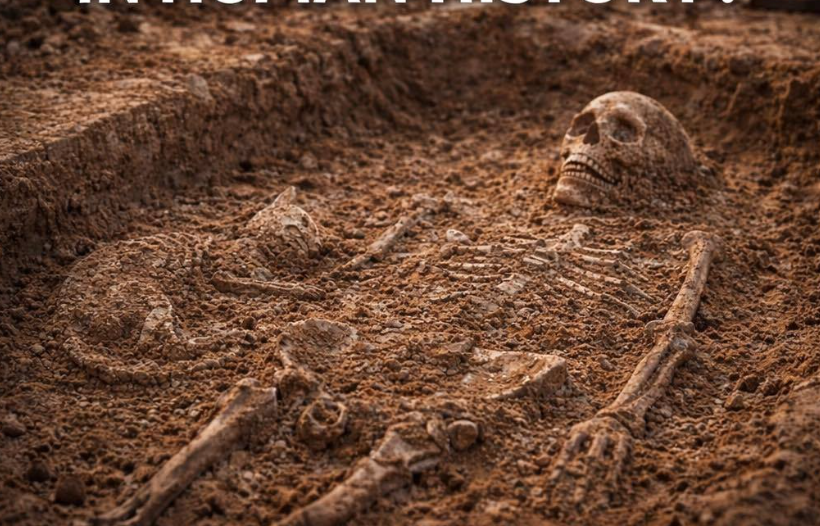
It turns out our bond with cats didn’t begin in ancient Egypt — it began thousands of years earlier, before cities, before writing, before the first pyramids ever rose along the Nile.
At the Neolithic settlement of Shillourokambos in Cyprus, archaeologists uncovered a remarkable 9,500-year-old grave: a human buried carefully beside a young cat. This quiet discovery fundamentally reshaped our understanding of cat domestication. It revealed that humans were forming close, intentional relationships with cats nearly 4,000 years before the monumental architecture of Giza was even imagined.
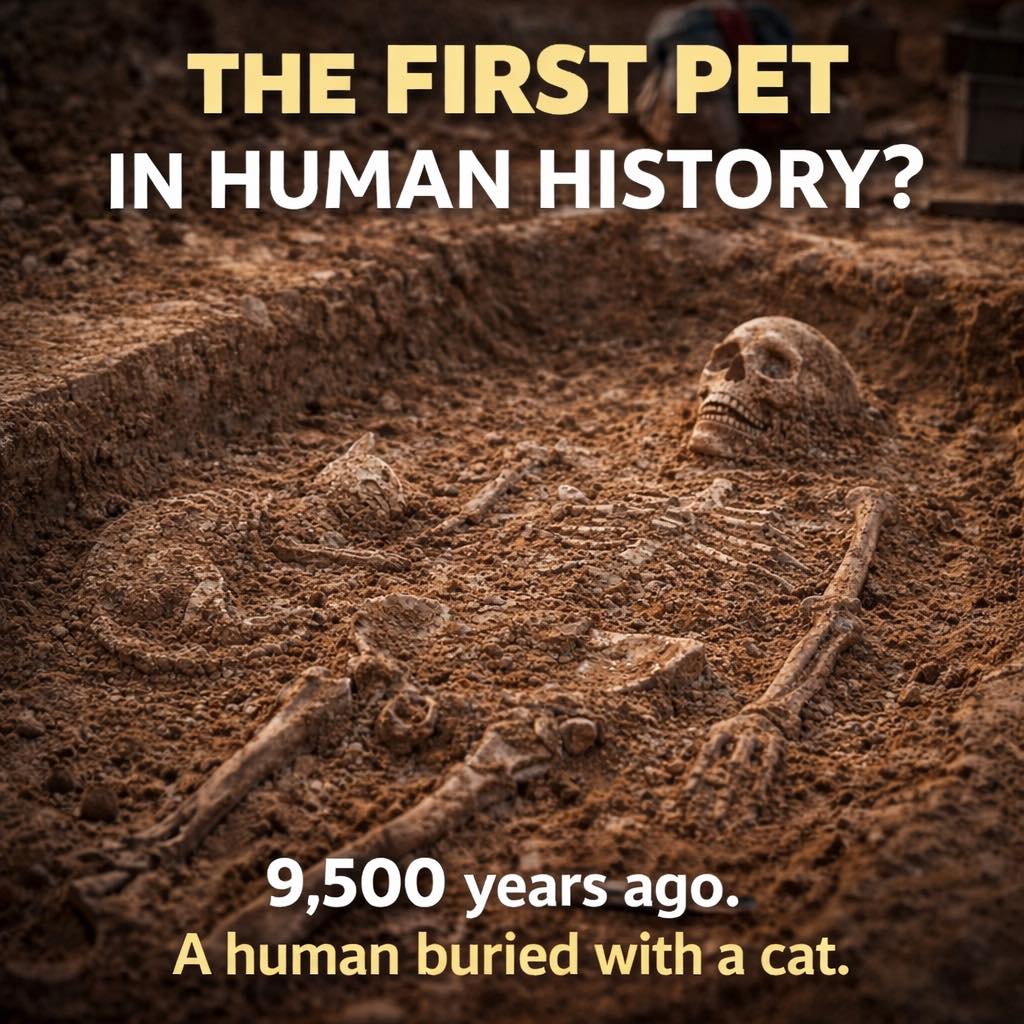 The details make the story even more compelling. Cats were not native to Cyprus at the time. The island had been separated from the mainland for thousands of years, meaning these animals did not arrive naturally. They had to be transported across the sea by boat. That single fact changes everything. These early farming communities did not simply tolerate wild felines lingering near grain stores — they deliberately brought them with them.
The cat in the grave was placed with care, suggesting intention rather than coincidence. This was not the remains of a pest or a stray. It was a companion animal buried in proximity to a human, likely someone of significance within the community. Such a burial implies emotional connection, not mere utility.
For decades, many believed the deep human–cat bond began in Ancient Egypt, where cats were famously revered, protected by law, and associated with deities. While Egypt certainly elevated cats to iconic status, the evidence from Shillourokambos demonstrates that the relationship was already thousands of years old. The roots of companionship stretch back to early agricultural societies, when humans began storing grain — inadvertently attracting rodents, and with them, wildcats. Over time, tolerance became cooperation, and cooperation evolved into companionship.
 This ancient burial tells us something profound about human nature. Even at the dawn of settled life, people were capable of forming bonds that went beyond survival. They chose to live alongside another species, to transport it across water, and to honor it in death.
Nearly ten millennia later, our world is unrecognizable compared to that early Neolithic village. Yet when a cat curls up beside us, the connection feels instinctive and timeless. That grave in Cyprus is more than an archaeological find — it is a reminder that some relationships endure long before history begins writing them down.