Back from the Ice Age: The 32,000-Year-Old Plant That Bloomed Again
- SaoMai
- March 3, 2026
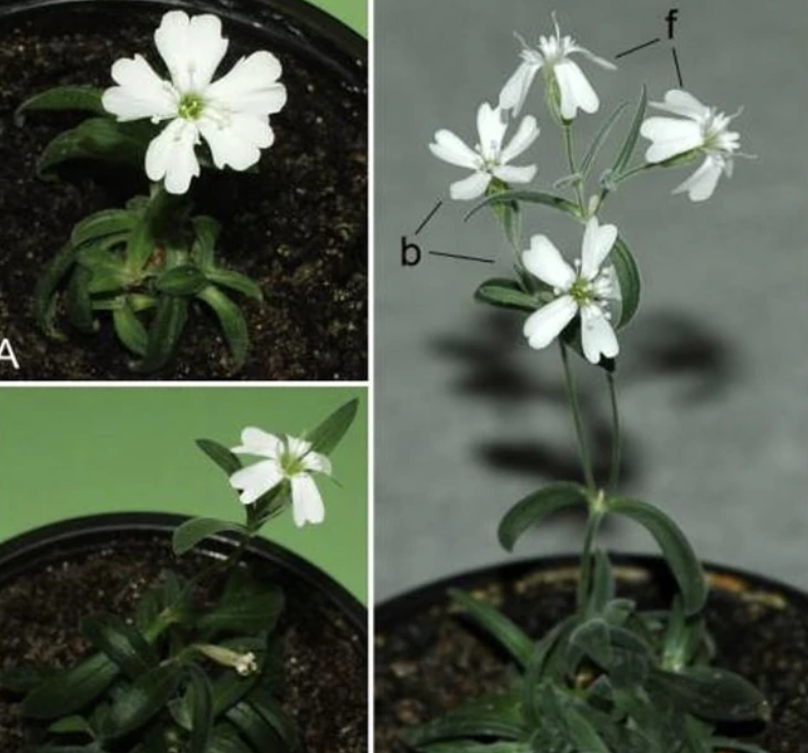
In one of the most astonishing scientific breakthroughs of the 21st century, researchers successfully regenerated a living plant from tissue that had been frozen in Siberian permafrost for approximately 32,000 years — making it the oldest organism ever brought back to life.
The discovery began near the Kolyma River, deep within the frozen soils of northeastern Siberia. Buried 124 feet below the surface, scientists uncovered ancient plant material inside the fossilized burrow of an Ice Age squirrel. During the late Pleistocene, these small mammals stored seeds and fruits in underground caches — natural vaults that, in this case, became perfectly sealed time capsules. The constant temperature of around 19°F (-7°C) effectively halted cellular decay, preserving the tissue since the age of woolly mammoths.
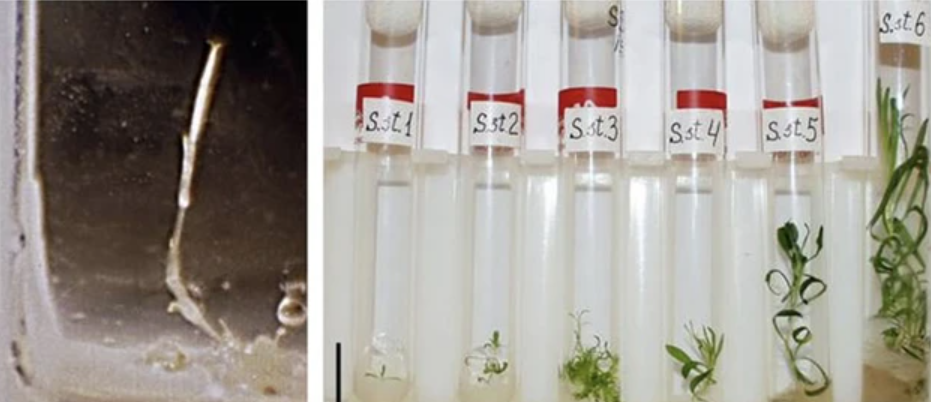
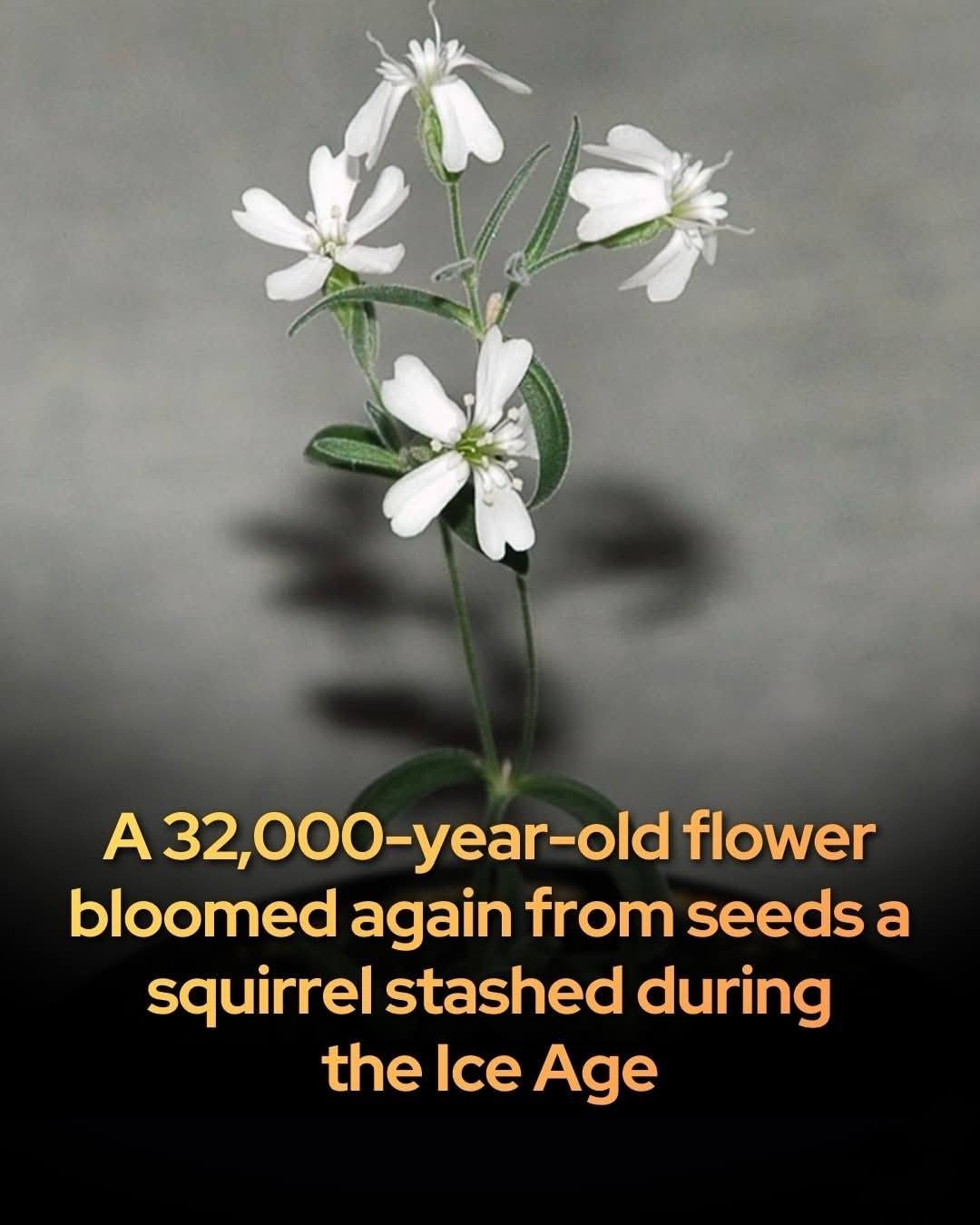 The plant species identified was Silene stenophylla, a hardy Arctic flowering plant that still exists today in northeastern Siberia. Initial attempts to germinate the mature seeds failed, as they had suffered damage over millennia. However, scientists took a different approach. Instead of relying on the seeds themselves, they extracted viable tissue from immature fruit samples preserved in the burrow.
Using sterile laboratory conditions and a specialized growth medium, researchers stimulated the ancient cells to regenerate. Remarkably, the experiment succeeded. Not only did the plant grow, it flowered — and produced fertile seeds of its own. Even more intriguing, the regenerated specimens displayed subtle differences from modern Silene stenophylla plants, offering a rare glimpse into evolutionary change across tens of thousands of years.
The groundbreaking study, published in the Proceedings of the National Academy of Sciences by Yashina and colleagues, represents more than a botanical curiosity. It demonstrates that complex plant tissues can remain viable across immense spans of time under the right preservation conditions. This finding carries profound implications for biodiversity conservation.
 By understanding how these ancient cells survived intact for 32 millennia, scientists hope to improve modern preservation strategies, including facilities such as the Svalbard Global Seed Vault. Often described as a “doomsday vault,” Svalbard safeguards crop diversity against global catastrophe. Insights from the Siberian resurrection could enhance long-term seed storage techniques and genetic conservation efforts worldwide.
As climate change accelerates permafrost thaw across the Arctic, more ancient biological material is being exposed. While this raises ecological concerns, it also reveals that Earth’s frozen regions are not merely graveyards of extinct life — they are potential archives of genetic history.
The revival of Silene stenophylla is a powerful reminder that life, under extraordinary circumstances, can endure far beyond what we once imagined possible. Frozen beneath ice for 32,000 years, it waited — and when given the chance, it bloomed again.