Frozen in Time: A 20,000-Year-Old Emerges from Siberia’s Melting Permafrost
- SaoMai
- March 3, 2026
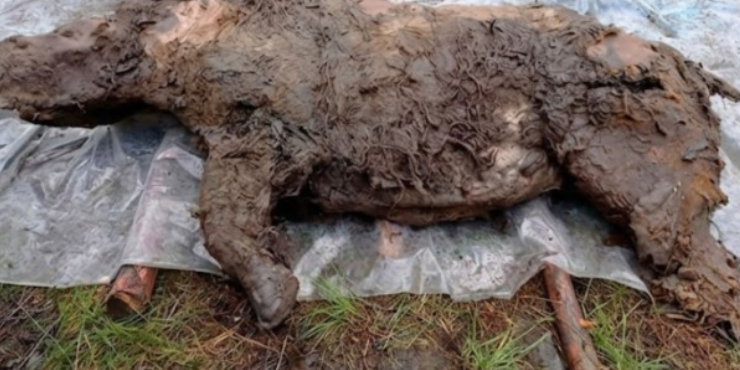
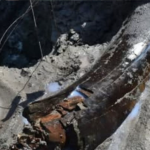
From the icy depths of Siberia’s frozen ground, an extraordinary survivor of the Ice Age has come back into the light.
As rising temperatures continue to thaw the vast permafrost of northern , researchers have uncovered a remarkably preserved woolly rhinoceros—entombed in ice for nearly 20,000 years. Unlike scattered bones or fossilized fragments, this specimen is astonishingly intact. Thick reddish-brown fur still clings to its body. Skin, muscle tissue, and even internal organs remain preserved in stunning detail, offering scientists a rare and intimate glimpse into a species that disappeared more than 10,000 years ago.
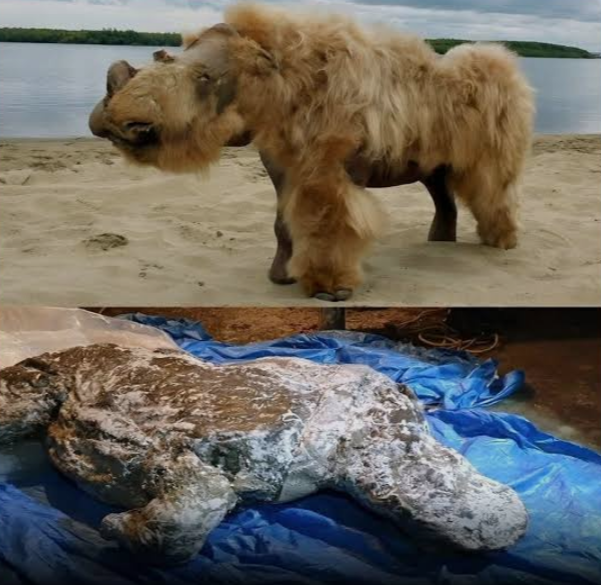 Experts believe the young rhino likely met a sudden end—possibly trapped in mud near a riverbank or drowning during seasonal flooding. Almost immediately, freezing temperatures sealed its body in a natural deep-freeze. Over millennia, layers of permafrost acted like a time capsule, protecting it from decay and scavengers.
What makes this discovery so invaluable is not just its preservation, but the story locked within it. Scientists examining the stomach contents found a final meal of grasses, sedges, and flowering plants—clear evidence of the rich, diverse vegetation that once blanketed the Ice Age steppe. Microscopic pollen grains caught in its fur provide further clues about the environment it roamed, helping researchers reconstruct ancient ecosystems with surprising precision.
The woolly rhinoceros was one of the dominant megafauna of the last Ice Age, sharing its habitat with mammoths, cave lions, and early humans. Thick fur and a dense layer of fat allowed it to survive brutal winters across Eurasia. 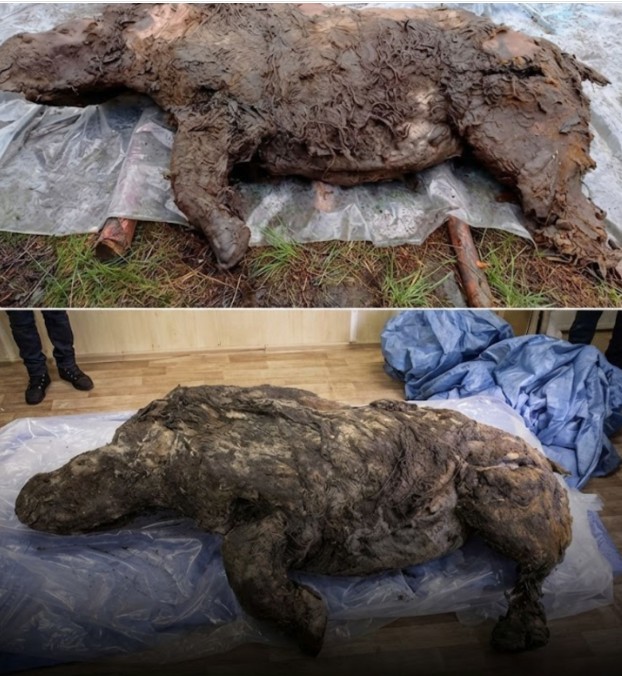 Yet even these formidable adaptations were not enough to withstand dramatic climate shifts at the end of the Pleistocene. As temperatures rose and habitats transformed, the species gradually vanished.
Ironically, it is modern climate change that is now revealing these ancient remains. As permafrost thaws at accelerating rates, long-buried relics—from Ice Age predators to prehistoric plants—are emerging with increasing frequency. Each discovery expands scientific understanding, but also serves as a sobering reminder of how fragile ecosystems can be when climate patterns shift rapidly.
This frozen rhinoceros is more than a scientific marvel. It is a messenger from a vanished world—a world of sweeping grasslands, towering glaciers, and giant beasts. Preserved in ice for twenty millennia, it now stands as both a window into Earth’s distant past and a warning about its uncertain future.