Roman Barbegal Watermills: Europe’s First Industrial-Scale Machine Complex
Roman Barbegal Watermills: Europe’s First Industrial-Scale Machine Complex
The 2nd century CE Barbegal watermills complex in southern France stands as one of the most remarkable engineering achievements of the ancient Roman world.
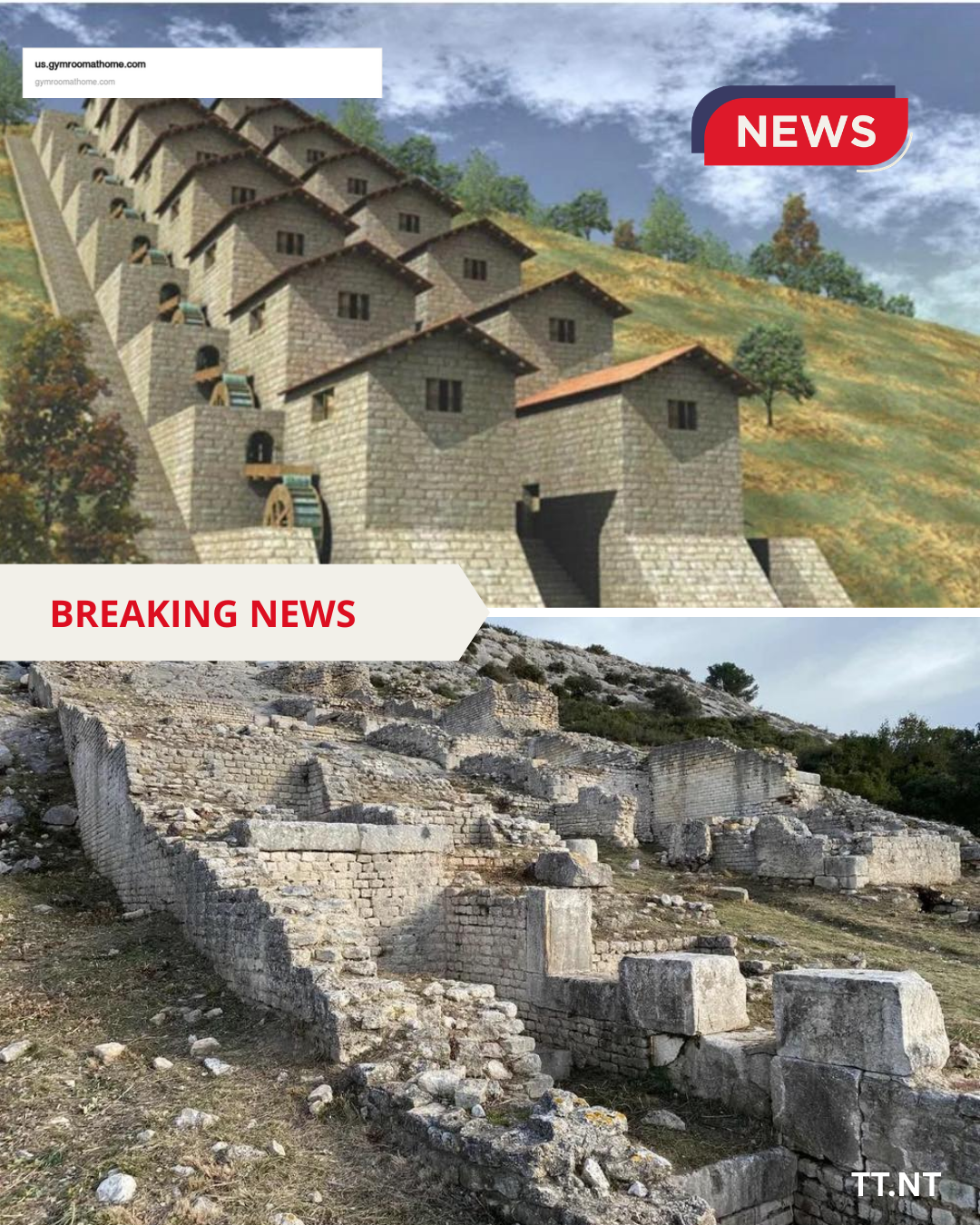
Located near Arles, the site consisted of a cascading arrangement of 16 waterwheels built into a hillside. Powered by water diverted from a Roman aqueduct, the mills operated in parallel rows, allowing gravity to drive the flow from one wheel to the next. This configuration created what many historians describe as the first known industrial-scale machine complex in Europe.

Archaeological research suggests the facility had an estimated production capacity of up to 25 tonnes of flour per day — enough to supply a substantial urban population. Such output indicates that the Roman Empire was not only capable of monumental architecture and road networks but also sophisticated mechanized food production.
The Barbegal mills highlight the Romans’ advanced understanding of hydraulics, engineering design, and economic organization. Rather than relying solely on manual or animal labor, the complex demonstrates a deliberate effort to centralize and mechanize grain processing.
Although the site eventually fell into disuse, its remains provide critical insight into early industrial thinking long before the medieval and modern industrial revolutions.

Today, the ruins of Barbegal continue to challenge assumptions about ancient technological limits, revealing that large-scale mechanized production was not solely a modern innovation but had deep roots in the classical world.