The Catacomb Saints: Jeweled Martyrs of Early Christianity
The Catacomb Saints: Jeweled Martyrs of Early Christianity
In 1578, underground tombs discovered along the Via Salaria in Rome revealed skeletal remains believed to belong to early Christian martyrs. These remains later became known as the “Catacomb Saints.”
At a time when the Catholic Church sought to reaffirm its spiritual authority during the Counter-Reformation, the relics were distributed to churches across Europe. They were presented as sacred connections to Christianity’s earliest believers and martyrs.

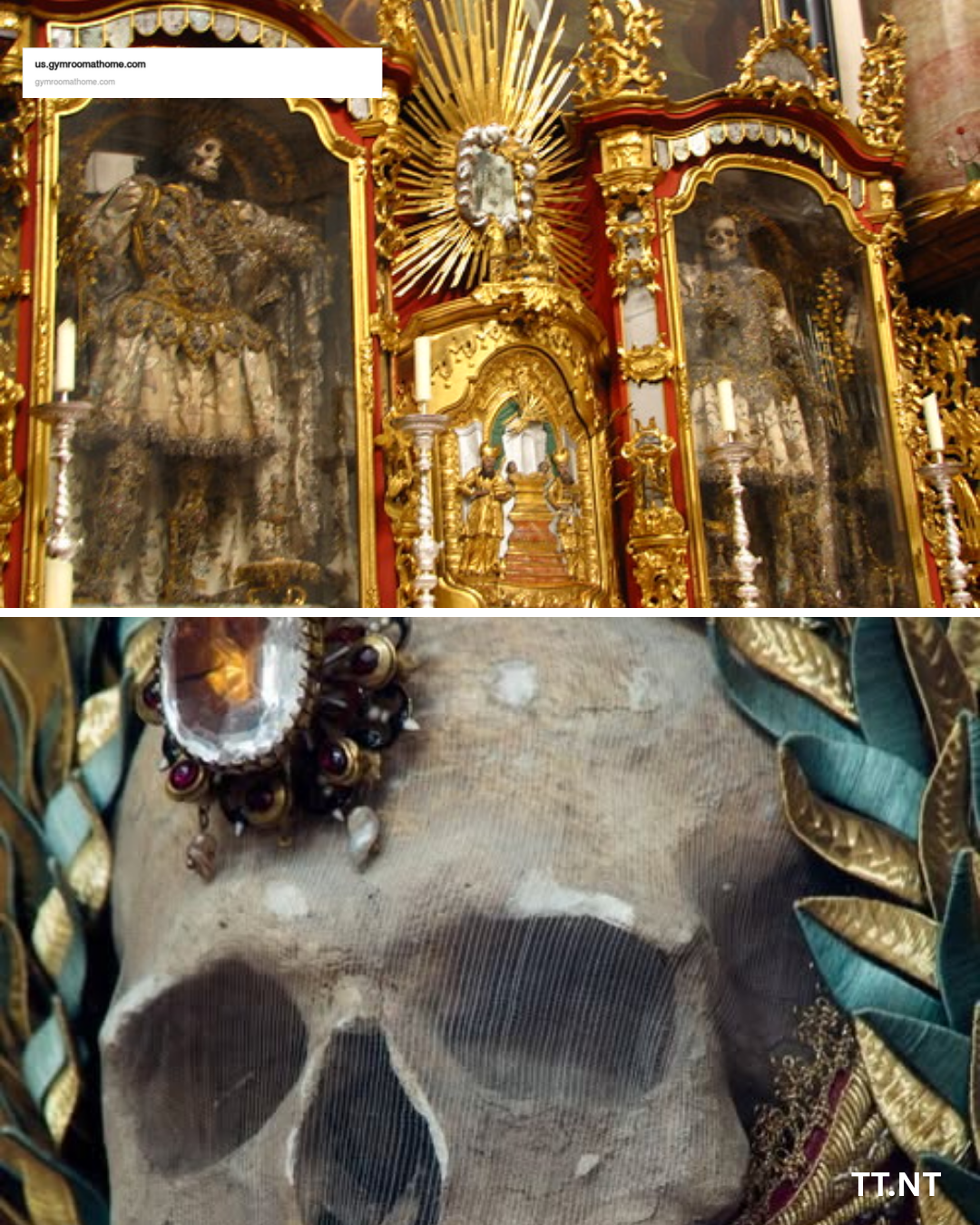
Rather than being displayed plainly, the skeletons were lavishly adorned. Skilled artisans encased the bones in intricate arrangements of gold thread, precious jewels, embroidered silk garments, and ornamental armor. The goal was not merely preservation, but glorification — transforming skeletal remains into radiant symbols of faith and triumph over death.
One of the most remarkable collections can be found at the Waldsassen Basilica in Bavaria, Germany. The basilica houses ten elaborately decorated skeletons, many crafted in the 18th century by artisans including Adalbart Eder, a Cistercian goldsmith renowned for his meticulous work.

These jeweled relics were venerated throughout Germany, Austria, and Switzerland, serving as tangible links to the early Church. For centuries, pilgrims traveled to view them, regarding the adorned remains as embodiments of devotion, sacrifice, and divine grace.
Although modern scholarship has questioned the precise identities of many Catacomb Saints, their cultural and artistic significance remains profound. They stand at the intersection of faith, craftsmanship, and history — a striking testament to how relics shaped religious identity in early modern Europe.