Gold and Devotion: A Colchian Statuette from Ancient Vani
- SaoMai
- March 3, 2026
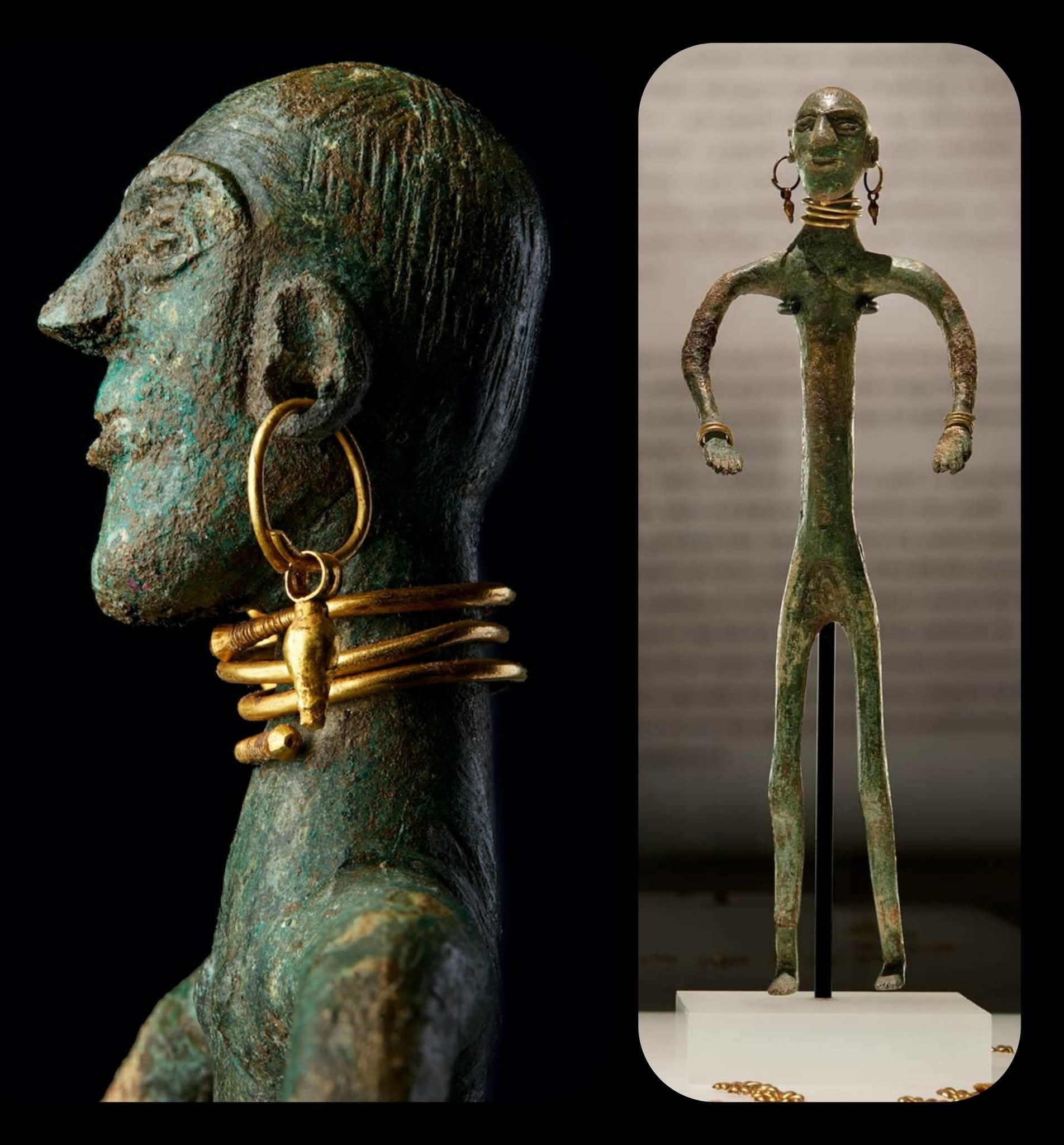
In 2002, archaeologists working on the windswept upper terrace of Vani made a discovery that quietly illuminated a forgotten spiritual world. Carefully wedged between roofing tiles in a small rectangular pit cut into the bedrock—just outside a third-century BCE sanctuary—lay a finely crafted bronze statuette adorned with gold. Though modest in scale, the figure carries immense historical weight, offering rare insight into the religious life of the ancient Colchians.
Now preserved in the Georgian National Museum in Tbilisi (inventory no. 1-2007/1), the statuette depicts a stylized male figure richly embellished with gold jewelry. Around his neck rests a torque; his wrists are circled with bangles; delicate earrings frame his face. These details were not incidental. Gold, in the ancient world, symbolized power, divinity, and prestige. 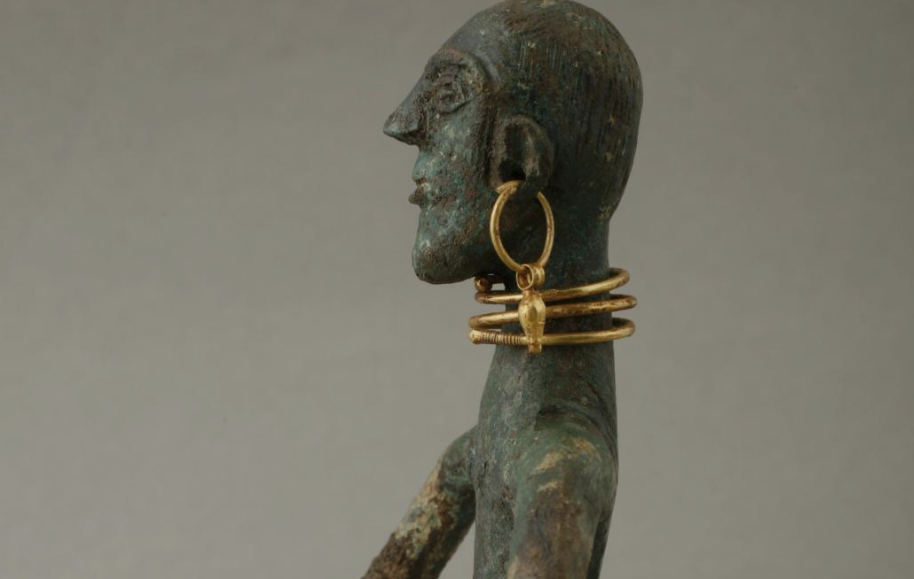 The careful application of precious metal to a bronze core suggests the figure represented someone—or something—of profound importance.
Vani, once a flourishing center in the region of ancient Colchis, was a vibrant hub of trade, culture, and ritual activity during the Hellenistic period. While classical sources often focus on Colchis through myth—most famously in the tale of the Golden Fleece—the archaeological record provides a more grounded, though still mysterious, picture. The sanctuary where this statuette was found dates to the 3rd century BCE and formed part of a complex sacred landscape that included altars, temples, and ritual deposits.
The context of the discovery is especially compelling. The figure had been intentionally placed within a rock-cut pit and concealed beneath tiles, suggesting a deliberate votive offering rather than accidental loss. Its careful positioning indicates ritual intent—perhaps an act of devotion, thanksgiving, or supplication. Similar iron statuettes discovered nearby reinforce the idea that such figures played a role in local religious practices, possibly representing worshippers, deities, or heroic ancestors.
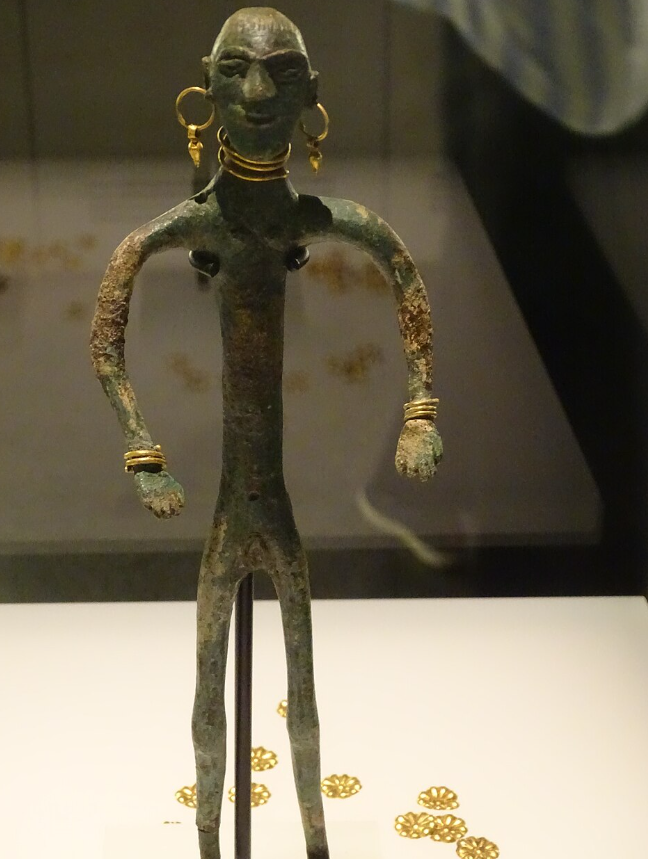 Despite these clues, much about Colchian religion remains elusive. Written records are scarce, and interpretation relies heavily on material evidence. This small, gleaming figure thus becomes a rare voice from a largely silent culture. Its stylized features bridge local traditions and broader Hellenistic artistic influences, reflecting a society connected to Mediterranean networks yet firmly rooted in its own beliefs.
Courtesy of the Georgian National Museum, the statuette stands as more than an artifact. It is a testament to devotion, identity, and craftsmanship in ancient Colchis—a golden whisper from a sanctuary carved into stone over two millennia ago.