Eternal Embrace: The 7,000-Year-Old Grave of “The Old Man and the Child”
- SaoMai
- March 3, 2026
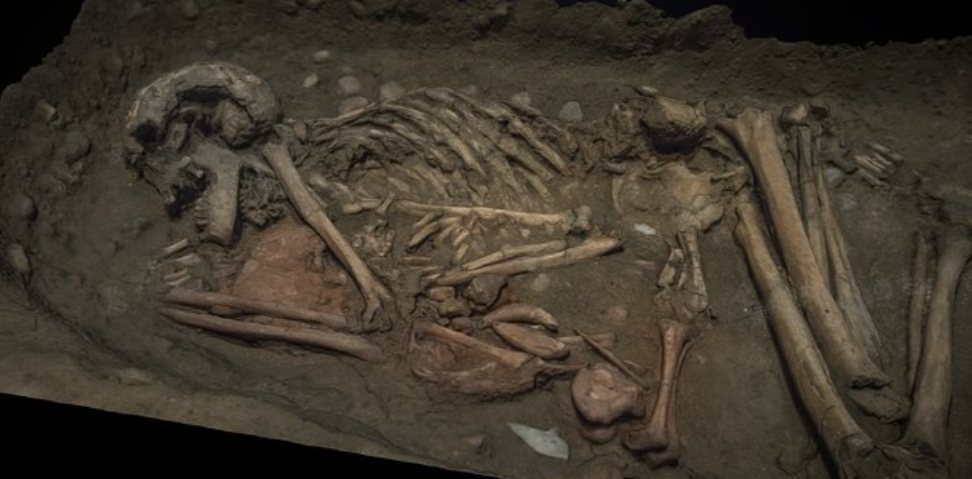
Along the southern coast of Skåne in Sweden lies Skateholm, one of Scandinavia’s most extraordinary Stone Age burial sites. Dating back approximately 7,000 years, this coastal settlement has revealed dozens of graves, ritual traces, and remarkable artifacts that illuminate the spiritual and emotional world of Mesolithic communities. Among its most moving discoveries is a burial often called “the old man and the child”—a grave that continues to stir hearts millennia after it was sealed.
Inside this carefully prepared grave lay a man about 60 years old, an impressive age for his time. Nestled closely beside him was a small child, estimated to be just four or five years old. Both were placed gently on their sides, facing one another. The child’s face was turned toward the man’s chest, and the man’s arm appears to curve protectively around the child’s head. Even in death, their bodies convey tenderness and intimacy, as though frozen in a final gesture of care.
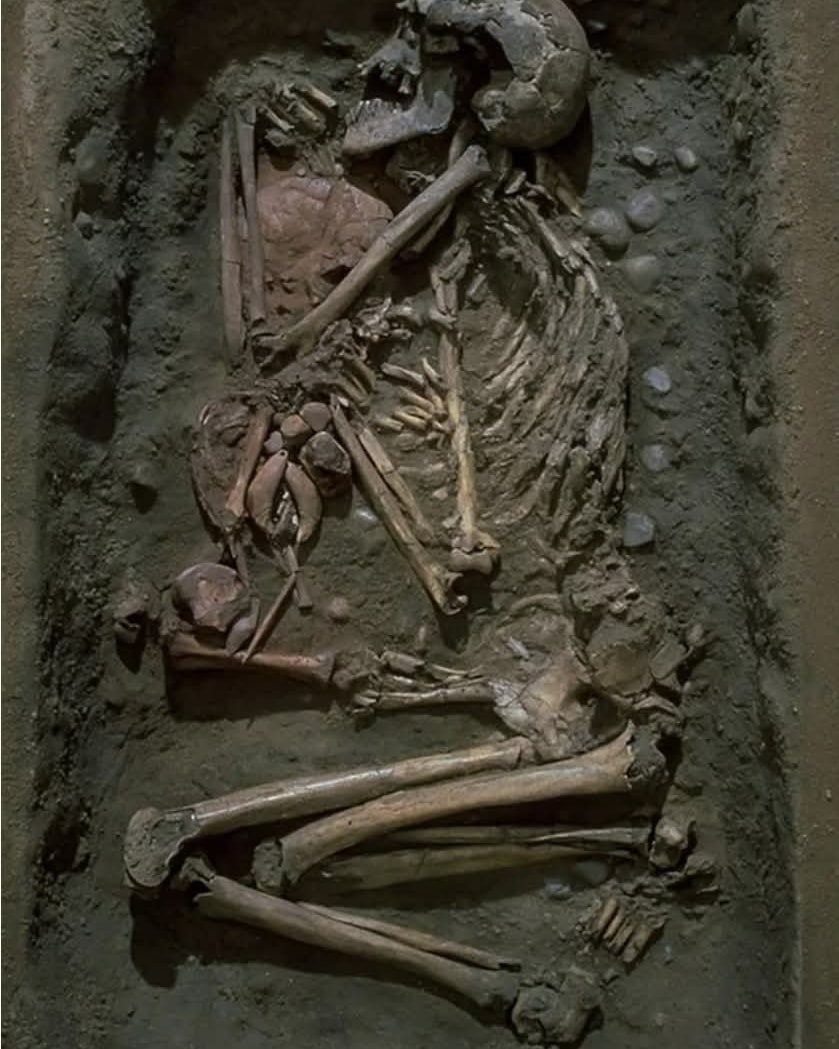 The burial goods deepen the story. Resting on the child’s chest were ornaments made of bear teeth, large amber pieces, and a finely crafted bone point. These items were not casual additions; they suggest meaning, memory, and perhaps status. Bear teeth may have symbolized strength or spiritual power, while amber—glowing like captured sunlight—was a prized and meaningful material in Stone Age Scandinavia.
The child’s body had also been sprinkled with red ochre, a pigment frequently found in prehistoric burials. Red ochre, derived from iron-rich deposits in water sources, was collected, dried, and heated to produce its vivid hue. Archaeologists believe it may have colored garments or been applied directly to the body. Though its exact purpose remains uncertain, red ochre is widely interpreted as having strong ritual or symbolic significance—possibly linked to life, blood, rebirth, or protection in the afterlife.
 When the grave was first excavated, researchers thought the child had been buried at a later date. The unusual position of the man’s right hand suggested a disturbance or secondary burial. However, more recent analyses indicate that both individuals were interred simultaneously. This reinterpretation transforms the scene into something profoundly poignant: a shared farewell.
Today, the grave is displayed at the Swedish History Museum, where visitors can stand before this silent testament to prehistoric humanity. Beyond its archaeological importance, the burial speaks across seven millennia with a message that feels timeless. In their final embrace, the old man and the child remind us that love, grief, and care are not modern emotions—they are among the oldest threads in the human story.