The Windeby Body: When Science Unmasked a 2,000-Year-Old Mystery
- SaoMai
- March 3, 2026
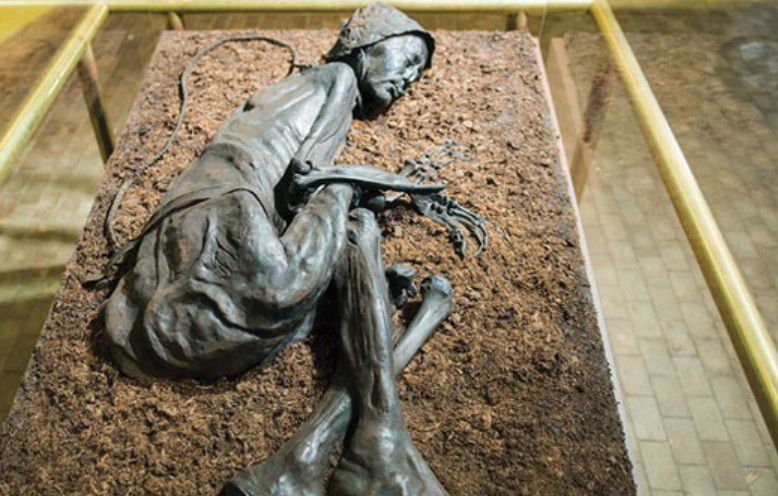
In 1952, peat cutters working in the wetlands of northern Germany made a chilling discovery beneath the dark, waterlogged earth. Curled tightly in a fetal position lay a remarkably preserved human body, its eyes closed as though in quiet sleep. The bog had stained the skin a deep brown, compressed the bones, and preserved the figure in haunting detail. It felt less like an archaeological find and more like a moment frozen in tragedy.
The remains were soon identified as a young girl, believed to have lived during the Iron Age. Scholars speculated that she had been punished or sacrificed in a ritual killing. With apparent signs of injury—a missing leg and damage to the skull—the narrative seemed to fit. The media embraced the story, and the figure became widely known as the “Windeby Girl,” a symbol of ancient cruelty and mystery emerging from the peat.
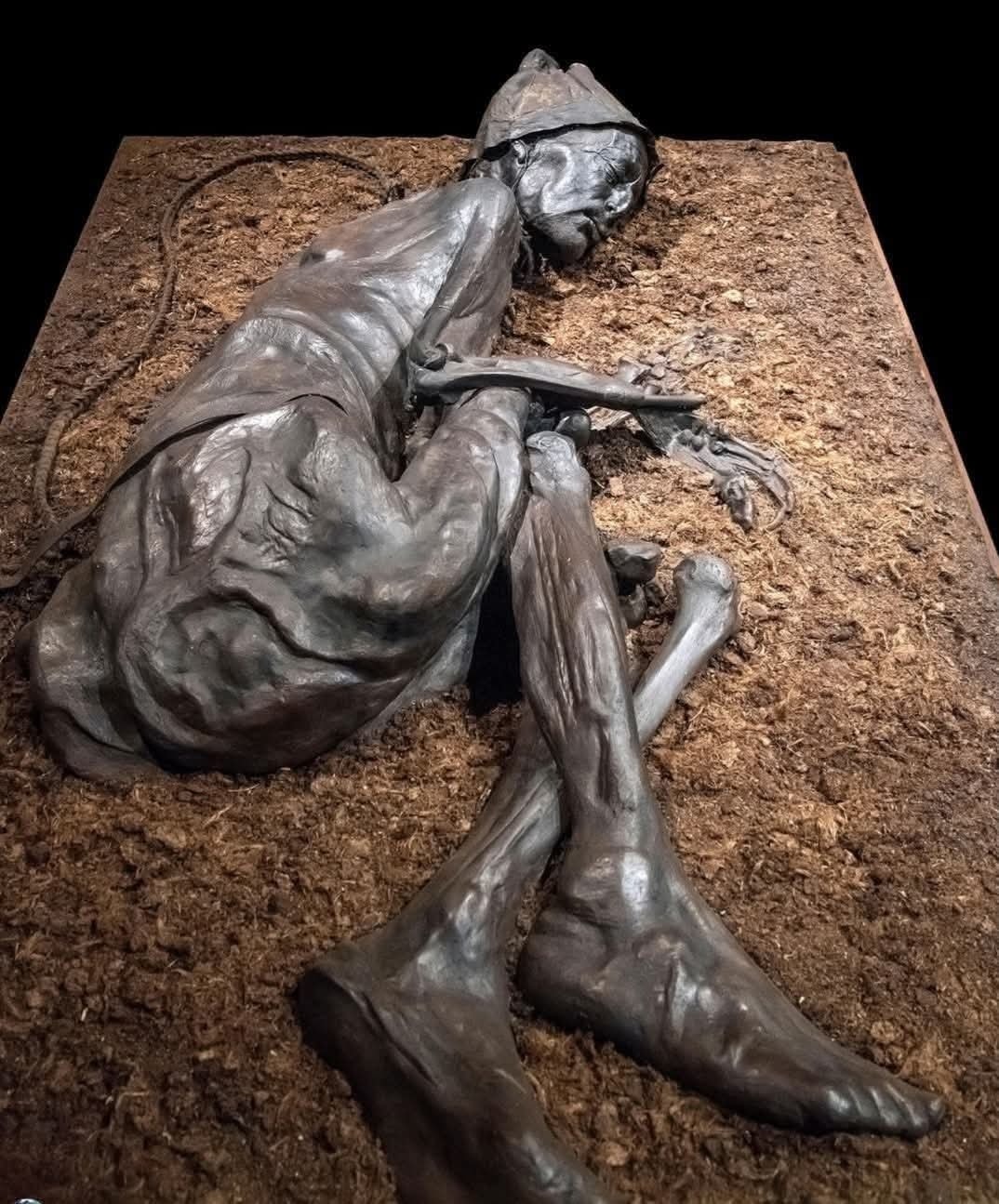 The body was found near the village of Windeby, not far from the Baltic coast, and eventually became one of the most famous exhibits at the Gottorf Castle in Schleswig, Germany. For decades, visitors gazed upon the fragile figure, absorbing the dramatic tale of sacrifice and sorrow that accompanied it.
But more than fifty years later, modern science challenged everything.
In 2006, Canadian anthropologist Heather Gill-Robinson conducted a new forensic investigation using advanced techniques, including DNA testing and detailed osteological analysis. The findings overturned decades of assumption: the body was not female, but male—a boy around sixteen years old at the time of death.
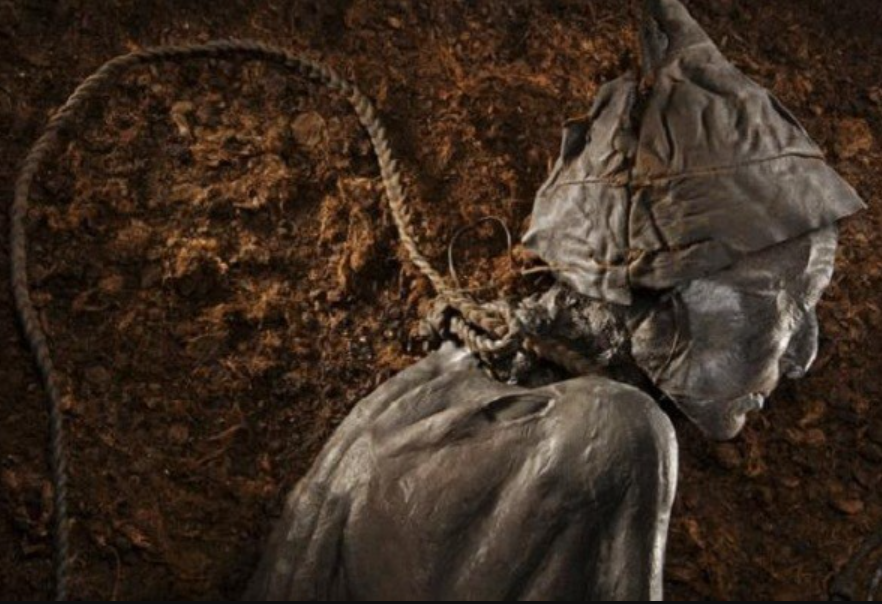 Even more striking, the supposed evidence of ritual violence began to dissolve under scrutiny. The crushed skull was likely the result of pressure from layers of peat and soil accumulating over centuries. The missing leg? Probably lost during mechanical peat cutting or excavation damage. What had long been interpreted as signs of sacrifice were, in fact, the effects of nature and time.
The dramatic narrative that once captivated scholars and the public alike had been built largely on interpretation rather than hard evidence. The “Windeby Girl” was, in reality, a teenage boy whose death remains unexplained—but not necessarily violent.
 Yet the mystery endures in a different way. Preserved for nearly 2,000 years in the acidic, oxygen-poor environment of a German bog, the Windeby body stands as a powerful reminder of how the past can mislead as easily as it reveals. Archaeology is not only about discovery—it is about revision, humility, and the willingness to question what we think we know.
In the end, the Windeby boy tells two stories: one from the Iron Age, and one from our own time—about how science can peel back layers of myth to uncover a more complex, and often more human, truth.