“The Thing” from Antarctica: The Giant Egg That Rewrote Prehistoric History
- SaoMai
- March 3, 2026
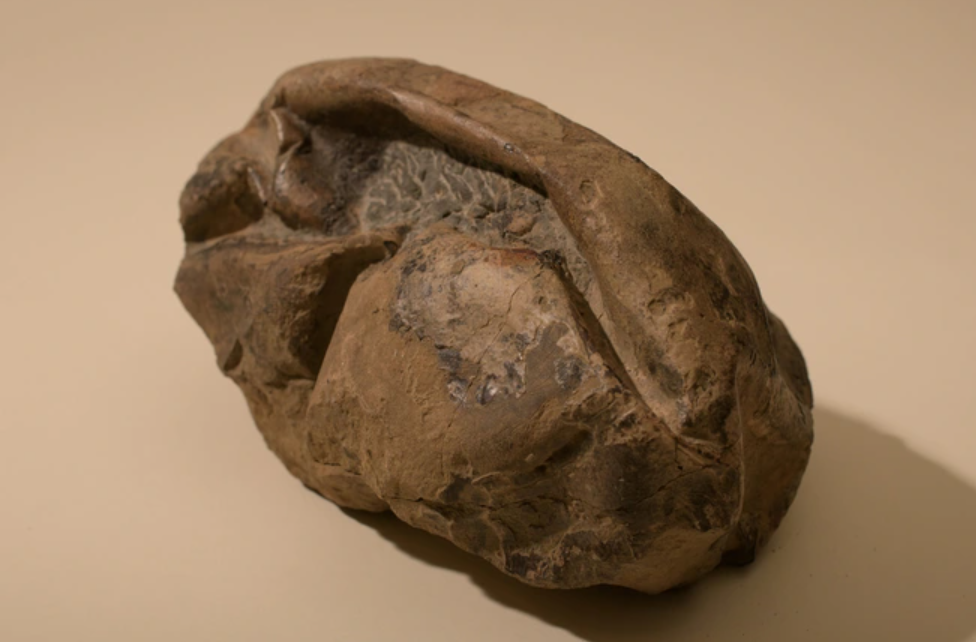
Imagine brushing away Antarctic sediment and uncovering something that looks like a collapsed, deflated football—only to realize you are holding a genuine egg laid more than 66 million years ago. That is exactly what happened on Seymour Island, where one of the most astonishing fossil discoveries in recent decades emerged from the frozen ground.
Nicknamed “The Thing” by researchers, the specimen puzzled scientists for years. Its strange, wrinkled appearance did not resemble the familiar hard-shelled dinosaur eggs displayed in museums. But detailed microscopic and chemical analysis eventually revealed the truth: it was a massive soft-shelled egg dating to the Late Cretaceous period.  Measuring approximately 29 by 20 centimeters, it is the largest soft-shelled egg ever discovered and ranks among the largest eggs of any animal in Earth’s history.
What makes this discovery especially extraordinary is its location. Antarctica today is a frozen desert, hostile and barren. Yet during the Cretaceous period, it was a dramatically different world—milder in climate and rich in life. Fossils from formations such as the Lopez de Bertodano Formation reveal a thriving ecosystem of marine reptiles, fish, ammonites, and early birds. The presence of such a delicate fossil in this environment is exceptionally rare, as soft shells typically decay long before fossilization can occur.
Soft-shelled eggs are common today among reptiles like snakes and lizards, whose flexible, leathery coverings differ greatly from the rigid calcium-rich shells of birds. The structure of “The Thing” closely resembles those of living lepidosaurs. This resemblance led scientists to compare egg size to body size across 259 modern reptile species. Their conclusion was startling: the egg was likely laid by a giant marine reptile.
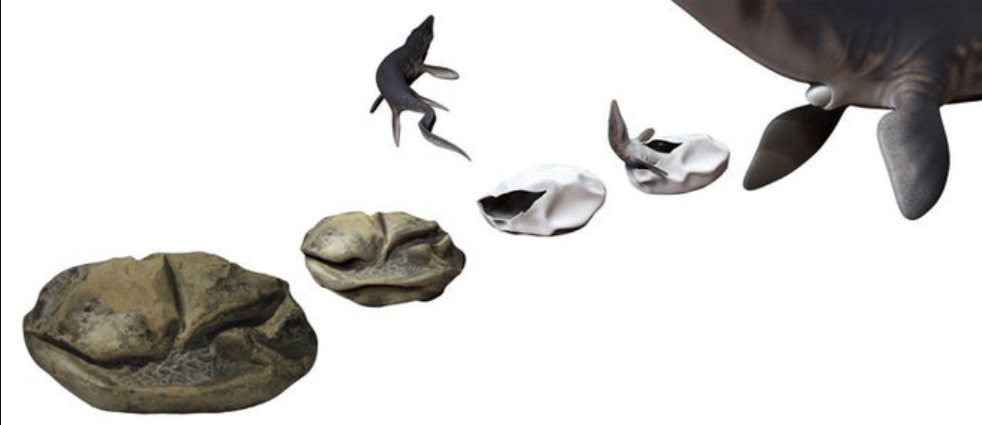 One leading candidate is a mosasaur—an enormous ocean predator that dominated Late Cretaceous seas. These formidable reptiles, some exceeding 10 meters in length, were long thought to give birth to live young, similar to whales and dolphins, avoiding the challenge of returning to land to lay eggs. However, this fossil suggests a more complex story. It may indicate that at least some large marine reptiles produced eggs, possibly laying them in shallow coastal environments just before hatching.
Over time, the egg collapsed and folded in on itself. Its soft shell lacked the rigid structure necessary to maintain its shape under sediment pressure, giving it the shriveled appearance that initially confused researchers. Ironically, this fragile structure is precisely what makes it so rare and scientifically valuable.
“The Thing” is more than an unusual fossil—it is a reminder that even in the most remote corners of the planet, the past can surface in unexpected ways. From a frozen island at the bottom of the world, a single egg has reshaped our understanding of how ancient ocean giants brought new life into the Cretaceous seas.