When Fossils Turn to Fire: The Dazzling World of Opalized Prehistory
- SaoMai
- March 3, 2026
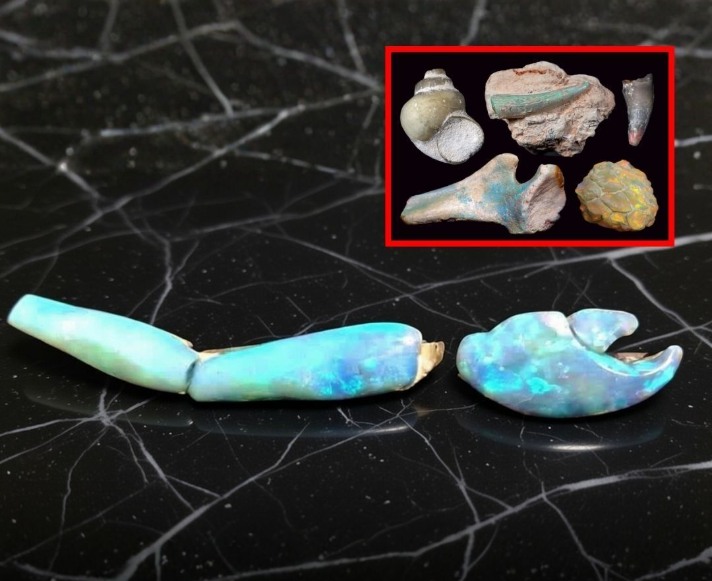
Every so often, nature performs a transformation so extraordinary it feels almost magical. Instead of turning bone or shell into ordinary stone, geological forces create something far rarer—opalized fossils. In this remarkable process, the original organic material is gradually replaced by silica-rich water over thousands or even millions of years. As the silica hardens, it forms opal, preserving the structure of the ancient organism in shimmering gemstone form. The result is a fossil that captures anatomical detail while glowing with flashes of iridescent color—a fusion of deep time and natural artistry.
Australia is world-renowned for these spectacular treasures. Regions such as Lightning Ridge, Coober Pedy, and Andamooka have produced some of the finest examples ever discovered. These sites, famous for their opal fields, occasionally yield fossils transformed into brilliant gemstones—turning paleontology into something that looks almost like jewelry design.
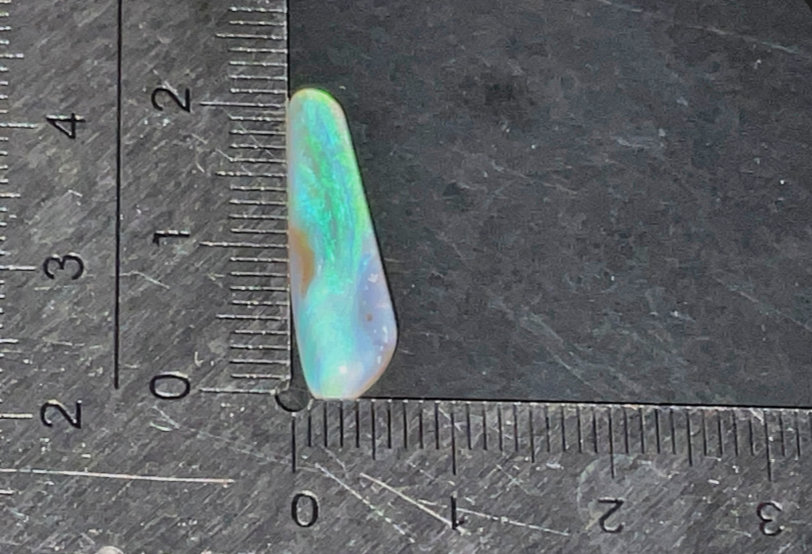 The range of opalized fossils is astonishing. Dinosaur bones shimmer in blues and greens. Marine reptiles appear frozen in flashes of fiery red and gold. Ancient shells and prehistoric plants emerge with delicate structures intact. Among the most breathtaking specimens are opalized ammonites, whose intricate spiral chambers are preserved down to the finest ridges. In some cases, even the microscopic texture of bone or wood can survive the opalization process.
For paleontologists, these fossils are far more than beautiful curiosities. Because the silica replacement can capture minute structural details, opalized specimens sometimes preserve anatomical information that would otherwise be lost in standard fossilization. They offer rare insight into the biology and evolution of long-extinct organisms, especially when examined under advanced imaging techniques.
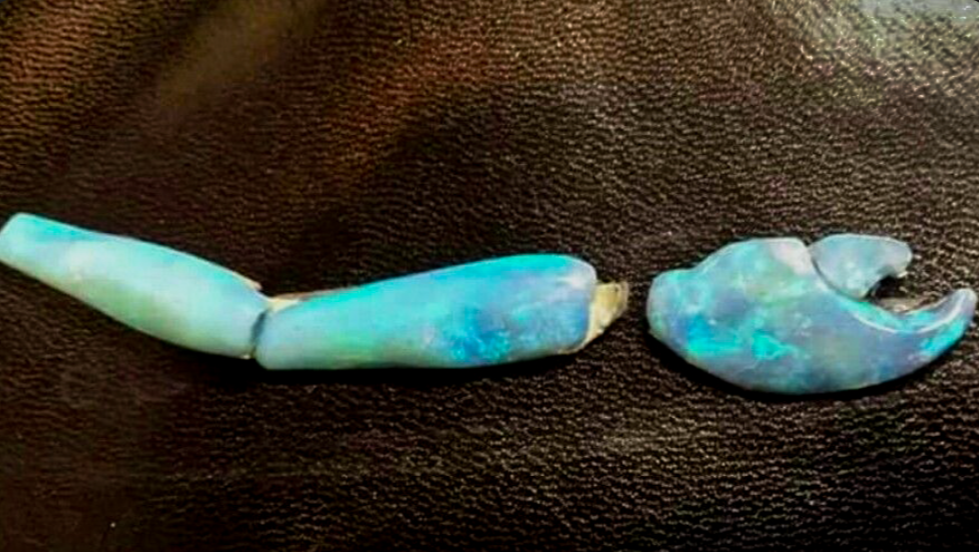 Their rarity and fragility, however, demand extreme care. Scientists typically rely on non-invasive methods—such as CT scanning and specialized microscopy—to study these luminous relics without damaging them. Each specimen represents a delicate balance between geological wonder and scientific value.
Opalized fossils also remind us that fossilization is not a single, uniform process. Under the right chemical and environmental conditions, nature can take an unexpected turn, replacing decay with brilliance and transforming ancient remains into gemstones. Strange Yet True Fact
Some opalized fossils fluoresce under ultraviolet light, radiating vivid colors in the dark. In that glowing moment, it almost feels as though a creature from millions of years ago has flickered back to life—reborn in fire and stone.