The Crimson Tomb of Pacopampa: A 3,000-Year-Old Andean Mystery
- SaoMai
- March 3, 2026
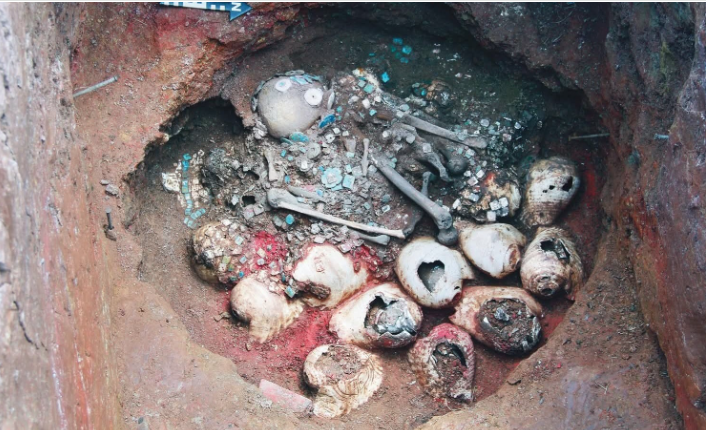
High in the northern Peruvian highlands, archaeologists made a breathtaking discovery in 2022 at the ancient ceremonial center of Pacopampa. Beneath layers of earth and stone, they uncovered a unique Andean tomb dating to approximately 1200–700 BCE—a period that predates the rise of the Inca by more than a millennium. What lay inside was not merely a burial, but a powerful statement of ritual, status, and symbolism in the ancient Andes.
At the center of the tomb rested the body of a man estimated to have been between 25 and 35 years old at the time of death. His carefully arranged remains suggest a deliberate and meaningful burial ceremony. Yet it was the extraordinary array of grave goods that truly set this discovery apart.
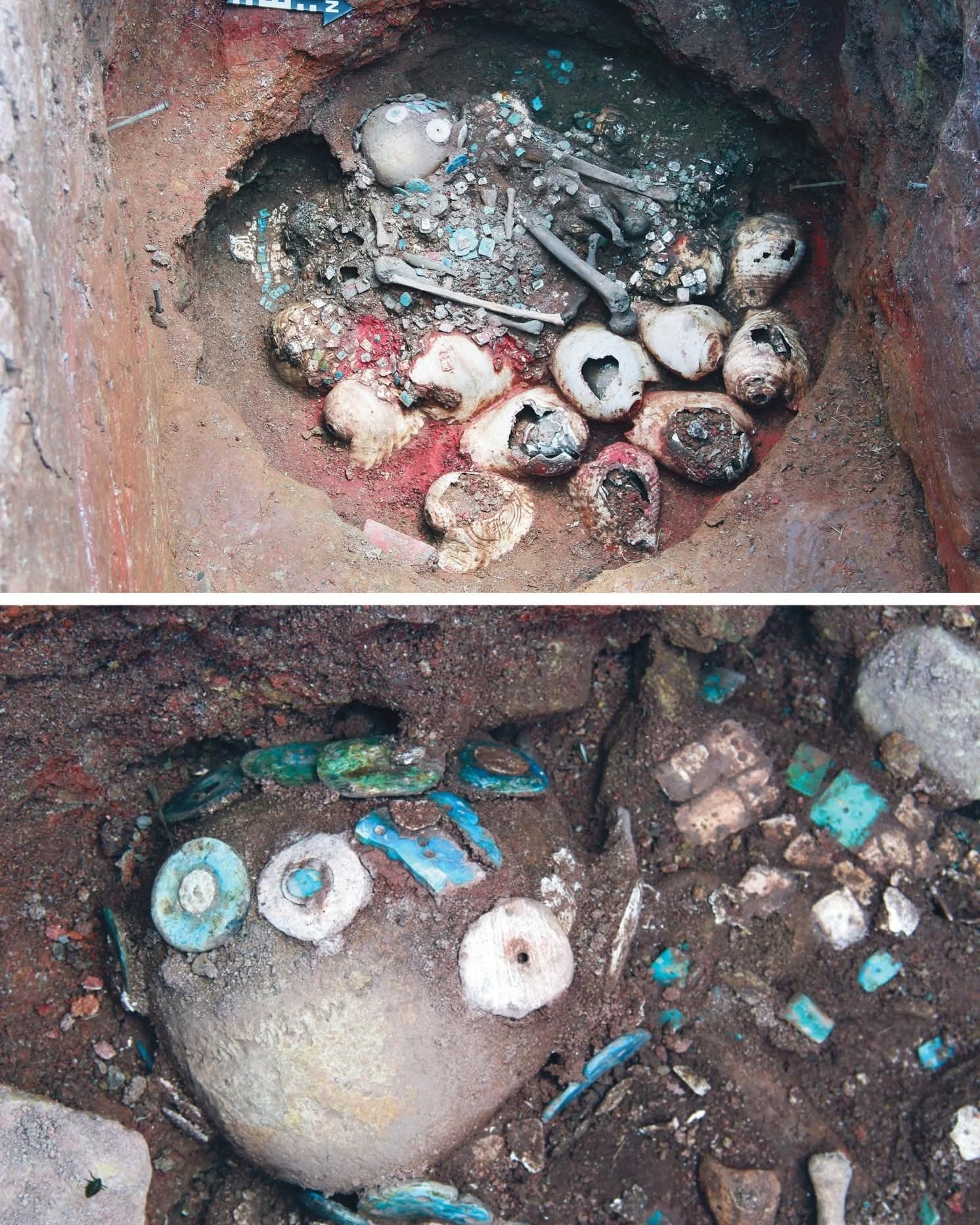 Among the offerings were finely crafted square beads and twenty large marine shells belonging to the genus Strombus. These shells, naturally found in warm coastal waters, would have been transported over considerable distances to reach the highland site of Pacopampa. Their presence alone signals long-distance trade networks and the symbolic importance of marine materials in Andean ritual life.
Even more striking, the shells had been coated with a vivid red pigment, most likely cinnabar—a mercury sulfide mineral prized in ancient cultures for its intense color and ritual associations. In many early societies, red pigments symbolized life force, blood, rebirth, or divine power. The deliberate application of cinnabar suggests that the burial was not simply commemorative but deeply ceremonial.
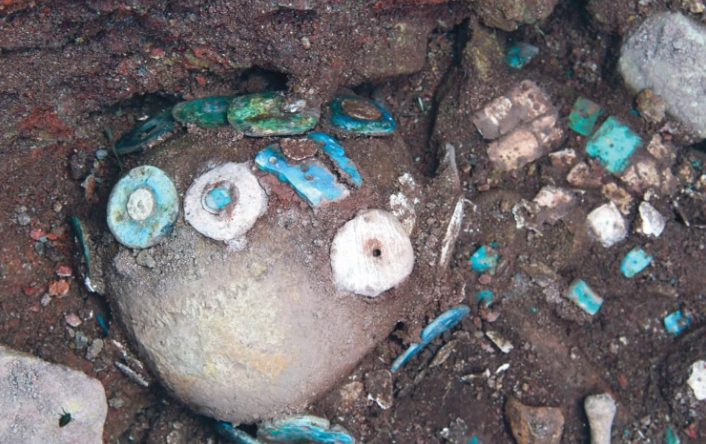 Pacopampa itself was an important ceremonial center during Peru’s Formative Period, characterized by monumental architecture and evolving religious practices. The tomb’s construction and its offerings indicate that the man interred there may have held elevated status—perhaps a ritual specialist, leader, or member of an emerging elite class. The combination of marine shells, red pigment, and crafted ornaments reflects a sophisticated symbolic system already well developed in the Andes three thousand years ago.
This discovery adds new depth to our understanding of early Andean societies. It demonstrates that complex social hierarchies, long-distance exchange, and elaborate ritual traditions were firmly established long before later civilizations dominated the region.
In the quiet darkness of a highland tomb, surrounded by crimson-stained shells and carefully placed beads, one man’s burial has illuminated an entire world. Through archaeology, his story—once sealed in stone—now speaks again across the centuries.