Graves at the Edge of the World: The Arctic Cemetery Threatened by a Warming Climate
- SaoMai
- March 3, 2026
Far above the Arctic Circle, in the icy wilderness of Svalbard, time is running out.
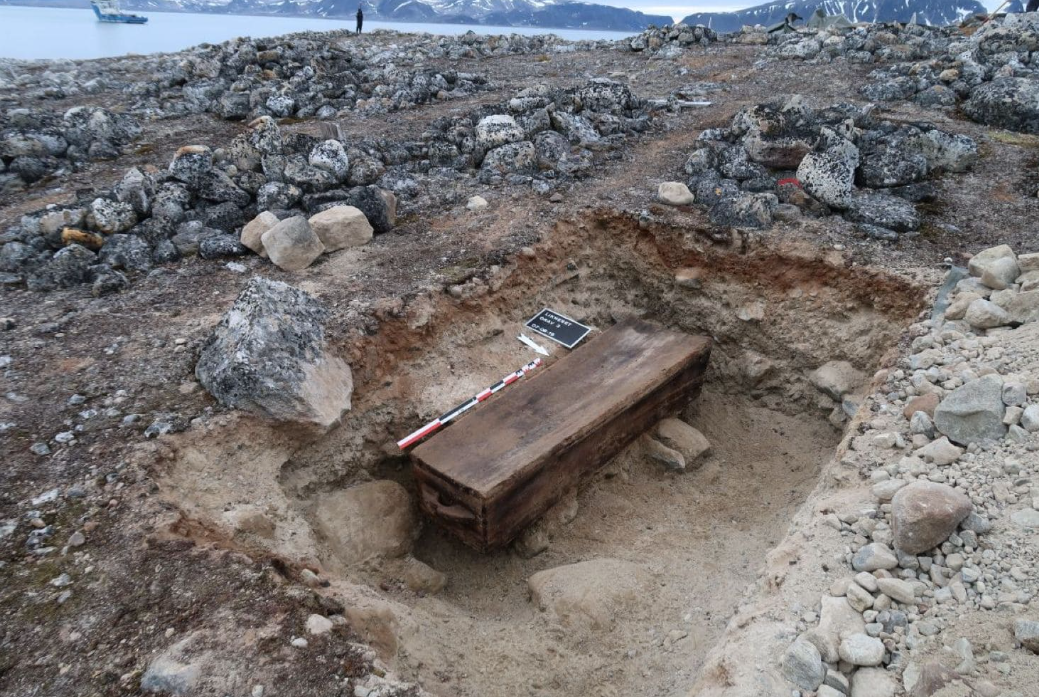
On one of the remote islands scattered across this stark Norwegian archipelago, researchers are urgently excavating a vast cemetery containing approximately 800 graves. These burials date back to the 17th and 18th centuries, when European whalers ventured into Arctic waters in pursuit of oil and profit. For centuries, the frozen ground acted as a natural vault. Permafrost preserved coffins, skeletal remains, clothing fragments, and even delicate organic materials with astonishing clarity.
Now, that frozen protection is failing.
Rising temperatures in the Arctic—warming at more than twice the global average—are destabilizing the once-solid permafrost. Coastal erosion is accelerating. The shoreline near the cemetery is slowly collapsing, and some graves lie perilously close to the edge. Without intervention, centuries-old burials risk sliding into the Arctic Ocean, lost forever to the sea.
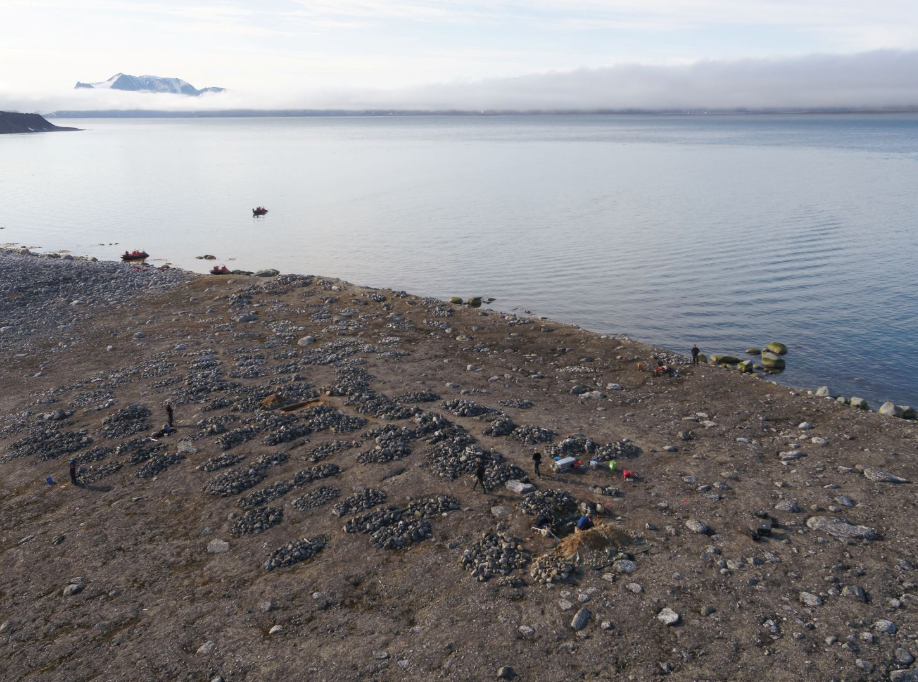 These are not anonymous remains. They belong to European whalers who worked in brutal, unforgiving conditions. The Arctic whaling industry of the 1600s and 1700s marked one of the earliest large-scale industrial exploitations of the polar regions. Men from countries such as the Netherlands, England, Denmark, and Germany traveled north into freezing waters, facing storms, ice, disease, malnutrition, and frequent fatal accidents. Many never returned home. Instead, they were buried in this remote frontier landscape, far from their families.
Archaeologists describe the current excavation not simply as research, but as a rescue mission. Each grave represents a story of global trade, early industrial ambition, and the human cost of Arctic enterprise. The preserved remains provide rare insight into diet, health, disease, and daily life in extreme environments. Artifacts such as coffin fittings, textiles, and tools deepen our understanding of maritime culture during the early modern period. Yet the clock is ticking.
Climate change is transforming the Arctic faster than almost anywhere else on Earth. What was once permanently frozen ground is thawing. As the soil softens, centuries of preserved history begin to decay within months. Wood rots. Organic material disintegrates. Coastlines crumble.
The cemetery in Svalbard stands at a dramatic intersection of past and present: a record of early industrial expansion now threatened by the environmental consequences of modern industry. Archaeologists working against the advancing shoreline are not only uncovering history—they are witnessing its vulnerability.
At the edge of the Arctic Ocean, beneath a sky that once seemed timeless, the graves of long-dead whalers remind us that even the coldest corners of the planet are no longer immune to change.