A Step Through Time: The 2,300-Year-Old Scythian Boot Preserved in Ice
- SaoMai
- March 3, 2026
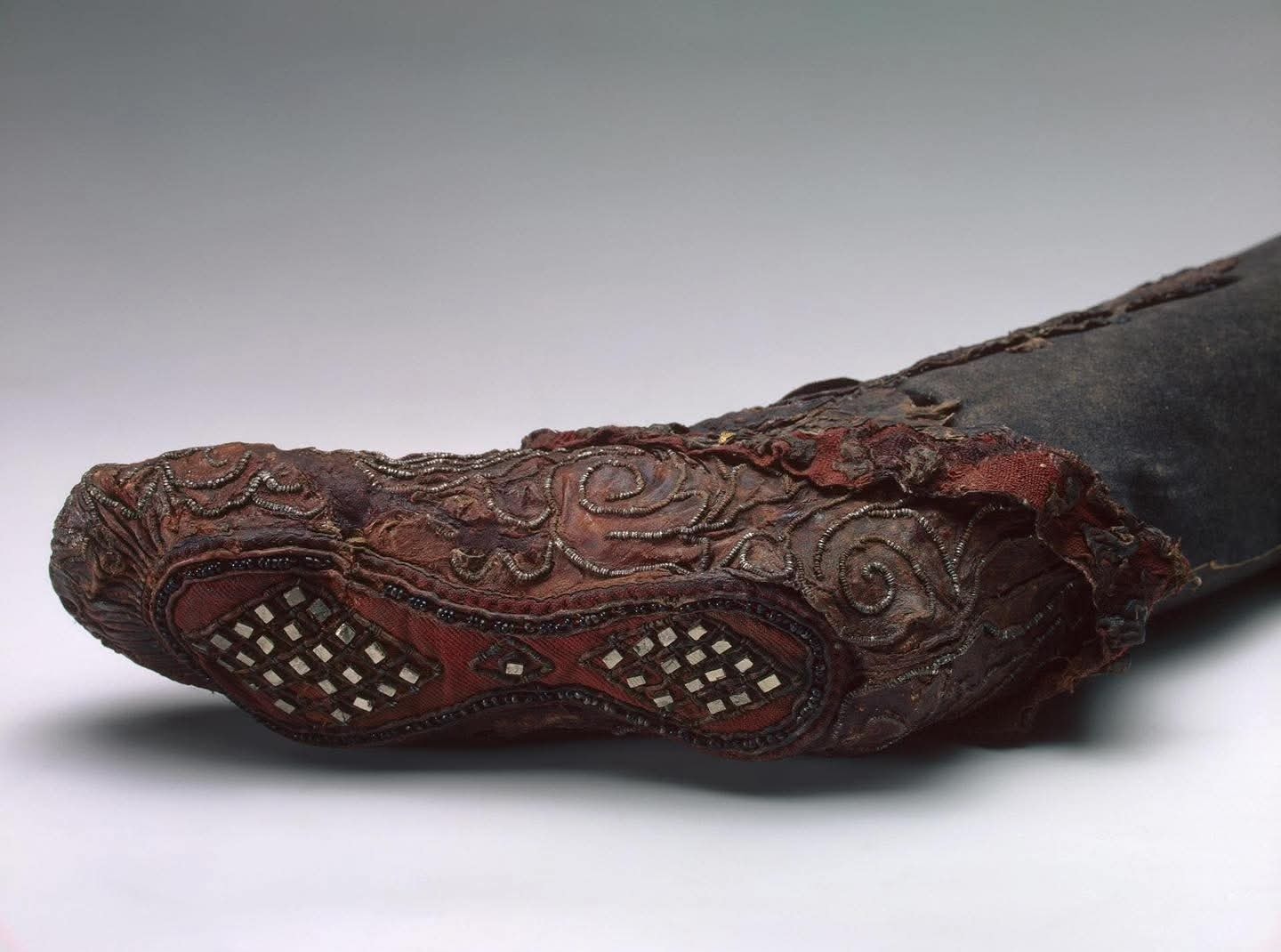
Frozen for more than two millennia and still breathtakingly elegant — this remarkable boot offers one of the most vivid glimpses into life on the ancient Eurasian steppes.
High in the rugged Altai Mountains, archaeologists uncovered a perfectly preserved boot belonging to a Scythian woman dating to the 4th–3rd century BCE. The discovery emerged from a burial mound sealed by permafrost — the same icy conditions that have protected some of the most extraordinary artifacts of steppe nomadic culture.
The Scythians, a network of horse-riding nomadic peoples who dominated vast stretches of Eurasia, are often remembered for their mobility, warfare, and animal-style art. Yet finds like this boot reveal something more intimate: their refined craftsmanship and personal expression.
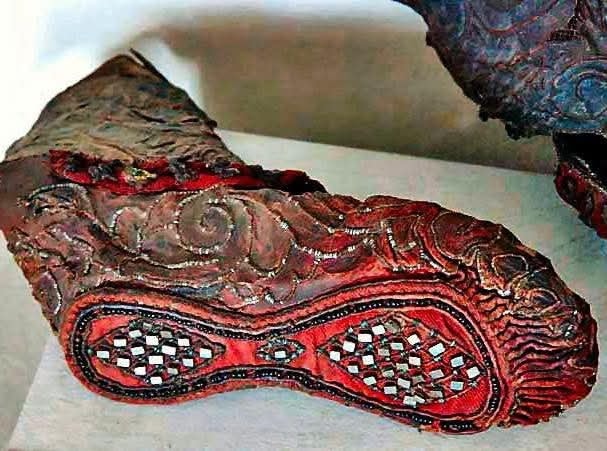 Carefully stitched from leather and felt, the boot is decorated with intricate red and black patterns that look astonishingly modern. The geometric designs are precise, balanced, and bold — not merely functional, but stylish. Every seam remains visible. Every decorative element survives. It feels less like an archaeological relic and more like something that could step onto a runway today.
This preservation is thanks to the Altai’s permafrost, which sealed the burial in ice shortly after interment. In oxygen-poor, frozen conditions, organic materials such as leather, textiles, and even human remains can endure for thousands of years. While most ancient clothing decomposes long before discovery, this environment created a natural time capsule.
The boot likely belonged to a woman of status, buried with care and accompanied by other grave goods typical of Scythian elite burials. Such discoveries align with what we know of Scythian society from archaeology and classical sources — a culture deeply connected to horsemanship, artistry, and complex social identity.
More than footwear, this boot tells a story. It speaks of a woman who once walked the windswept grasslands, rode across open steppe, and participated in a vibrant nomadic world stretching from the Black Sea to Siberia. It reveals that fashion, symbolism, and skilled handiwork were just as important 2,300 years ago as they are today.
In a single preserved artifact, we see not just survival through time — but personality, creativity, and humanity frozen in a step forward that never truly ended.