Written in Gold: A 1,000-Year-Old Gospel Manuscript of Purple and Light
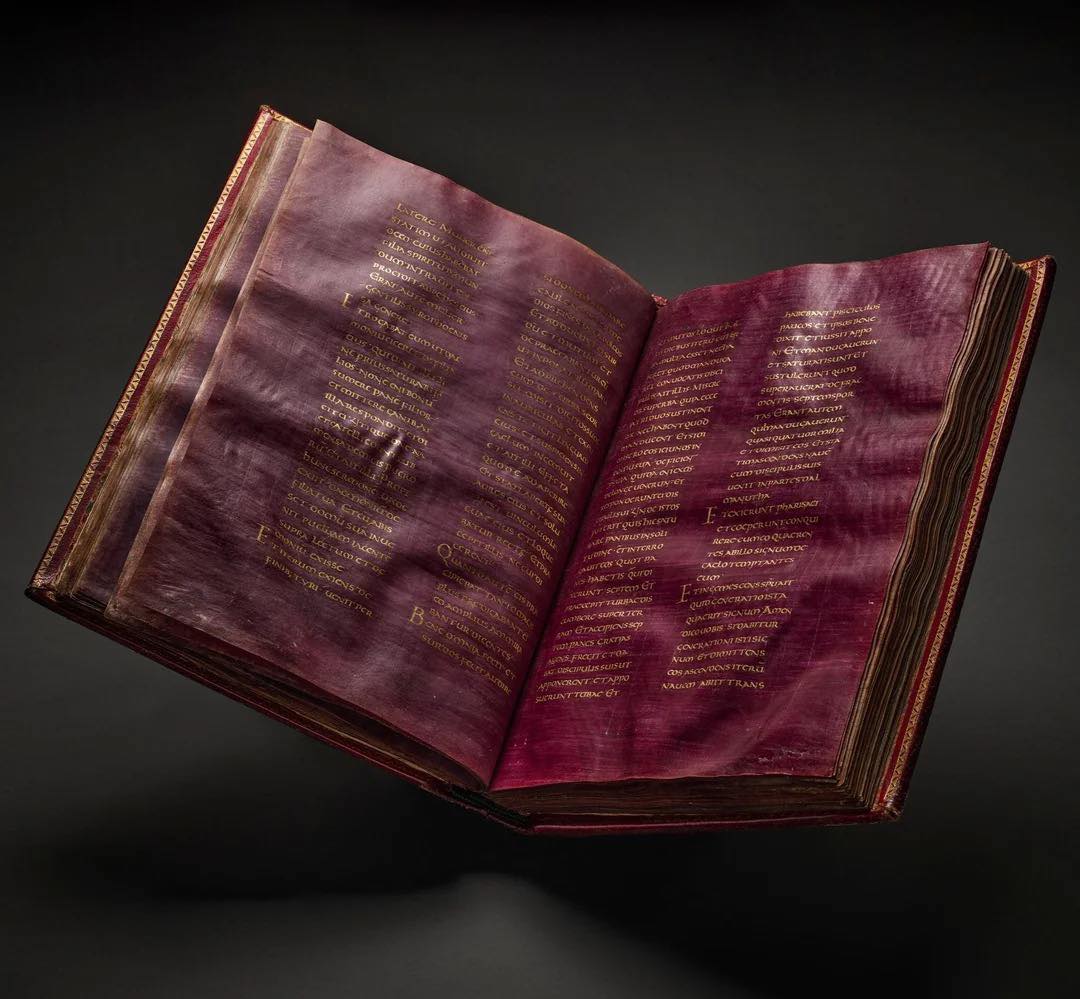
A thousand years ago, inside a Benedictine abbey in the historic city of Trier, a remarkable act of devotion and artistry unfolded. Around sixteen scribes worked patiently and meticulously to produce a Gospel manuscript unlike almost any other — a book not merely written, but illuminated with reverence.
This extraordinary codex was created in the early 11th century, during a period when monasteries were centers of learning, craftsmanship, and spiritual life. In the quiet scriptorium of the abbey, teams of monks prepared parchment, mixed pigments, ruled pages, and carefully copied sacred text. But this was no ordinary manuscript.
The scribes used gold ink to inscribe the words of the four Gospels. Each letter shimmered against pages that had been dyed a deep, royal purple using plant-based pigments. Purple manuscripts were rare and prestigious, echoing earlier imperial Roman and Byzantine traditions in which purple symbolized authority, sanctity, and divine kingship. 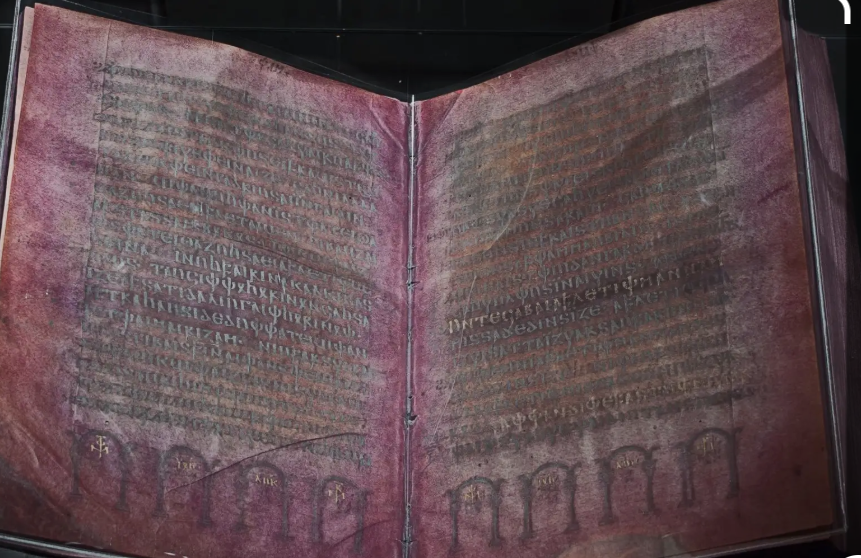 Writing Scripture in gold on purple parchment elevated the book itself into a sacred object — a visual proclamation of the holiness of its contents.
The creation of such a manuscript required immense coordination. Preparing parchment alone was labor-intensive, involving the careful treatment and stretching of animal skins. Dyeing the pages purple demanded additional skill and resources. The application of gold ink — often made by grinding gold into fine particles and mixing it with a binding agent — required steady hands and extraordinary patience. The involvement of approximately sixteen scribes suggests both the scale of the project and the importance placed upon it.
Beyond its shimmering beauty, the manuscript reflects the intellectual vitality of medieval monastic culture. Benedictine communities were not only centers of prayer but also guardians of knowledge. Through their scriptoria, they preserved biblical texts, classical works, and theological writings that would shape European history.
Today, this luminous Gospel book is housed at the Morgan Library & Museum in New York. Far from its original abbey in Trier, it continues to captivate viewers — not only for its craftsmanship, but for what it represents: faith expressed through artistry, collaboration across many hands, and the enduring power of the written word.
Even after a millennium, the gold still glows. And in that glow, we glimpse the devotion of the scribes who believed that sacred words deserved nothing less than brilliance.