Stitched to Survive: A Medieval Manuscript Repaired with Silk
- SaoMai
- March 3, 2026
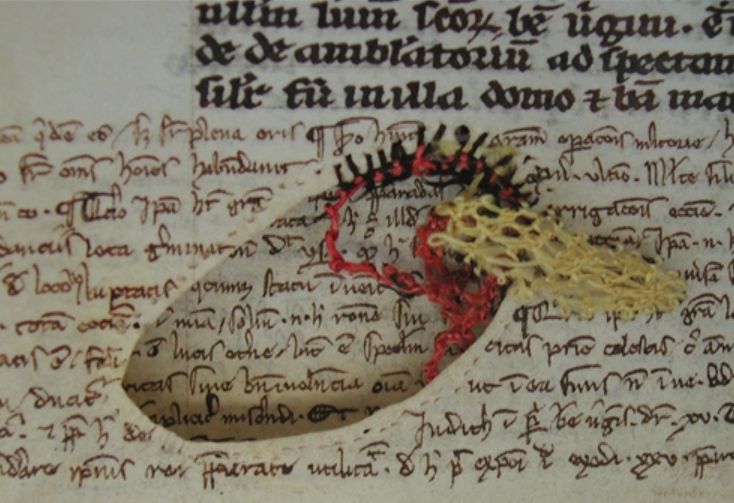
At first glance, it looks like a wound carefully sewn shut.
Along the torn edge of a medieval parchment page, fine silk thread winds delicately through small punctures, pulling fractured vellum back together. It is not decorative embroidery. It is preservation — a quiet, practical act of care carried out centuries ago by hands determined to save a book.
In the Middle Ages, manuscripts were precious objects. Before the age of printing, every text had to be copied by hand, often in monastic scriptoria or later in urban workshops. Parchment — made from specially prepared animal skin — required immense labor to produce.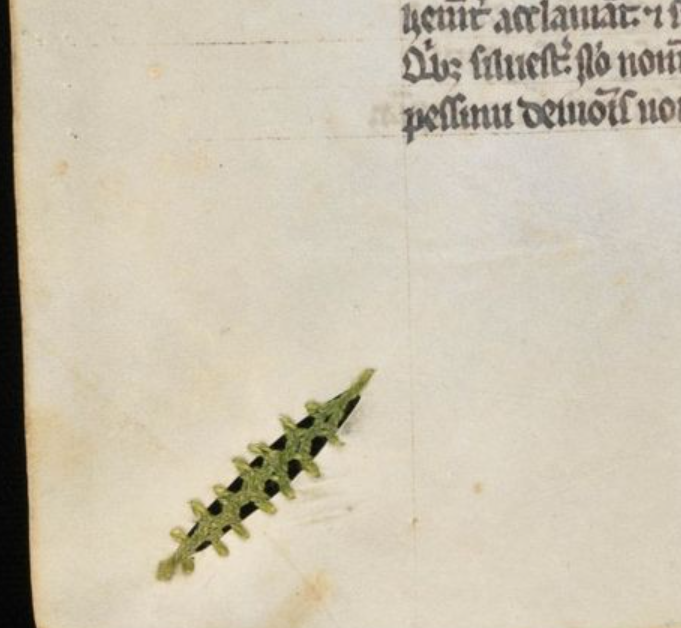 The process involved soaking, stretching, scraping, and drying hides to create a smooth writing surface. It was durable, but far from indestructible. Tears, splits, and holes could form through use, humidity, or simple age.
Replacing damaged parchment was costly and time-consuming. Instead of discarding a flawed sheet, scribes and bookbinders frequently repaired it. One of the most striking methods involved sewing tears together with silk thread. Silk was strong, flexible, and less likely to cut further into the parchment. Its fine texture allowed repairs to stabilize the page without adding excessive bulk.
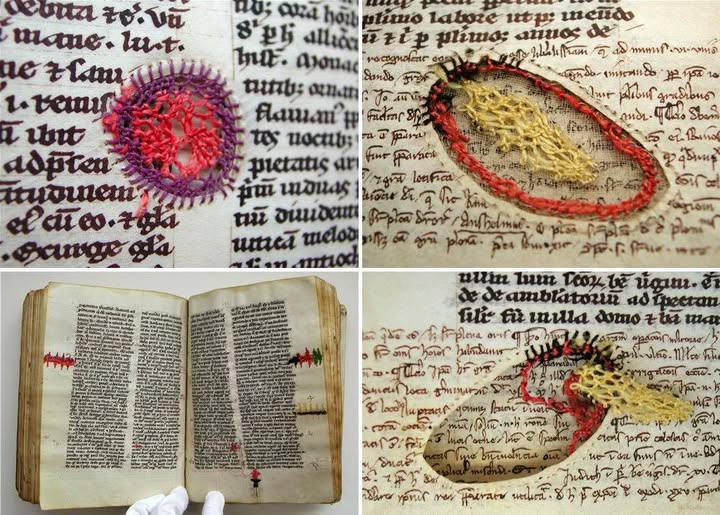 These repairs were not hidden. In many surviving manuscripts, the stitches remain clearly visible — sometimes running vertically along margins, other times crossing diagonally through damaged text. The thread might be natural in tone or subtly colored, creating a faint contrast against the pale surface of the parchment. Each stitch represents a decision: preserve rather than replace.
Such mending also reveals something profound about medieval attitudes toward books. Manuscripts were not disposable objects. They were repositories of theology, law, medicine, poetry, and history. A book might take months or even years to complete. Repairing it was both economically sensible and culturally significant.
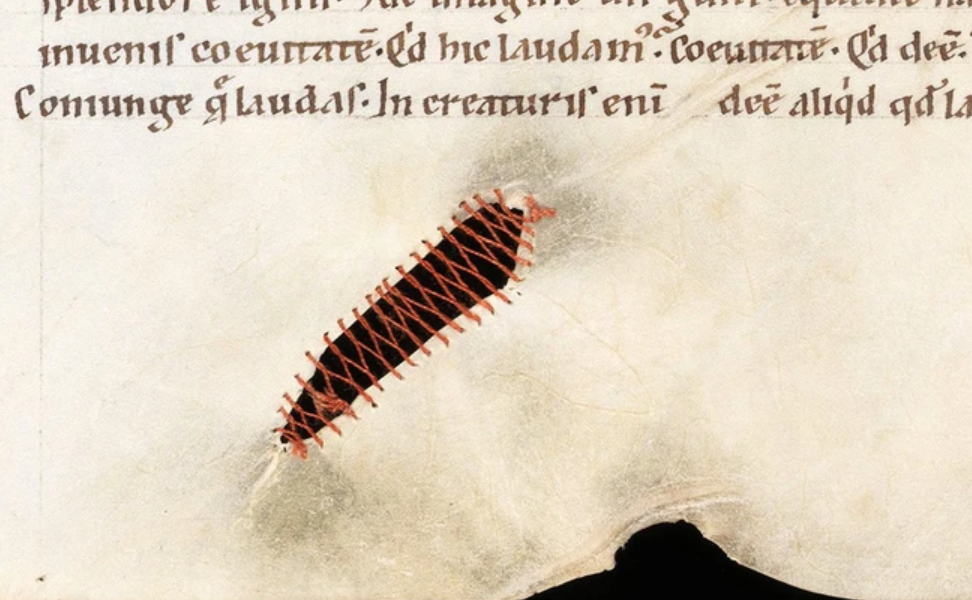 In some cases, scribes even wrote carefully around damaged areas, adapting the layout to accommodate stitched sections. The result is a layered artifact — text, damage, repair — all coexisting on the same page. It becomes a record not only of the words it carries, but of its own survival.
Today, when conservators examine these silk repairs, they see more than restoration. They see continuity. A medieval reader once held that same page, noticed its fragility, and chose to protect it for the future.
The thread may be centuries old, but its message is timeless: knowledge is worth saving — even if it must be stitched back together, one careful loop at a time.