Hezbollah Claims To Strike Israel’s Ramat David Airbase As Israeli Military Pounds Beirut

The confrontation between Israel and Hezbollah intensified sharply overnight, with both sides reporting major military actions that signal a widening and more direct phase of the conflict.
Hezbollah announced that it launched a coordinated drone swarm targeting Israel’s Ramat David Airbase in northern Israel, claiming the unmanned aircraft struck radar installations and control facilities inside the base perimeter. The group described the operation as retaliation for ongoing Israeli airstrikes in Lebanon and as a demonstration of its expanding aerial capabilities.
The Israel Defense Forces (IDF) did not confirm that the airbase was successfully hit but acknowledged that hostile aerial threats were detected and intercepted in northern Israel. Military officials stated that air-defense systems were activated and that investigations were underway to assess whether any drones penetrated secured zones.
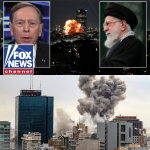
Shortly afterward, the IDF announced renewed large-scale air operations targeting what it described as Hezbollah command centers, weapons depots, and launch infrastructure in Beirut and surrounding areas. Explosions were reported in multiple districts of the Lebanese capital, with thick smoke visible above densely populated neighborhoods. The Israeli military said the strikes were aimed at degrading Hezbollah’s operational capabilities and preventing further cross-border attacks.
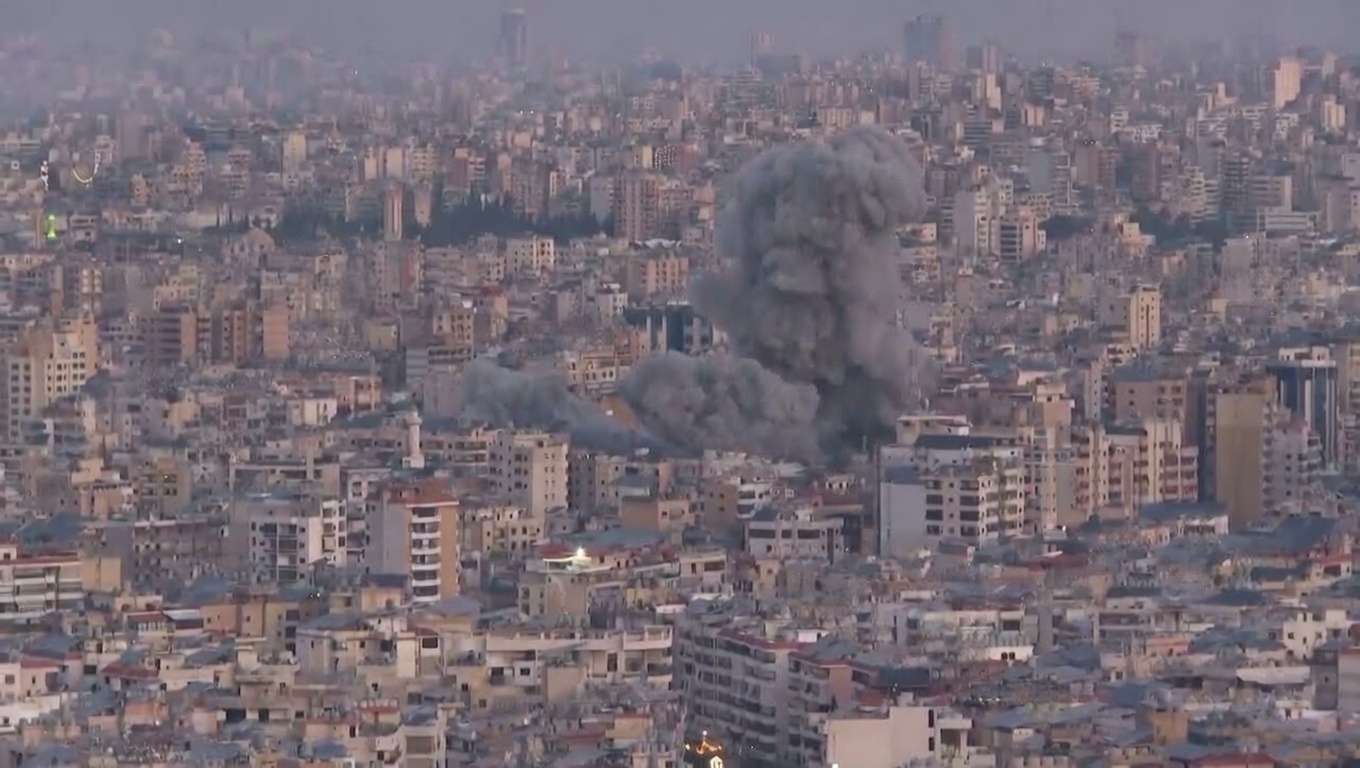
In addition to targets in Lebanon, Israeli officials indicated that strikes were conducted against associated militant infrastructure beyond Lebanese territory, though operational details remain limited. The IDF reported killing several militants during the raids, including what it described as a commander affiliated with Palestinian Islamic Jihad.
Lebanese authorities reported at least 52 fatalities following the Israeli bombardment, along with significant infrastructure damage. Emergency services worked through the night to extract survivors from damaged buildings. The humanitarian situation in affected areas is reportedly deteriorating as displacement increases and medical facilities face mounting strain.
Politically, the escalation has triggered renewed debate inside Lebanon. Some government figures have called for stronger state control over armed groups and urged Hezbollah to place its weapons under national authority. However, Hezbollah maintains that its military wing is essential for defending Lebanon against Israeli aggression.

Security analysts warn that a confirmed strike on a major Israeli airbase — if validated — would represent a serious operational development. Airbases are critical nodes for Israel’s rapid-response and strike capabilities, and attacks on such facilities risk triggering broader retaliatory campaigns.
With cross-border rocket fire, drone operations, and sustained airstrikes now occurring simultaneously, the risk of further escalation remains high. Regional actors are closely monitoring developments, concerned that continued exchanges could expand beyond the Israel-Lebanon theater and draw in additional forces.
For now, both sides appear locked in a cycle of retaliation — each strike met with another — as civilians on both sides bear the growing cost of an increasingly volatile confrontation.