40,000-Year-Old European Engravings Point to Early Structured Sign Systems, Study Says
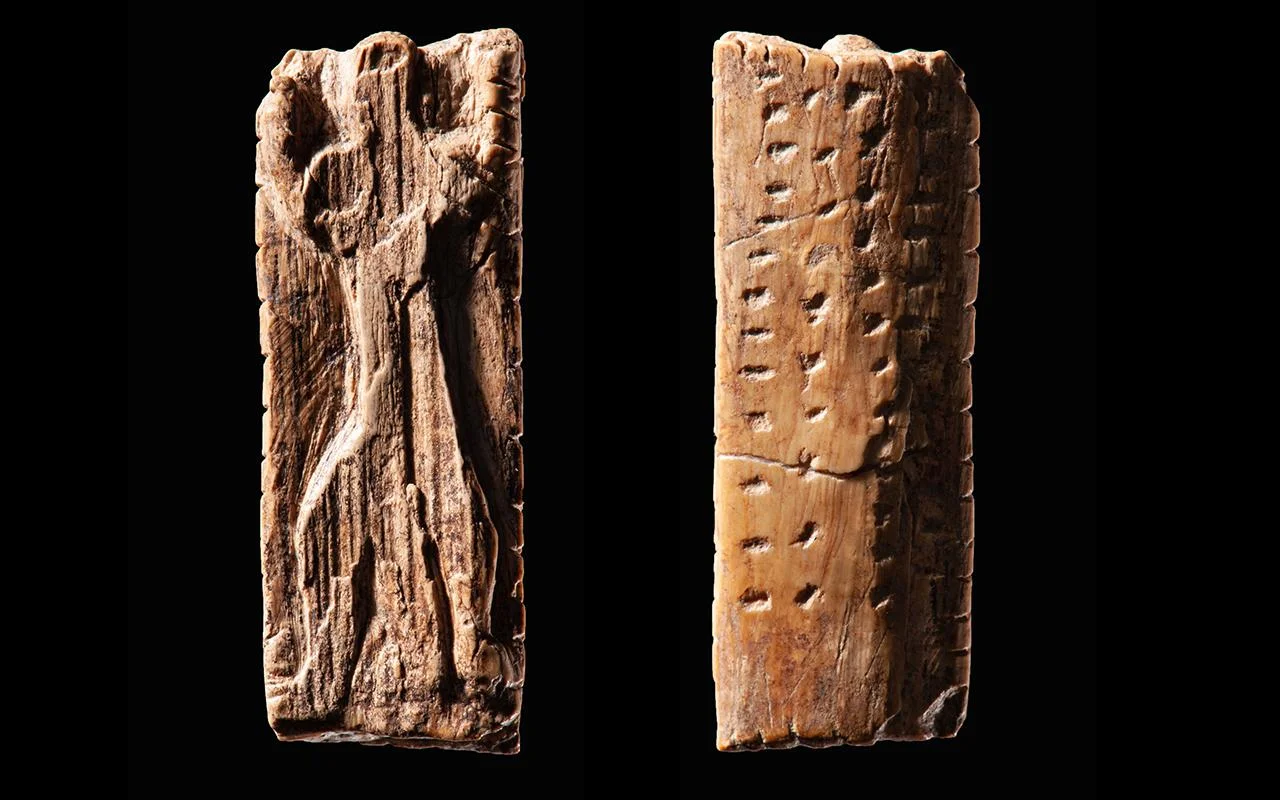
More than 40,000 years ago, people living in Europe carved lines, dots, notches, and crosses into tools and small figurines. According to a new study, these markings were not mere decoration. Instead, researchers argue they formed structured sign systems capable of encoding information.
The study, published in Proceedings of the National Academy of Sciences, was led by linguist Christian Bentz of Saarland University and archaeologist Ewa Dutkiewicz from the Museum für Vor- und Frühgeschichte. The team analyzed more than 3,000 engraved signs found on 260 objects dated between 34,000 and 45,000 years ago. Many of these artifacts come from caves in the Swabian Jura, alongside examples from other parts of Europe.
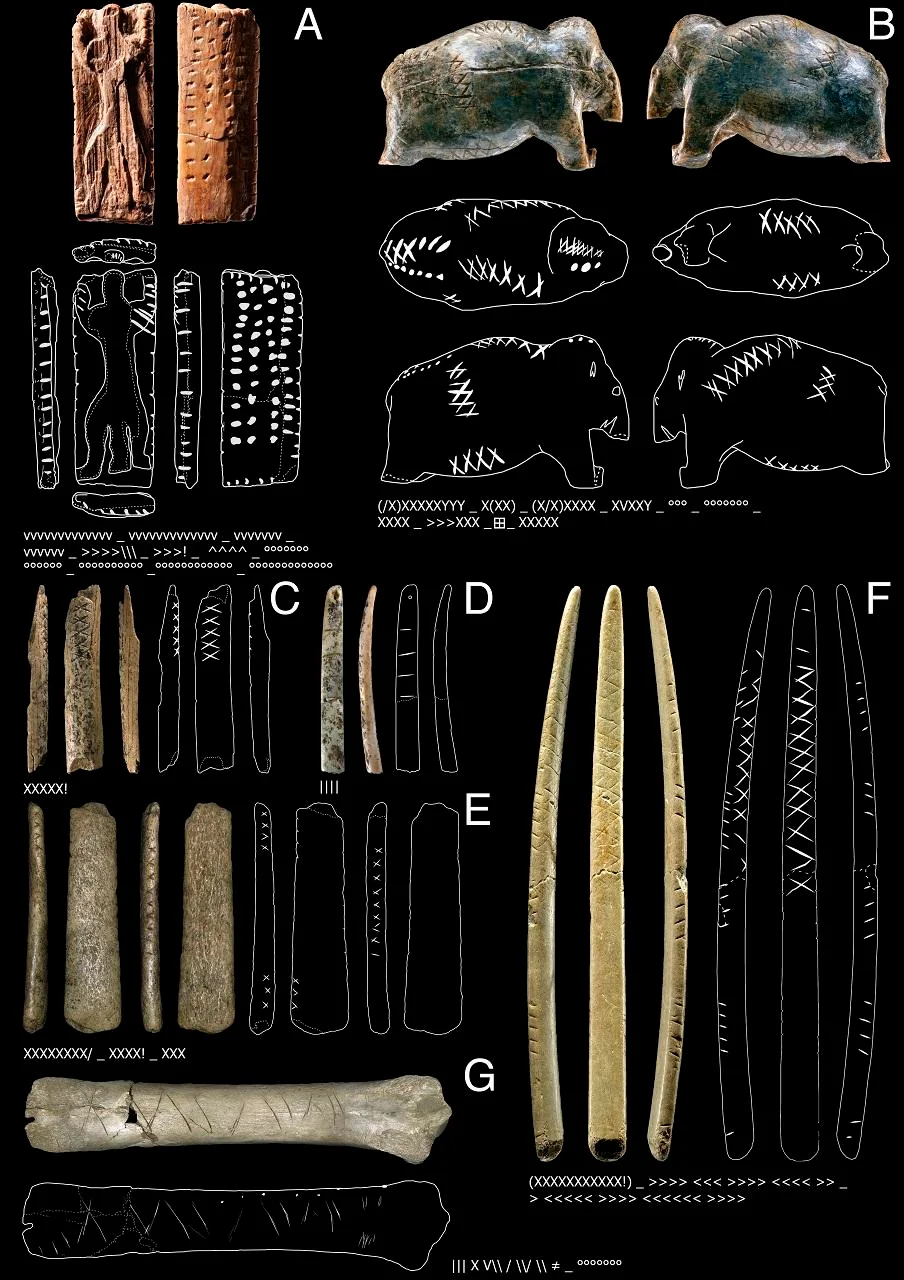
Among the most famous artifacts is the Lion Man from Hohlenstein-Stadel Cave in the Lone Valley, a mammoth-ivory figure marked with evenly spaced notches along one arm. A small mammoth figurine from Vogelherd Cave is decorated with rows of crosses and dots, while an ivory plaque from Geißenklösterle Cave in the Ach Valley shows repeated dot and notch patterns. Across these objects, the engravings follow consistent, deliberate arrangements.
To determine whether the marks carried structured information, the researchers digitized each sequence and applied statistical models and machine-learning techniques. They examined repetition and entropy—a measure of how predictable a sequence is and how much information it can potentially convey.
The markings do not represent spoken language. Unlike modern writing systems, which encode speech and tend to minimize repetition, many Paleolithic sequences repeat the same symbol several times in a row, such as line after line or cross after cross. This pattern differs from linguistic writing but still shows internal organization.
When compared with early proto-cuneiform tablets from Mesopotamia dating to around 3000 BCE, the results were striking. Proto-cuneiform also features repeated signs and relatively high predictability between symbols. Statistically, the entropy values of the Paleolithic engravings fall within a similar range, despite a gap of roughly 40,000 years between the two systems.
These findings suggest a long-lasting tradition in how humans encoded information visually. For tens of thousands of years, people appear to have relied on repetitive, structured symbol sequences. Only about 5,000 years ago did writing shift toward directly representing spoken language, producing very different statistical patterns.
The researchers do not claim to know what the signs meant. While interpretations have ranged from hunting records to ritual symbols, the study focuses on measurable structure. The results show that the engravings were organized systems rather than casual ornamentation.
Most of the objects are small and portable, often fitting in the palm of a hand, implying they were handled, carried, and possibly reused. Although the Swabian Jura has yielded an unusually rich collection, similar markings have been found across Europe.
The people who made these engravings were anatomically modern Homo sapiens, already possessing cognitive abilities comparable to our own. The capacity to record and transmit information through standardized marks would have supported cooperation, memory, and knowledge sharing beyond spoken language.
Rather than appearing suddenly, writing seems to have emerged from this deep history of symbolic behavior. Long before cities and clay tablets, humans were already arranging simple marks into structured sequences, preserving information in ivory and stone.