Expectations and Skepticism as Trump Orders Review and Release of UFO Files
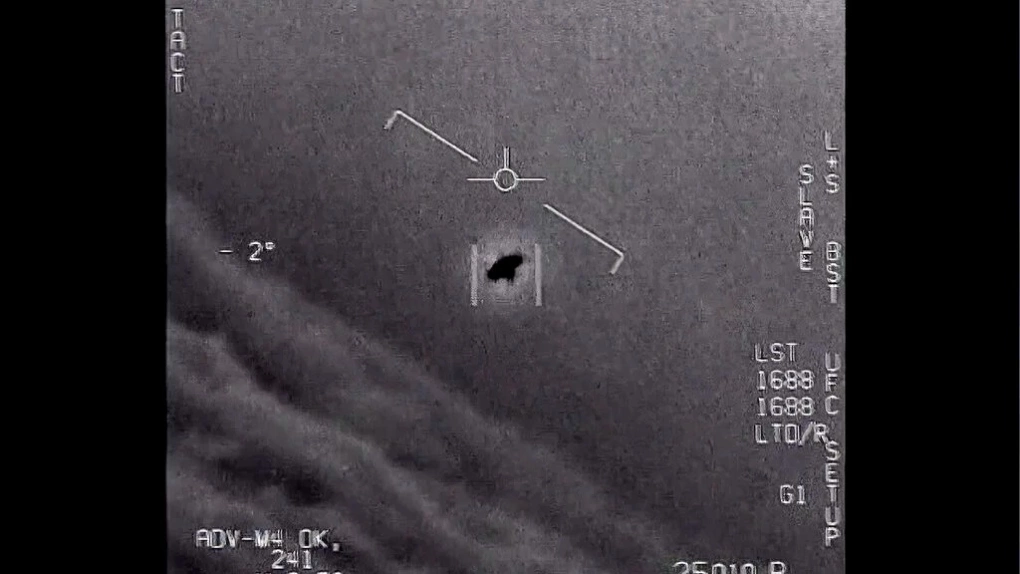
The decision by U.S. President Donald Trump to review and release government files related to UFOs has stirred both anticipation and doubt over what information the public may soon gain access to.
On February 19, President Trump announced on social media that he would instruct the Pentagon and other relevant agencies to review and disclose government records concerning extraterrestrials and possible alien life, unidentified anomalous phenomena (UAP), and unidentified flying objects (UFOs).
The move came just days after former president Barack Obama sparked public debate by jokingly stating that “aliens are real” during a podcast appearance. Although Obama later clarified his remarks, many people continued to speculate that he had accidentally revealed a long-kept secret.
In the United States, official reviews of UFO files are not unprecedented. In the 1990s, the Central Intelligence Agency conducted a comprehensive assessment of its UFO records and concluded that most sightings were linked to classified surveillance aircraft. These conclusions, however, failed to satisfy UFO researchers and enthusiasts, who now look to Trump’s directive for new revelations.
Public fascination with UFOs in the U.S. is often traced back to the 1947 incident near Roswell, New Mexico. Former Army pilot Kevin Randle has spent decades interviewing witnesses who claimed to have seen debris or objects resembling alien bodies removed from the area. His work helped fuel continued interest and ultimately contributed to the CIA’s review in the 1990s, which Randle, now 76, still finds unconvincing.
“They wanted to shut down interest in Roswell because it was leading into areas they didn’t want us to explore,” Randle said in an interview.
Astronomer Chris Impey of the University of Arizona believes the U.S. government does possess undisclosed information, largely withheld for national security reasons. Speaking to National News Desk, Impey said that Trump’s directive could potentially shed more light on UFOs or UAPs.
Former U.S. Navy pilot Ryan Graves described himself as “excited but cautious” about Trump’s promise. He questioned whether the public would truly see the material many believe the government has studied for decades. Graves also noted that there has been no commitment to full declassification, meaning released data could be fragmented or difficult to interpret.
Interest in UAPs has grown sharply in recent years, drawing attention from lawmakers and defense officials. In 2023, the United States Congress passed the Unidentified Anomalous Phenomena Disclosure Act, while the Pentagon established the All-domain Anomaly Resolution Office (AARO) in 2022.
Graves testified before Congress on UAPs in 2023 and says those hearings revealed only a small fraction of the full picture. AARO’s most recent report, released in late 2024, reviewed hundreds of UAP cases, some of which remain unexplained. However, the report stated there is no evidence of extraterrestrial life or alien technology. Most resolved cases involved ordinary objects such as balloons, birds, drones, satellites, or aircraft.
Against this backdrop, the latest UFO file review could provide additional data for the public and scientific community, while also illustrating how the government manages unexplained aerial phenomena. Observers say the scope of the review will depend on how the Pentagon defines its parameters, ranging from a narrow focus on video-documented cases to millions of reports accumulated over multiple presidential administrations.
According to Luis Elizondo, a former Pentagon official, Trump’s commitment will be difficult to carry out. The U.S. government has accumulated more than 80 years of classified material spread across the intelligence community, defense agencies, and even the Department of Energy.
Impey also stressed the distinction between the likelihood of extraterrestrial life and the idea that Earth has been visited. Astronomers have identified thousands of exoplanets, including hundreds with Earth-like characteristics. Estimates suggest there may be around 10 billion potentially habitable planets in the Milky Way alone. While this makes the existence of life elsewhere plausible, intelligent civilizations could be exceedingly rare and separated from Earth by thousands of light-years—distances that remain effectively insurmountable even with advanced technology.
President Trump himself has stopped short of endorsing belief in extraterrestrials.
“I don’t know if they exist or not. I don’t have an opinion on it. I’ve never talked about it,” Trump said during an interview aboard Air Force One. “A lot of people have. A lot of people believe it.”