Skull of an Ancient Greek Girl Buried with a Crown of Ceramic Flowers (400–300 BCE)
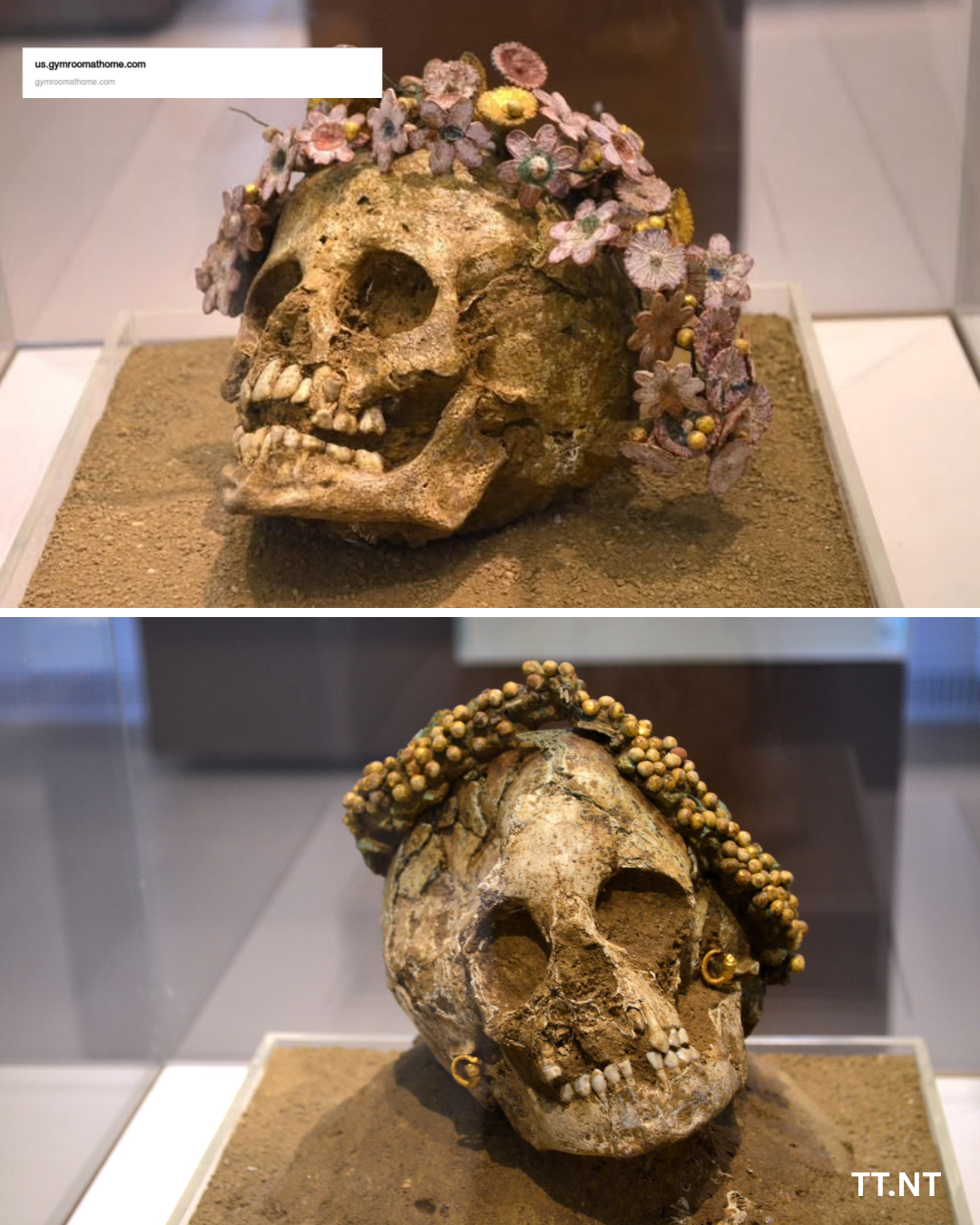
Skull of an Ancient Greek Girl Buried with a Crown of Ceramic Flowers (400–300 BCE)
The skull of an ancient Greek girl, dated to approximately 400–300 BCE, remains one of the most poignant funerary artifacts preserved in the Archaeological Museum of Patras.

Discovered during excavation in western Greece, the burial revealed the young individual adorned with a delicate crown composed of ceramic flowers. Such funerary wreaths were symbolic in ancient Greek culture, often associated with honor, remembrance, and the fleeting nature of life.
Unlike perishable floral garlands placed in many burials, ceramic flowers were crafted to endure — preserving the image of vitality beyond death. The careful placement of the crown suggests intentional ritual preparation and reflects the emotional and cultural significance attributed to the child’s burial.
During the Classical and early Hellenistic periods, grave goods and adornments frequently conveyed status, affection, and spiritual beliefs. Floral motifs in particular symbolized renewal, youth, and connection to the divine.
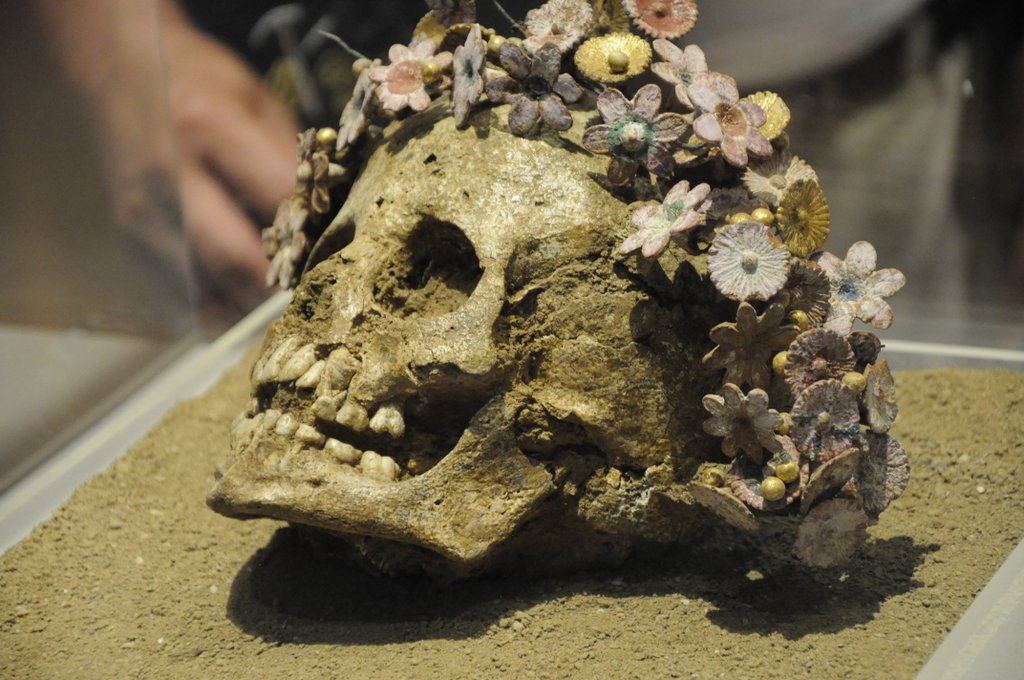
Today, the preserved skull and its ceramic wreath provide insight not only into ancient Greek burial customs but also into the deeply human desire to memorialize loved ones with beauty and dignity.