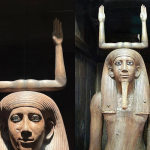
Necklace of Princess Khenmet (ca. 1932–1898 BCE)
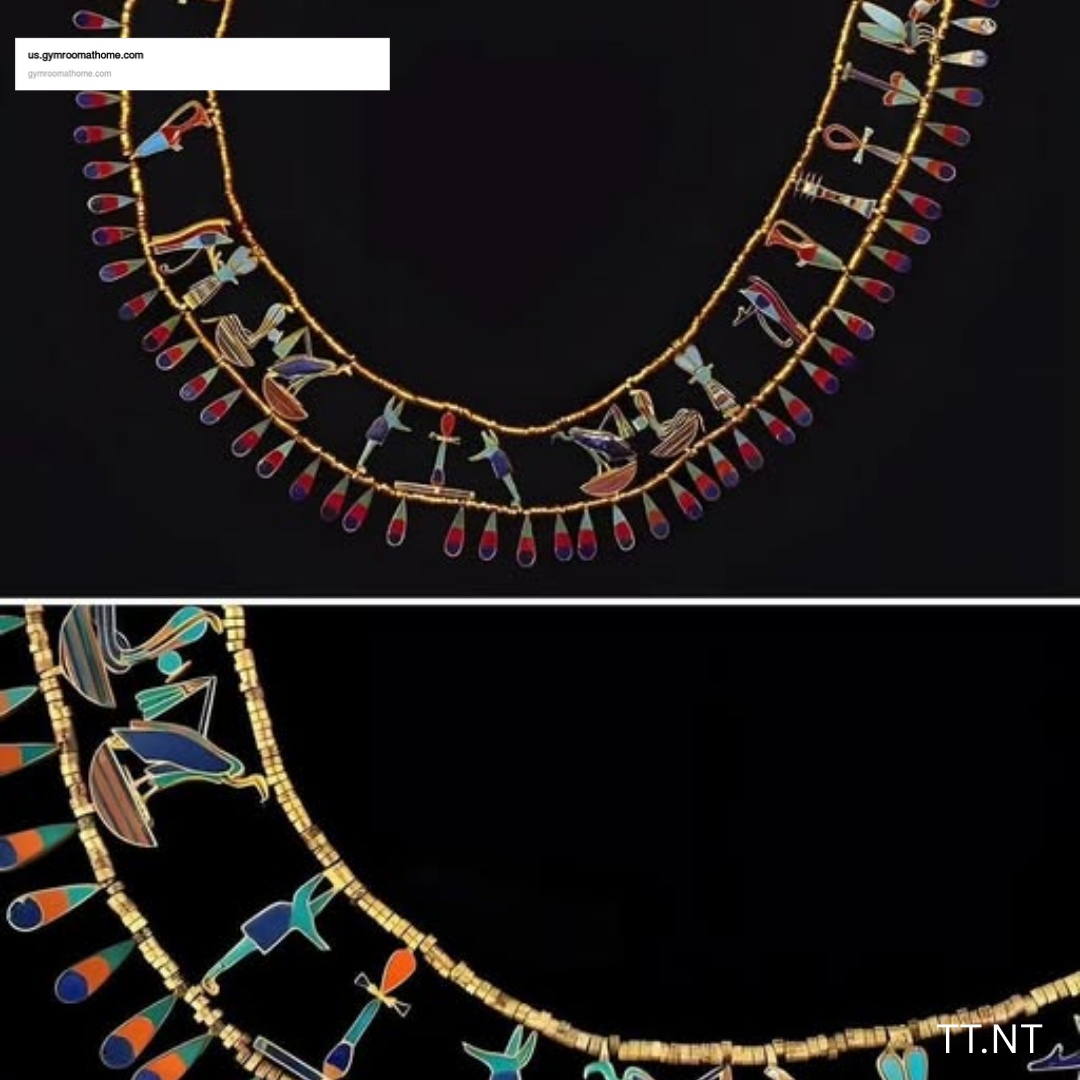
Necklace of Princess Khenmet (ca. 1932–1898 BCE)
This exquisite necklace belonging to Princess Khenmet was discovered adorning her mummy and dates to approximately 1932–1898 BCE, during Egypt’s Middle Kingdom (12th Dynasty). It is now preserved at the Egyptian Museum.
The necklace is composed of a series of finely crafted gold amulets, each intricately shaped and inlaid with semiprecious stones including carnelian, turquoise, and lapis lazuli. These materials were not chosen merely for beauty — each carried symbolic meaning in ancient Egyptian belief.

-
Carnelian symbolized vitality and protection.
-
Turquoise represented joy and divine favor.
-
Lapis lazuli, often associated with the heavens, signified rebirth and cosmic power.
The amulets depict sacred symbols and deities, forming a protective assemblage intended to safeguard the princess in the afterlife. Such jewelry was both ornamental and spiritual, functioning as a powerful talismanic device placed directly upon the body.
The craftsmanship demonstrates advanced goldsmithing techniques of the Middle Kingdom, including delicate stone setting and symmetrical design. The vibrant color contrast between gold and gemstones reflects a refined aesthetic sensibility.
Princess Khenmet is believed to have been a royal daughter during a period marked by political stability and artistic flourishing. Her burial jewelry provides valuable insight into elite funerary customs and the theological symbolism embedded in personal adornment.
More than 3,800 years later, the necklace remains a luminous testament to ancient Egyptian artistry and the enduring belief in protection beyond death.