Roman Carnelian Intaglio: A Grasshopper Driving a Butterfly Chariot (1st Century BCE–1st Century CE)
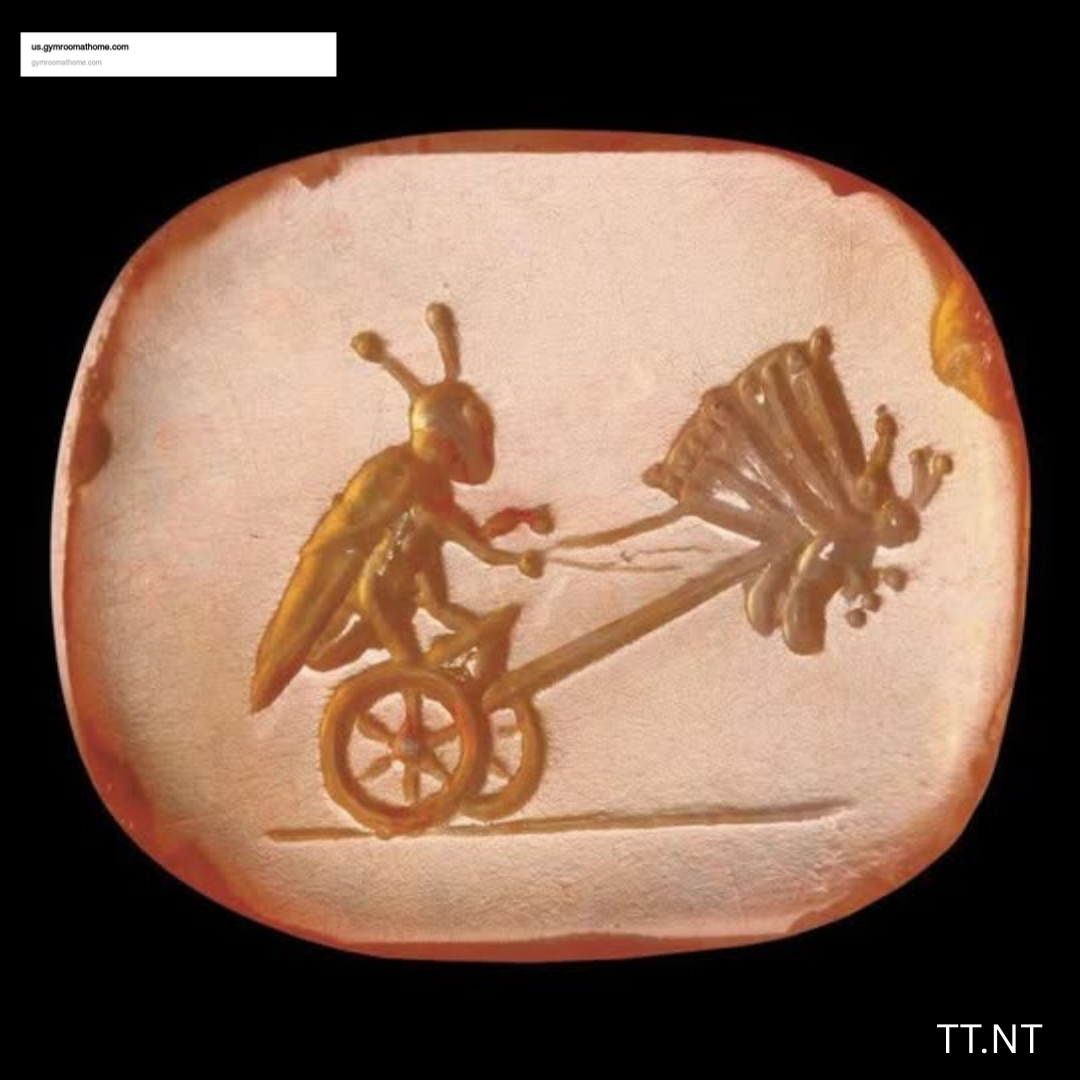
Roman Carnelian Intaglio: A Grasshopper Driving a Butterfly Chariot (1st Century BCE–1st Century CE)
This charming Roman intaglio gemstone, carved from carnelian and dating between the 1st century BCE and the 1st century CE, depicts a delightfully whimsical scene: a grasshopper driving a chariot pulled by two butterflies.
Intaglios were small engraved gemstones used primarily as personal seals. When pressed into wax, the carved design would produce a raised impression, often used to authenticate documents or secure letters. In the Roman world, such gems were also worn in rings as both decorative objects and symbols of personal identity.
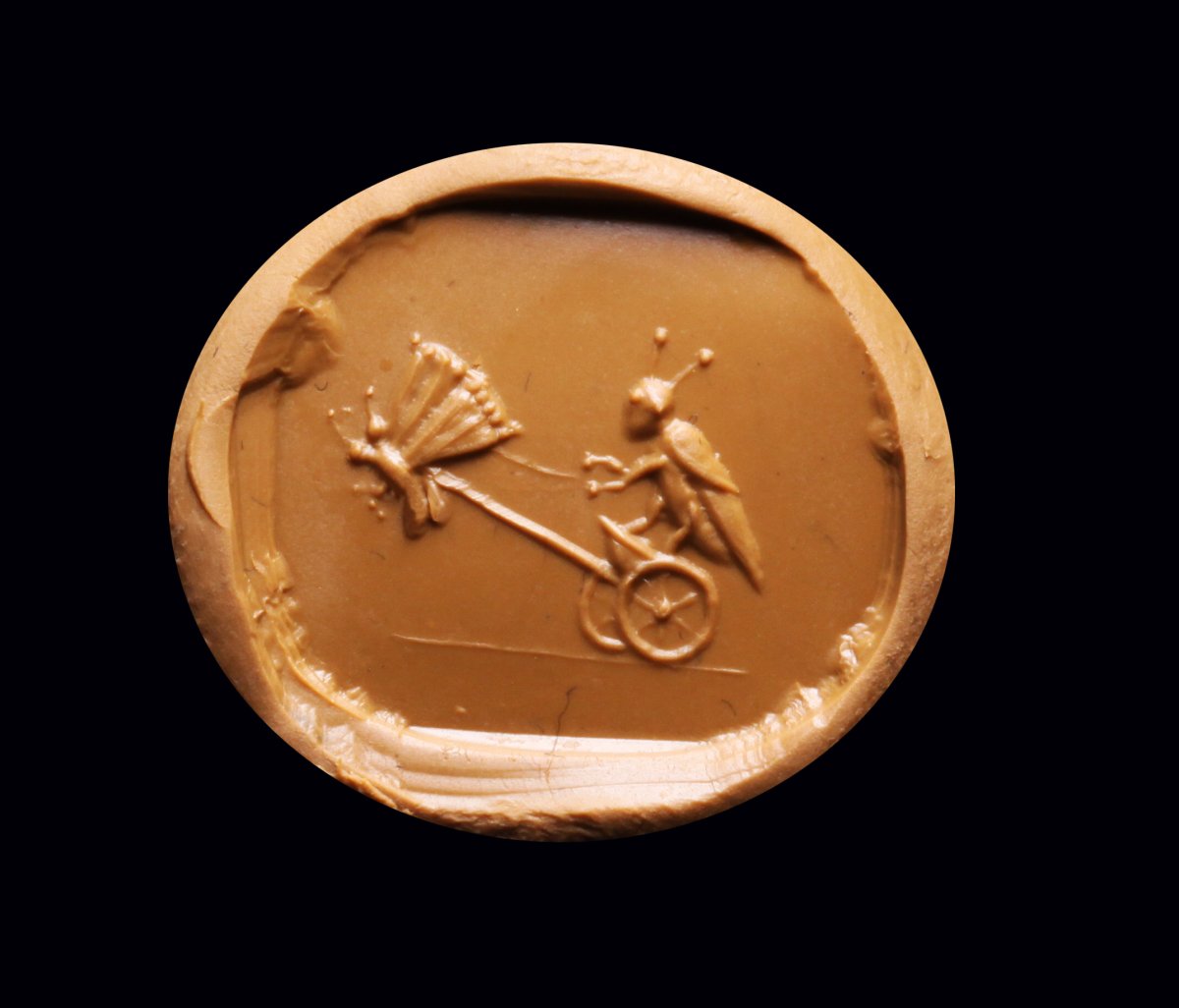
The scene carved into this stone reflects the playful imagination sometimes found in Roman glyptic art. While many intaglios depict gods, mythological scenes, or heroic figures, others display humorous or fantastical imagery. A grasshopper acting as a charioteer, with butterflies serving as its team, likely carried symbolic or satirical meaning—possibly referencing lightness, transformation, or the fleeting nature of life.
Carnelian was a popular gemstone in Roman jewelry due to its durability and warm reddish-orange color. Skilled artisans used fine tools to engrave intricate details into the hard stone, creating designs that could remain crisp for thousands of years.
Today, objects like this intaglio offer a glimpse into the lighter side of Roman artistic expression. Beyond grand monuments and imperial power, they reveal a culture that appreciated wit, creativity, and miniature craftsmanship.