Earliest Homo Looked Very Different From Modern Humans, New Skeleton Suggests
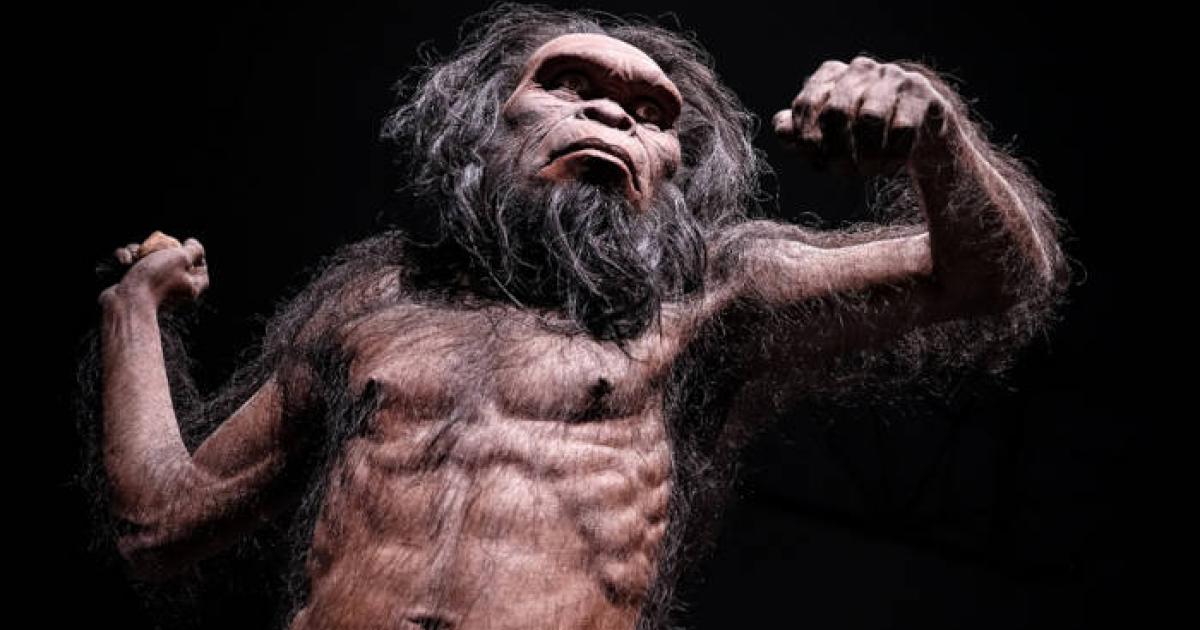
For decades, Homo habilis has often been considered the earliest and most basic member of the human genus, commonly portrayed as a more human-like species because of its skull features, teeth, and association with early stone tools. However, a newly analyzed fossil skeleton suggests that early members of Homo may have looked far less human than scientists once assumed.
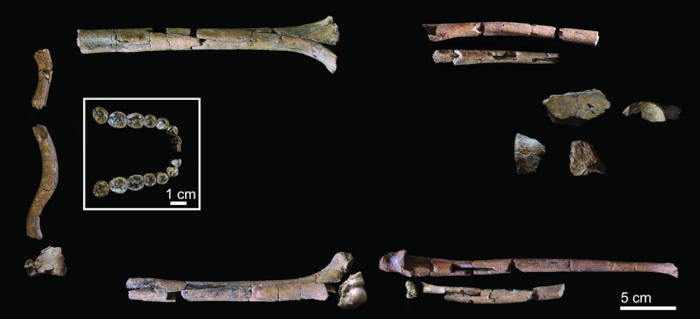
The fossil assemblage was discovered at Koobi Fora, on the eastern side of Lake Turkana. It includes around 100 bones from the upper body and pelvis, along with a nearly complete lower jaw and teeth. Together, these remains form the most complete skeleton of Homo habilis ever described, identified as KNM-ER 64061 and detailed in a recent study published in The Anatomical Record.
A Body That Still Looked Primitive
The study reveals that this early human ancestor had a surprisingly primitive body structure. While its head and teeth resemble those of early humans, its body retained features more typical of older hominin species.
The skeleton shows long, powerful arms and thick outer bone walls, characteristics similar to earlier species such as Australopithecus. In other words, early Homo may have had a relatively modern-looking head while keeping a body that would not appear human from a distance.
The Discovery at Koobi Fora
The fossils were first discovered in 2012, beginning with a single tooth, followed by additional teeth and scattered bones found downslope. One of the main challenges for researchers was determining whether the jaw and limb bones belonged to the same individual, since fossils at such sites are often moved or mixed by natural processes.
Scientists used CT scans to analyze mineral traces preserved on the bones. They found matching mineral “fingerprints,” including barite deposits, on both the jaw and arm bones. This evidence strongly suggests the pieces belonged to one individual, allowing researchers to reconstruct body proportions rather than studying isolated fragments.
The skeleton includes rare skeletal elements for Homo habilis, such as fragments of the clavicle and shoulder blade, both upper arms, both forearms, and parts of the hip and sacrum. Most fossils of this species previously consisted mainly of skull and tooth remains, making this discovery particularly important.
Long Arms and a Different Body Plan
The new skeleton challenges the traditional idea that early humans already had the modern human body shape.
Researchers found that Homo habilis had relatively long forearms compared with later species such as Homo erectus. In addition, the bones of the upper limbs had very thick cortical walls, again resembling earlier australopith ancestors.
These features do not necessarily mean the individual spent most of its time in trees. However, the anatomy suggests that climbing or heavy upper-body activity likely remained an important part of daily life, even as early stone tool use was spreading across Africa.
Evidence of Efficient Walking
Despite these primitive traits, the fossil also contains signs of more advanced locomotion. A small fragment of the ischium, part of the pelvis, indicates that Homo habilis may have had more efficient hip mechanics for upright walking compared with australopiths.
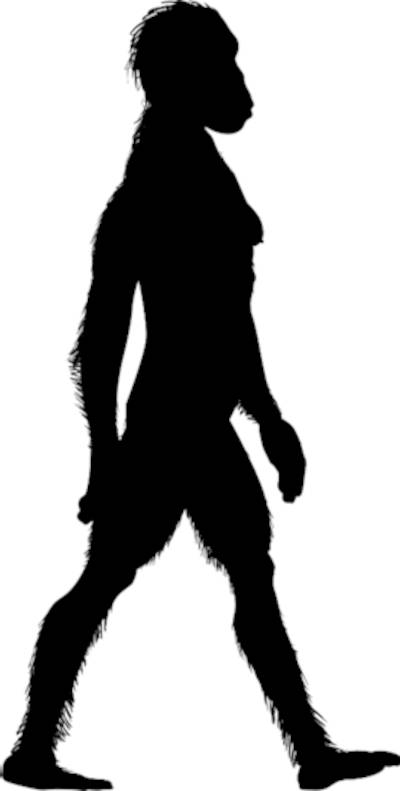
This combination of traits creates a mosaic anatomy: neither fully human nor ape-like, but a mixture of evolutionary features.
Rethinking Early Human Evolution
The discovery also affects how scientists view the relationship between early human species. Homo habilis and Homo erectus appear to have coexisted for a long period, rather than forming a simple ancestor-to-descendant line.
This overlap suggests that the evolution of the human body was not a straight path. Instead, multiple early human species may have experimented with different evolutionary adaptations at the same time.
Researchers estimate the individual represented by KNM-ER 64061 stood about 160 centimeters tall but weighed only around 31–33 kilograms, making it significantly lighter than typical estimates for Homo erectus.
A Different Beginning for the Human Body
The findings suggest that the fully human-like body shape—tall, long-legged, and built for endurance walking—likely evolved later than previously thought. Early members of our genus may have first developed larger brains, different teeth, and tool use, while still retaining body features inherited from older hominin ancestors.
If this interpretation holds, the familiar human body plan may have emerged only later in evolution, after several different human species had already begun sharing the same landscapes of East Africa.