The “Mooning Gargoyle” of Freiburg Minster
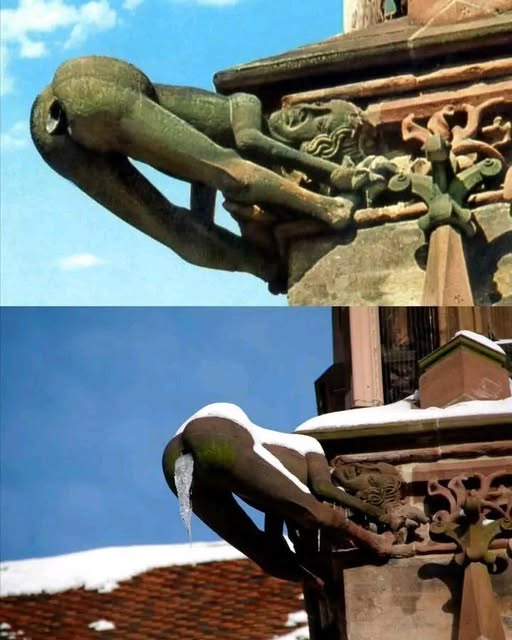
The “Mooning Gargoyle” of Freiburg Minster
Perched high on the exterior of Freiburg Minster in southern Germany is one of the most unusual—and humorous—examples of medieval stone carving: the famous “Mooning Gargoyle.”

Unlike the fearsome or grotesque creatures commonly associated with Gothic cathedrals, this particular gargoyle is carved in the act of bending over and exposing its backside toward the city below. The figure serves as a rain spout, channeling water away from the cathedral’s stone walls, but it also reveals the playful sense of humor sometimes hidden within medieval architecture.
Gargoyles were originally functional elements designed to drain rainwater from roofs and protect masonry from erosion. Over time, however, they became opportunities for sculptors to create imaginative figures—ranging from monsters and demons to animals and human caricatures.
The “mooning” figure at Freiburg likely reflects the mischievous creativity of medieval craftsmen. Some historians suggest it may have been intended as satire, a joke among builders, or even a symbolic gesture aimed at rival towns or authorities. Medieval artisans occasionally incorporated humor and subtle social commentary into church decorations.

Construction of Freiburg Minster began around 1200, and the cathedral remains one of the most celebrated Gothic buildings in Germany. Its detailed stonework includes hundreds of figures, each revealing something about the artistic culture of the Middle Ages.
Among them, the Mooning Gargoyle stands out as a reminder that even in the solemn environment of a great cathedral, medieval craftsmen did not lose their sense of humor.