8,000-Year-Old Skeleton Discovered Deep Inside Mexican Cave System
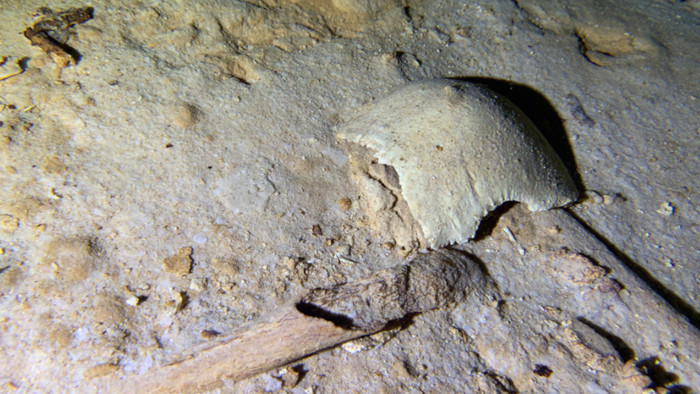
An 8,000-year-old human skeleton discovered deep within a flooded cave system along Mexico’s Caribbean coast is offering new insights into the prehistoric inhabitants of the Yucatán Peninsula. Archaeologists believe the remains represent a deliberate ritual burial, revealing rare evidence of funerary practices that existed thousands of years before the rise of the Maya civilization.
This remarkable find—now the eleventh ancient skeleton recovered from the region’s underwater caves—is helping scientists better understand how early humans lived and migrated in the Americas.
Discovery Beneath the Water
The skeleton was discovered in late 2025 by a team of cave-diving archaeologists led by Octavio del Río from National Institute of Anthropology and History (INAH). The remains were located in a submerged cave system called Actun Cave System, near the coastal city of Tulum.
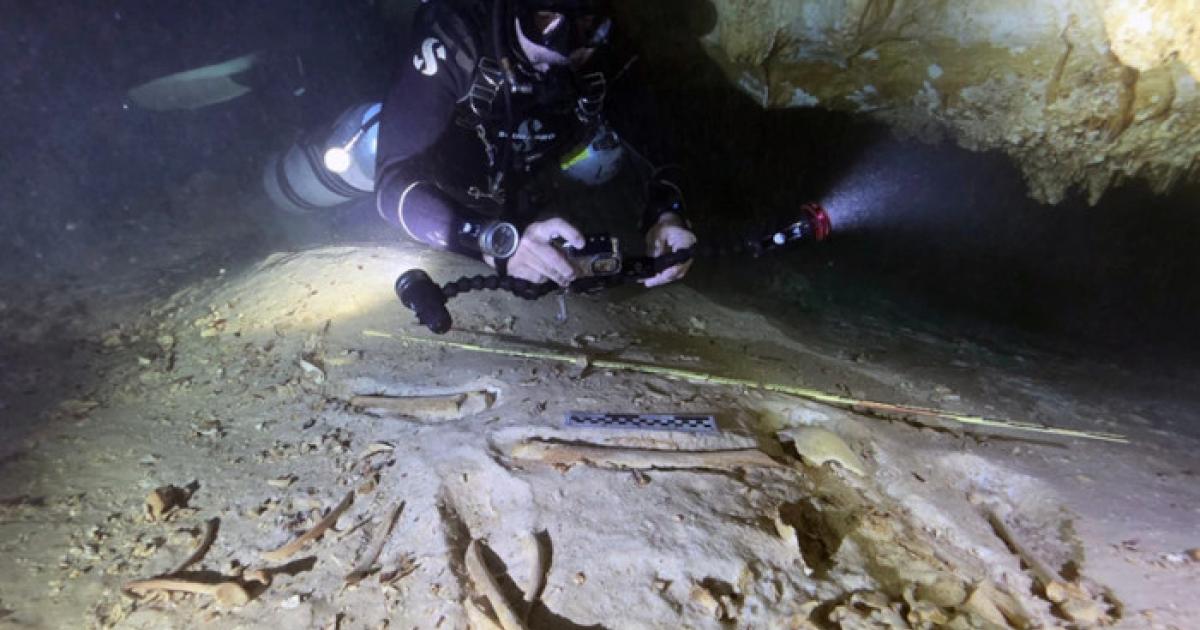
To reach the site, divers had to swim about 200 meters (656 feet) through narrow underwater passages before reaching an interior chamber. The skeleton lay roughly 8 meters (26 feet) below the surface, positioned on a dune of sediment in a tight section of the cave.
According to researchers, the location strongly suggests intentional placement rather than accidental death. The narrow chamber would have required effort to reach even when the cave was dry.
Buried Before the Caves Flooded
The cave system is part of a network of natural sinkholes known as cenotes, which formed in the region’s limestone bedrock. At the end of the last Ice Age, rising global sea levels flooded many of these caves around 8,000 years ago.
Because the skeleton lies inside a now-submerged passage, the burial must have occurred before the flooding, when the cave was still accessible on foot. Today, reaching the chamber requires specialized cave-diving equipment, highlighting the effort and intention behind the ancient burial.
The stable underwater environment also helped preserve the remains remarkably well. Cenotes are known for maintaining consistent temperature, low oxygen levels, and minimal disturbance, turning them into natural archaeological time capsules.
Clues About the First Americans
This discovery adds to a growing collection of ancient human remains found in the cenotes of the Yucatán Peninsula. Over the past 30 years, archaeologists have recovered ten other prehistoric skeletons from similar caves.
Among the most famous discoveries is Naia, a teenage girl who lived nearly 13,000 years ago. Another notable find is the Woman of Naharon, considered one of the oldest human remains in the Americas, dating to about 13,720 years ago.
Each of these discoveries provides important evidence about the early populations of the Americas.
Understanding Early Migration
According to Luis Alberto Martos, director of archaeological studies at INAH, the new skeleton could help researchers better understand how early humans reached the Yucatán Peninsula.
Thousands of years ago, the region looked very different. Instead of the dense jungles and beaches seen today, it was largely dry land with open cliffs and cave systems.
Scientists generally believe the first people arrived in the Americas by crossing the Bering Land Bridge from Asia during the last Ice Age. However, the skeletal features of some ancient individuals from the region—including Naia—have led some researchers to suggest that multiple migration waves from different regions of the world may have contributed to early American populations.
The newly discovered skeleton is currently undergoing detailed analysis. Researchers hope it will provide further clues about who these early inhabitants were, how they lived, and how the first people spread across the Americas.