Ancient Greek Coins Featuring Octopuses
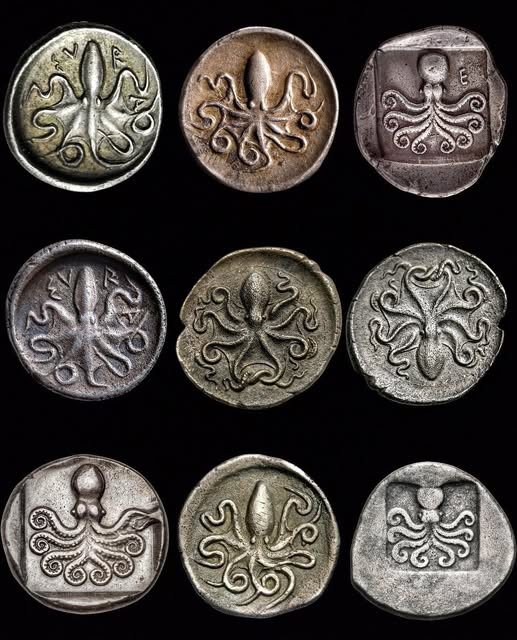
Ancient Greek Coins Featuring Octopuses
These remarkable ancient Greek coins display detailed images of octopuses, a motif strongly associated with the maritime cultures of the Aegean world.
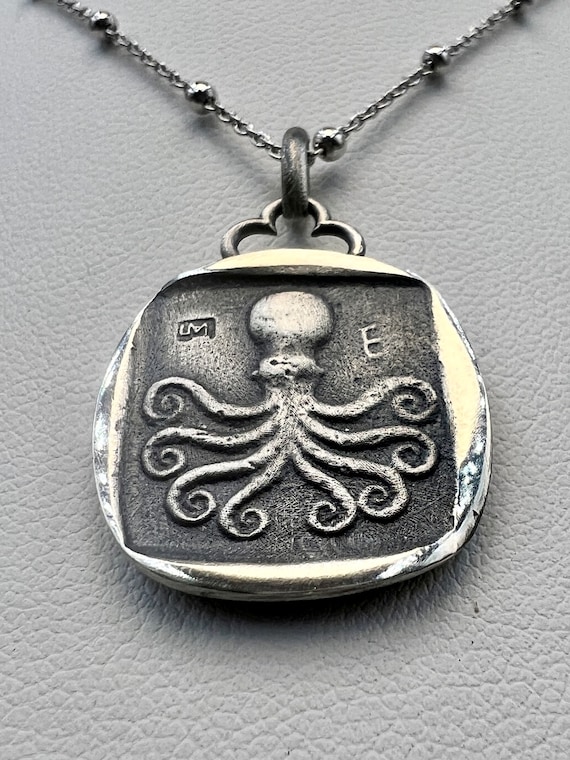
Coins featuring octopus designs were minted primarily by Greek city-states located on islands or coastal regions, where the sea played a central role in daily life and economy. Such imagery reflected the importance of fishing, trade, and seafaring, all of which sustained these communities.
The octopus itself was a familiar creature in the Mediterranean and appeared frequently in Greek art, from pottery to jewelry. On coins, its curling tentacles allowed engravers to create dynamic, visually striking designs within the small circular space of the coin.
Many of these coins date to the Classical and Hellenistic periods (roughly 5th–3rd centuries BCE). They were typically struck in silver or bronze and served as everyday currency while also communicating civic identity. Much like modern national symbols on currency, the octopus represented the coastal character and maritime wealth of the issuing city.
The craftsmanship visible in these tiny engravings demonstrates the extraordinary skill of ancient die-cutters. Despite their small size, the coins capture fine anatomical details, movement, and texture—evidence of the high artistic standards of Greek numismatic art.
Today, octopus coins remain among the most distinctive examples of ancient coin imagery, illustrating how Greek societies celebrated the natural world and the sea that connected their cities across the Mediterranean.