The Antique Pool of Hierapolis (Cleopatra’s Pool)
The Antique Pool of Hierapolis (Cleopatra’s Pool)
The Antique Pool of Hierapolis, often called Cleopatra’s Pool, is one of the most unusual archaeological sites in the ancient city of Hierapolis in southwestern Anatolia.
Dating to the Roman Imperial period (2nd–3rd century CE), the pool was fed by natural thermal springs that were highly valued in antiquity for their reputed healing properties. The warm, mineral-rich water made Hierapolis an important spa destination within the Roman world, attracting visitors seeking therapeutic bathing.

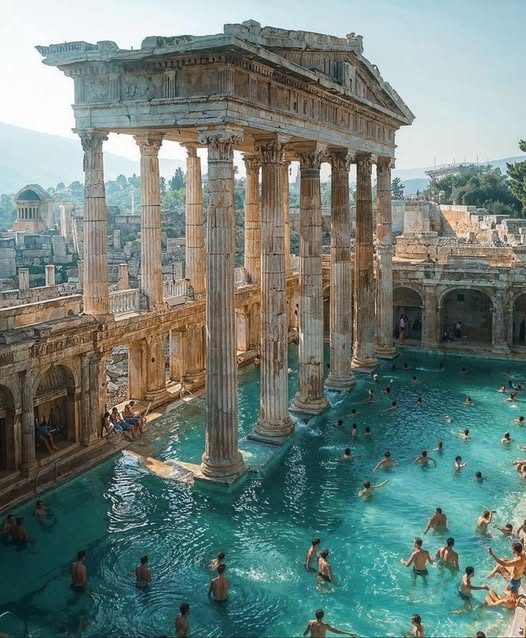
The striking underwater ruins visible today were not originally part of the pool. During a powerful earthquake in antiquity, surrounding structures—likely temples, porticoes, and civic buildings—collapsed into the thermal basin. Columns, architraves, and carved architectural blocks tumbled directly into the water and remained there.
As a result, the pool now contains submerged marble fragments from the ancient city. Bathers can literally swim among pieces of Roman architecture while warm spring water continues to bubble up from the earth below.
Today, the site lies within the broader archaeological landscape of Hierapolis, near the famous white travertine terraces of Pamukkale. The pool remains one of the rare places in the world where visitors can experience both an ancient spa tradition and a living archaeological environment at the same time.

The surreal scene—crystal water flowing over fallen Roman columns—offers a vivid reminder of how natural forces and human history can intersect in unexpected ways.