Walnut Cache from the Yayoi Period at the Kuso’oki Ruins
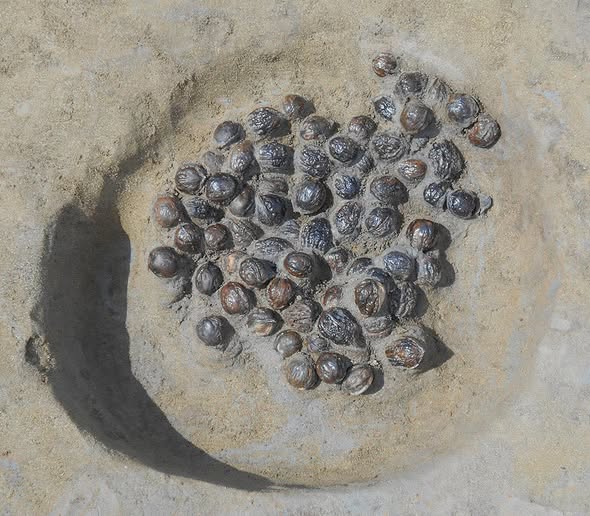
Walnut Cache from the Yayoi Period at the Kuso’oki Ruins
Archaeologists excavating the Kuso’oki Ruins in Fukui uncovered a remarkable stash of walnuts preserved inside a storage pit dating to the Yayoi period.
The walnuts were found clustered within a shallow, carefully dug pit, suggesting intentional storage rather than natural accumulation. During the Yayoi period, communities in Japan were transitioning toward more complex agricultural societies, cultivating rice while continuing to rely on gathered foods such as nuts, fruits, and wild plants.
Walnuts were an important seasonal food resource. Rich in fats and nutrients, they could be stored for long periods and served as a reliable food supply during colder months or times of scarcity. Archaeological discoveries like this one reveal how ancient communities planned for seasonal cycles and preserved food for future use.
The preservation of the nuts also provides insight into the storage techniques used by Yayoi people. Underground pits helped maintain stable temperatures and protect food from animals, moisture, and spoilage.
Finds like the Kuso’oki walnut cache help researchers reconstruct everyday life in prehistoric Japan. While monumental artifacts often capture public attention, simple discoveries such as stored food reveal the practical strategies that allowed ancient societies to survive and thrive.
More than 2,000 years later, this small cluster of walnuts remains a quiet but powerful reminder of early agricultural life and food management in the Japanese archipelago.